



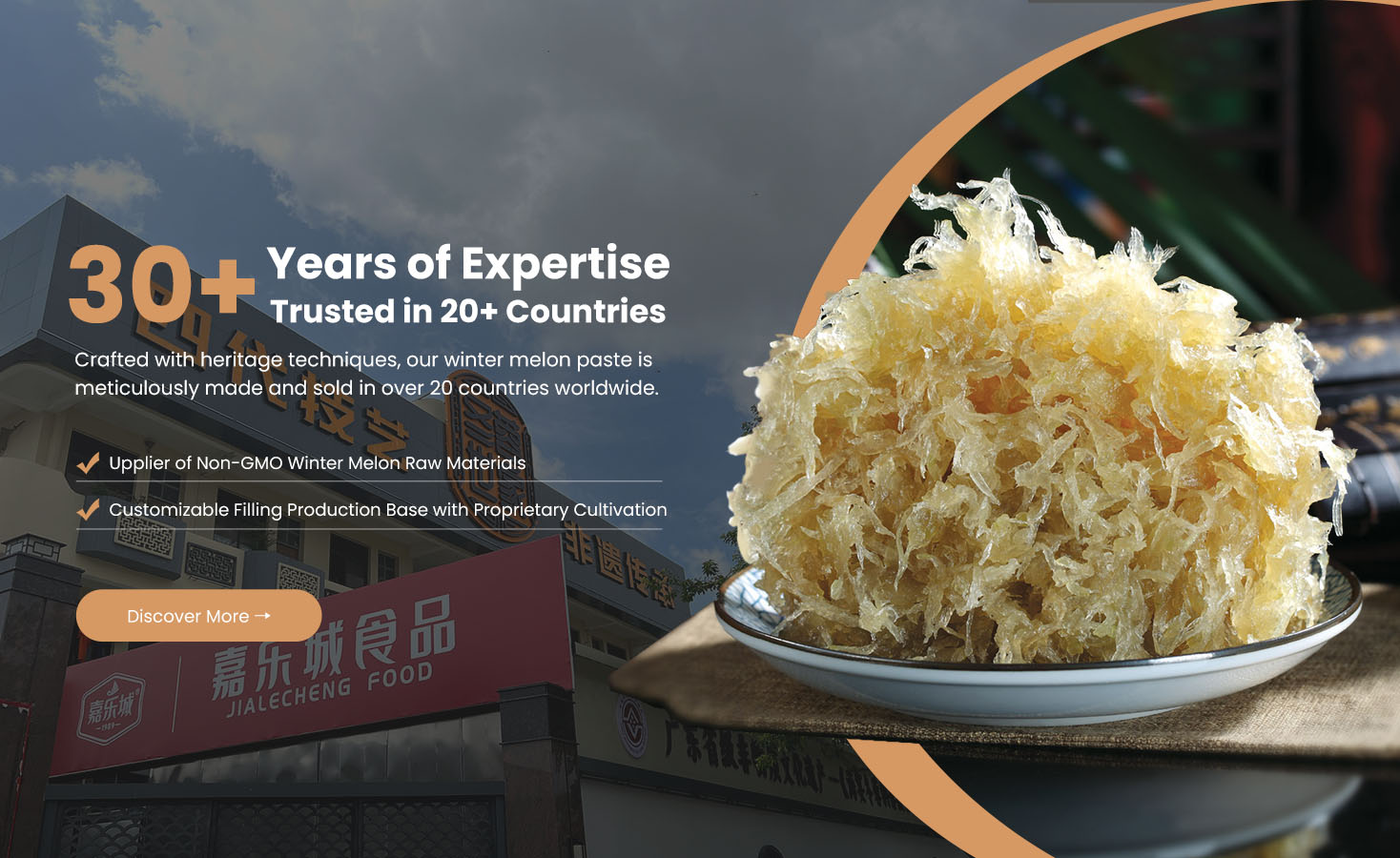
What Is The Ideal Ph Level for Stable Winter Melon Paste Products?
Table of Contents
- Understanding the Importance of pH in winter melon paste
- Ideal pH Range for winter melon paste
- Why pH 4.0–5.5 Is the Most Stable Range
- What Happens If pH Is Too High or Too Low?
- How Manufacturers Adjust pH in Winter Melon Paste
- pH Monitoring During Production
- How Jialecheng Foods Ensures Ideal pH for Product Stability
Understanding the Importance of pH in winter melon paste
The pH level of winter melon paste plays a major role in determining its shelf life, microbial stability, and performance in baking or industrial processing. While winter melon paste naturally falls on the mild-acid to neutral side of the pH scale, controlled acidification is often used in commercial production to improve safety and maintain consistent quality. Managing pH correctly helps prevent spoilage, enhances preservative effectiveness, and supports long-term storage—whether refrigerated, frozen, or shelf-stable.
Ideal pH Range for winter melon paste
For most bakery and factory applications, the optimal pH for stable winter melon paste is:
pH 4.0 – 5.5
This range strikes the best balance between:
Food safety
Microbial control
Flavor stability
Texture preservation
Compatibility with preservatives
Let’s break down why this range is effective.
Why pH 4.0–5.5 Is the Most Stable Range
1. Inhibits Microbial Growth
Most spoilage organisms—including yeast, mold, and bacteria—struggle to grow in mildly acidic environments.
Lowering pH helps:
Reduce fermentation
Prevent gas formation in sealed packaging
Minimize mold risk
A pH level below 5.5 significantly extends shelf life.
2. Enhances Preservative Performance
Widely used preservatives such as potassium sorbate and sodium benzoate work more effectively at mildly acidic pH levels.
Potassium sorbate is strongest below pH 5.5
Sodium benzoate is most effective below pH 4.5
Keeping the filling in the ideal pH range improves preservative synergy.
3. Protects Color and Flavor
Acidic conditions help winter melon paste maintain:
Natural golden color
Mild sweetness
Fresh aroma
Without proper pH control, oxidation and browning occur more quickly.
4. Stabilizes Texture
pH affects the gel-like network in winter melon paste.
A stable pH:
Prevents thinning or water separation
Reduces crystallization
Maintains creamy texture
This is essential for fillings used in pastries, mooncakes, hopia, and cookies.
What Happens If pH Is Too High or Too Low?
If pH is too high (above 6.0):
Higher microbial risk
Greater chance of fermentation or souring
Shorter shelf life
Increased water separation
Reduced preservative effectiveness
This is unsafe for industrial production.
If pH is too low (below 3.5):
Unnaturally acidic taste
Over-softened texture
Potential interference with baking behavior
Reduced consumer acceptance
Winter melon paste should never become sour or sharp-tasting.
How Manufacturers Adjust pH in Winter Melon Paste
To maintain the ideal pH range, manufacturers commonly use controlled amounts of natural or food-safe acidifiers, such as:
Citric acid
Malic acid (apple acid)
Lemon juice powder
These ingredients help fine-tune acidity without altering winter melon’s natural mild flavor.
pH Monitoring During Production
Industrial producers track pH at multiple stages:
1. After Cooking
Verifies natural acidity before adjustments.
2. After Ingredient Blending
Ensures sugars, starches, or additives do not raise pH excessively.
3. Before Packaging
Confirms final product is in the safe range for preservation.
4. During Shelf Life Testing
Monitors whether pH drifts over time.
Consistent pH is essential for factory reliability and export compliance.
How Jialecheng Foods Ensures Ideal pH for Product Stability
Jialecheng Foods formulates winter melon paste with precisely controlled pH to optimize shelf life, texture, and safety for industrial bakeries. Their approach includes:
Maintaining the paste within the ideal pH 4.0–5.5 range
Using natural acidifiers to ensure clean flavor
Conducting strict quality checks at every production stage
Creating stable formulations suitable for freezing, baking, and long-haul distribution
Ensuring preservative systems work efficiently for extended shelf life
This allows Jialecheng Foods to deliver winter melon paste that performs consistently across multiple pastry formats and storage environments.