



How Are Food Technologies Changing The Production Of Winter Melon Filling?
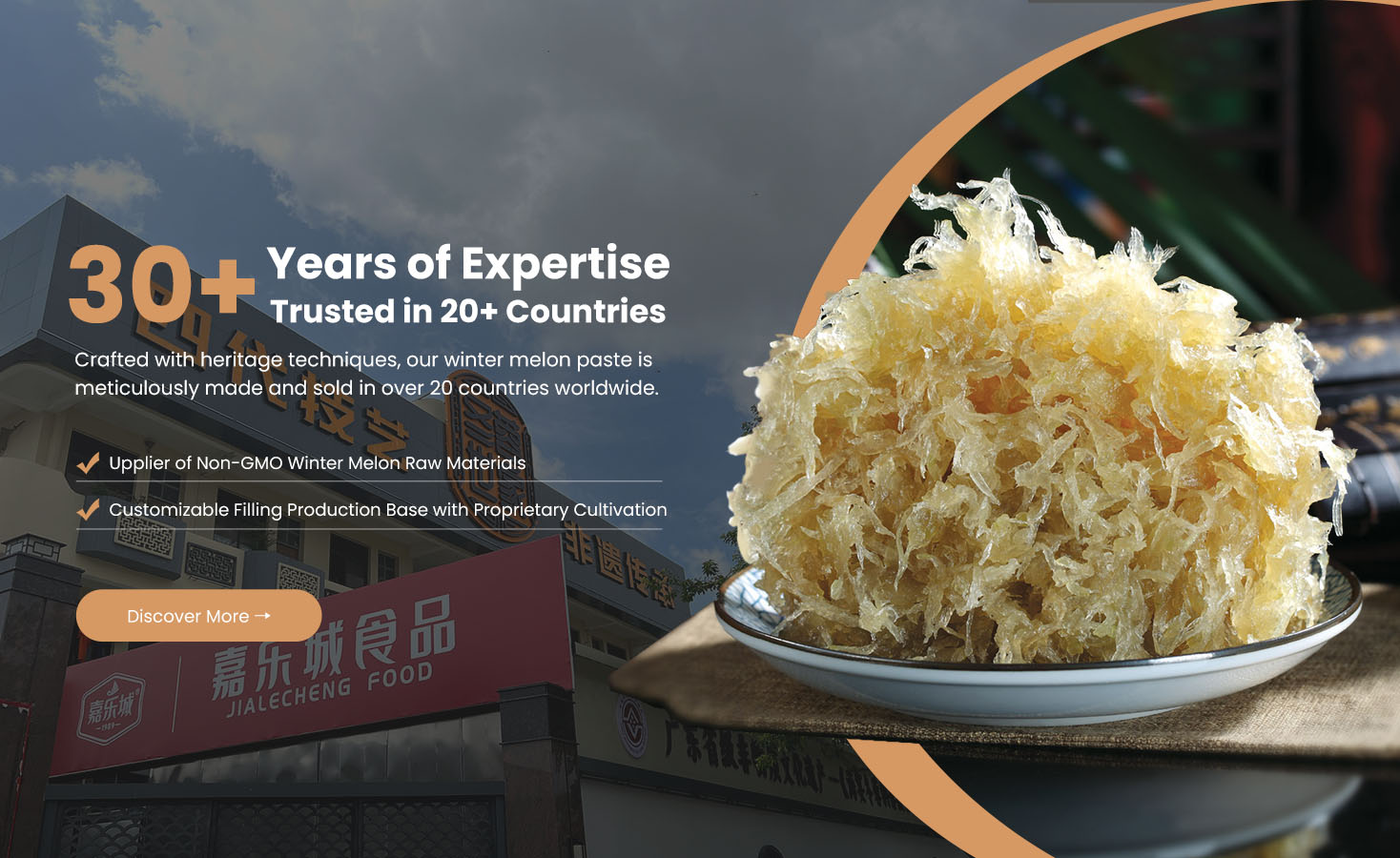
Food technology has significantly reshaped how Winter Melon Filling is produced, moving it from labor-intensive, experience-driven craftsmanship to a more controlled, scalable, and quality-consistent process. While the cultural identity of Winter Melon Filling remains intact, modern technologies now influence every stage of production—from raw material handling to texture control and food safety—allowing this traditional ingredient to meet contemporary bakery and export demands.
Table of Contents
- From Manual Processing to Controlled Production Systems
- Precision Moisture Control and Dehydration Technology
- Advanced Mixing and Texture Engineering
- Data-Driven Sweetness and Flavor Balance
- Improved Food Safety and Hygiene Systems
- Shelf-Life Optimization Through Process Design
- Customization Through Modular Production
- Automation and Scalability
- Balancing Technology With Tradition
- Implications for Bakeries and Buyers
- Final Perspective
From Manual Processing to Controlled Production Systems
Traditional Limitations
Historically, winter melon filling production relied heavily on manual judgment. Cooking time, moisture reduction, and sugar integration were determined by experience rather than measurable parameters. This approach created strong regional character but also resulted in variability between batches.
Modern food technologies have introduced:
Measurable process control
Repeatable production conditions
Reduced dependence on individual craftsmanship
This shift improves reliability without removing the traditional formulation foundation.
Precision Moisture Control and Dehydration Technology
Why Moisture Matters
Moisture content directly affects shelf life, bake stability, and texture. Excess moisture leads to leakage during baking, while over-reduction causes dryness and cracking.
Technological Improvements
Modern dehydration and cooking systems allow:
Precise temperature profiling
Controlled evaporation rates
Uniform moisture reduction across batches
As a result, winter melon filling achieves predictable density and stable performance in both artisanal and industrial baking environments.
Advanced Mixing and Texture Engineering
Consistent Particle Size Distribution
Modern mixing and refining equipment ensures uniform particle size, eliminating coarse fibers that were once common in traditional fillings.
Benefits include:
Smoother mouthfeel
Cleaner post-bake appearance
Improved slicing and portion control
Texture engineering allows producers to fine-tune firmness based on application requirements.
Controlled Oil Integration
Oil plays a critical role in mouthfeel and baking behavior. Advanced emulsification and staged mixing techniques help distribute oil evenly throughout the filling.
This results in:
Reduced oil separation during baking
Stable structure under high temperatures
More consistent sensory experience
Data-Driven Sweetness and Flavor Balance
Moving Beyond Excess Sugar
Traditionally, high sugar content served both flavor and preservation purposes. Modern food technology reduces reliance on sugar by improving process hygiene and moisture control.
Producers can now:
Lower sweetness without compromising stability
Adjust sugar ratios for different markets
Maintain traditional flavor recognition
This supports broader consumer acceptance and healthier positioning.
Improved Food Safety and Hygiene Systems
Integrated Safety Controls
Food safety technologies have transformed winter melon filling production from open-process cooking to monitored systems.
Key upgrades include:
Controlled cooking environments
Inline metal detection
Batch traceability systems
These measures ensure compliance with modern food safety standards, especially for export-oriented production.
Shelf-Life Optimization Through Process Design
Stability Without Over-Processing
Rather than relying on heavy preservation, modern production focuses on:
Precise thermal processing
Balanced moisture and oil ratios
Clean processing environments
This approach extends shelf life while preserving texture and flavor integrity.
Customization Through Modular Production
Application-Specific Formulations
Food technologies allow winter melon filling to be tailored for different bakery uses.
Manufacturers can adjust:
Density for high-temperature baking
Softness for fresh pastries
Oil content for layered products
This modular approach supports OEM and customized bakery production without reinventing the core process.
Automation and Scalability
Meeting Modern Demand
Automation enables winter melon filling to be produced at scale while maintaining consistency.
Advantages include:
Stable output during peak seasons
Reduced batch-to-batch variation
Efficient labor utilization
This is especially important for festival-driven demand cycles.
Balancing Technology With Tradition
Technology as an Enabler, Not a Replacement
Despite technological advances, winter melon filling remains rooted in traditional formulation logic. Technology enhances execution rather than redefining identity.
Modern producers focus on:
Preserving traditional taste memory
Using technology to remove variability
Ensuring repeatable quality across markets
This balance allows winter melon filling to evolve without losing cultural relevance.
Implications for Bakeries and Buyers
For professional buyers and bakeries, technology-driven production offers:
Predictable baking performance
Reduced formulation risk
Consistent quality across supply cycles
Understanding these technological changes helps buyers evaluate suppliers beyond surface claims and focus on real production capability.
Final Perspective
Food technologies are transforming winter melon filling production by introducing precision, consistency, and scalability into a traditionally experience-based craft. Through controlled moisture reduction, advanced mixing, data-driven formulation, and improved food safety systems, winter melon filling is now better suited to modern baking, global distribution, and evolving consumer expectations. Rather than replacing tradition, technology ensures that this heritage ingredient can continue to thrive in contemporary food production environments.