



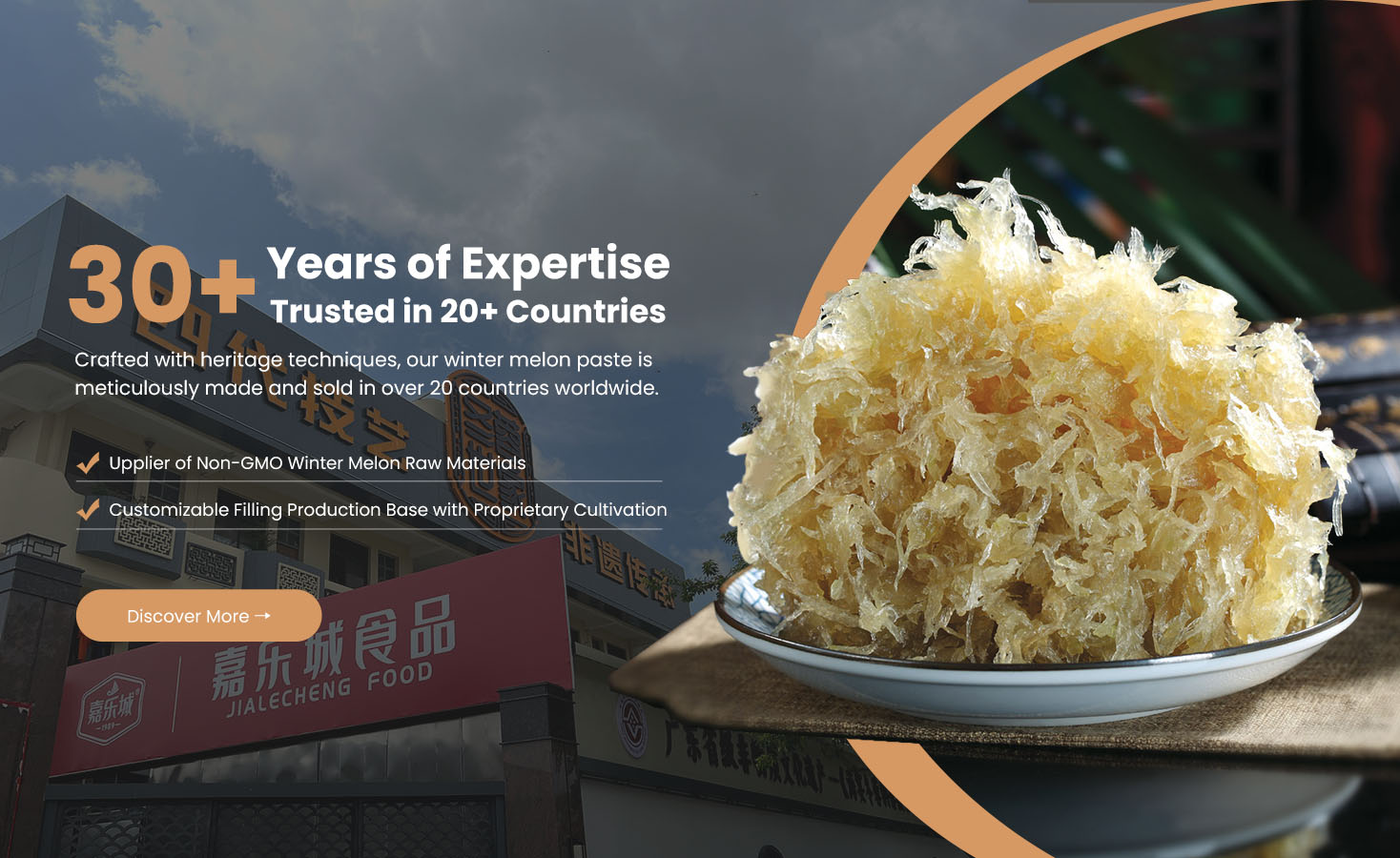
How Do Global Markets Perceive Traditional Asian Fillings Like Winter Melon?
Traditional Asian fillings such as winter melon are increasingly visible in global bakery and dessert markets. Once closely tied to regional festivals and cultural consumption, these fillings are now evaluated through a broader lens that includes taste adaptability, functionality in baking, clean-label potential, and cultural storytelling. Global perception is not uniform, but it is evolving in ways that create both opportunities and challenges for producers and buyers.
Table of Contents
- Initial Perception: Unfamiliar but Neutral
- Functional Appreciation in Professional Baking
- Cultural Framing Shapes Consumer Acceptance
- Sweetness Expectations and Regional Adjustment
- Texture Perception Across Markets
- Positioning Against Familiar Fillings
- Retail vs Foodservice Perception Differences
- Export Market Confidence and Trust
- Remaining Barriers to Wider Acceptance
- Long-Term Trend: From Niche to Ingredient Platform
- Final Perspective
Initial Perception: Unfamiliar but Neutral
Low Flavor Recognition, Low Resistance
In many global markets, winter melon is not widely recognized by name. However, its mild flavor profile works in its favor. Unlike strongly aromatic or culturally specific ingredients, winter melon does not trigger immediate resistance.
From a sensory standpoint:
The flavor is perceived as gentle and non-aggressive
Sweetness is often described as clean rather than heavy
Texture is viewed as smooth and balanced
This neutrality allows Winter Melon Fillings to be accepted even when consumers are unfamiliar with their origin.
Functional Appreciation in Professional Baking
Performance Over Provenance
Among professional bakers, pastry chefs, and food manufacturers, perception is driven more by functionality than tradition.
Winter Melon Fillings are valued for:
Stability under high-temperature baking
Predictable moisture behavior
Clean slicing and shape retention
Compatibility with automated production
In this context, winter melon is seen less as an exotic ingredient and more as a reliable functional filling comparable to other established bakery bases.
Cultural Framing Shapes Consumer Acceptance
From “Traditional” to “Heritage-Inspired”
How winter melon is presented strongly influences perception. When positioned purely as a traditional Asian ingredient, it may feel niche. When framed as a heritage-inspired or time-tested filling, it gains credibility and curiosity.
Global consumers respond positively when:
The ingredient is linked to long-standing craftsmanship
Its role in celebration and tradition is explained
It is presented as refined rather than rustic
Storytelling transforms winter melon from unfamiliar to meaningful.
Sweetness Expectations and Regional Adjustment
Adapting to Global Palates
One of the most noticeable perception gaps lies in sweetness. Many global markets prefer less intense sweetness compared to traditional Asian pastry standards.
Winter melon performs well here because:
Its base flavor allows easy sweetness reduction
Lower sugar versions still maintain structure
It pairs well with modern pastry styles
When adapted correctly, winter melon fillings are often perceived as more balanced than conventional fruit fillings.
Texture Perception Across Markets
Clean, Dense, and Controlled
Texture plays a critical role in acceptance. Globally, winter melon fillings are often described as:
More refined than chunky fruit fillings
Less sticky than high-sugar pastes
More stable than fresh fruit-based alternatives
This makes them particularly appealing in premium baked goods where clean appearance and consistency are valued.
Positioning Against Familiar Fillings
Seen as a Structural Base, Not a Standalone Flavor
In global markets, winter melon is rarely perceived as a hero flavor. Instead, it is understood as:
A base filling that supports other ingredients
A carrier for layered or blended formulations
A structural component rather than a flavor driver
This perception aligns well with how modern bakeries design composite fillings and layered desserts.
Retail vs Foodservice Perception Differences
Retail Consumers
Retail buyers tend to rely more on visual cues and labeling. Winter melon fillings are better received when:
The product appearance is clean and uniform
Flavor descriptions focus on balance and smoothness
Cultural references are subtle and accessible
Foodservice and Industrial Buyers
In foodservice and manufacturing, winter melon is evaluated pragmatically:
Consistency across batches
Ease of handling
Performance across different baking systems
In this segment, perception is largely positive due to technical reliability.
Export Market Confidence and Trust
Consistency Builds Acceptance
Global markets place high value on consistency and compliance. When winter melon fillings demonstrate:
Stable quality across shipments
Clear specification control
Predictable performance
They are perceived as professional-grade ingredients rather than ethnic specialties.
This trust is critical for repeat purchasing and long-term adoption.
Remaining Barriers to Wider Acceptance
Name Recognition and Education
The term “winter melon” can sometimes cause confusion in markets unfamiliar with the ingredient. Without context, it may not align with consumer expectations of melon flavor.
Clear explanation and thoughtful naming strategies help overcome this gap.
Cultural Distance in Traditional Formats
Highly traditional pastry formats may not translate directly. While the filling itself is accepted, the surrounding product format often needs localization.
Winter melon succeeds best when integrated into familiar pastry forms rather than introduced in entirely traditional shapes.
Long-Term Trend: From Niche to Ingredient Platform
Growing Openness to Asian Bakery Ingredients
As global consumers become more open to Asian cuisines and desserts, winter melon benefits from broader acceptance of Asian-origin ingredients.
Its future perception is shifting toward:
A versatile bakery ingredient
A clean, controllable filling base
A culturally rooted but globally usable component
This positions winter melon as an ingredient platform rather than a single-use traditional filling.
Final Perspective
Global markets perceive traditional Asian fillings like winter melon through a mix of curiosity, functional appreciation, and evolving cultural understanding. While name recognition may still be limited, winter melon’s neutral flavor, strong baking performance, and adaptability allow it to integrate smoothly into modern global bakery systems. When positioned thoughtfully and formulated to match regional preferences, winter melon is increasingly viewed not as an unfamiliar tradition, but as a reliable, refined, and scalable filling suited to international markets.