



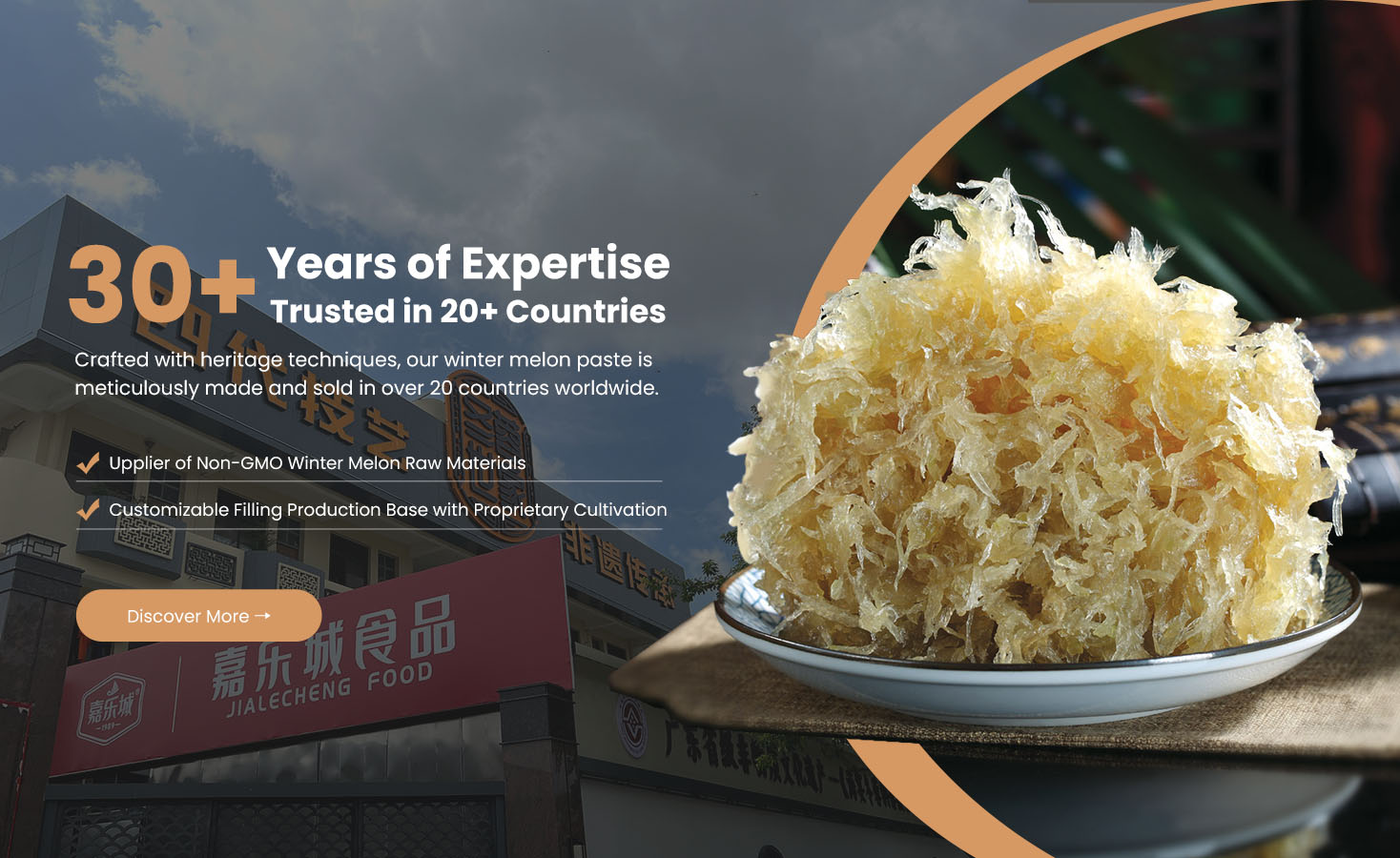
Importing winter melon paste into North America involves far more than logistics and pricing. As a processed food ingredient used in commercial bakery production, winter melon paste must meet strict regulatory, technical, and commercial expectations. Many challenges only become visible after the first shipment, making early evaluation critical for overseas buyers and suppliers alike.
Below is a structured analysis of the key challenges importers face when bringing winter melon paste into North American markets, especially the United States and Canada.
Table of Contents
- Regulatory Compliance Under North American Food Law
- Labeling And Ingredient Transparency
- Food Safety And Microbiological Risk Management
- Traceability And Batch Control Challenges
- Documentation And Inspection Readiness
- Logistics And Shelf-Life Pressure
- Market Acceptance And Technical Fit
- Communication And Technical Support Gap
- Commercial And Risk Allocation Challenges
- Key Risk Indicators Importers Should Watch For
- Final Perspective
Regulatory Compliance Under North American Food Law
FDA And FSMA Requirements
In the United States, winter melon paste falls under regulations enforced by Food and Drug Administration. Compliance is shaped largely by the Food Safety Modernization Act.
Key challenges include:
Mandatory facility registration for foreign manufacturers
Implementation of preventive controls for human food
Verifiable hazard analysis and food safety plans
Readiness for inspection, record requests, and shipment holds
Manufacturers that treat compliance as documentation only, rather than an operational system, often face delays or refusals at entry.
Importer Responsibility And FSVP
Under FSMA, the importer is legally responsible for verifying that the foreign supplier meets U.S. food safety standards.
Challenges include:
Importers must maintain a Foreign Supplier Verification Program
Supplier audits, documentation review, and risk assessment are required
Incomplete or unclear supplier records shift compliance risk to the importer
This makes supplier selection and traceability a shared legal responsibility.
Labeling And Ingredient Transparency
Ingredient Declaration Complexity
Winter melon paste is often a compound ingredient, not a single raw material.
Common challenges:
Accurate ingredient naming aligned with North American labeling conventions
Clear declaration of sugars, oils, and processing aids
Consistency between commercial invoices, specifications, and labels
Misalignment between local terminology and North American expectations is a frequent cause of shipment review.
Allergen Control Statements
Even if winter melon paste does not contain allergens, importers are expected to demonstrate:
Facility-level allergen risk assessment
Cross-contact control documentation
Clear allergen status declarations
Lack of formal allergen documentation can raise red flags during import review.
Food Safety And Microbiological Risk Management
Moisture And Shelf Stability Expectations
North American buyers and regulators pay close attention to:
Moisture control
Water activity stability
Microbiological safety over extended shelf life
Winter melon paste that performs well in domestic markets may face issues in longer North American distribution cycles if stability margins are narrow.
Validation Of Heat Treatment Or Preservation Method
Whether the product is aseptic, retort-treated, chilled, or frozen, importers must be able to demonstrate:
Validated processing logic
Consistent batch control
Clear shelf-life justification
Lack of validation data increases inspection risk.
Traceability And Batch Control Challenges
One Step Back, One Step Forward Is Not Enough
North American import systems expect rapid traceability in case of a quality or safety concern.
Common weaknesses include:
Batch codes that cannot be linked clearly to raw materials
Incomplete linkage between production records and shipped lots
Delays in providing traceability data upon request
Poor traceability can turn minor issues into full shipment holds.
Documentation And Inspection Readiness
Border And Port Scrutiny
Imported food shipments may be subject to:
Document review before release
Physical inspection or sampling
Temporary detention pending clarification
Challenges often arise from:
Inconsistent product descriptions across documents
Missing preventive control summaries
Slow response from overseas suppliers during inspections
North American systems favor suppliers that can respond quickly and clearly.
Logistics And Shelf-Life Pressure
Long Transit Times And Temperature Fluctuations
Sea freight to North America introduces:
Long transit durations
Port congestion delays
Temperature cycling in containers
Winter melon paste with marginal moisture or oil stability may show quality drift by the time it reaches the customer, even if it left the factory in good condition.
Market Acceptance And Technical Fit
Different Baking Conditions And Expectations
North American bakeries often use:
Different oven profiles
Automated filling and depositing systems
Longer distribution chains
Winter melon paste must be technically compatible, not just culturally authentic. Inconsistent texture or behavior under local baking conditions can limit repeat orders.
Communication And Technical Support Gap
Distance Amplifies Small Problems
Time zone differences, language gaps, and delayed feedback can turn small technical issues into major disruptions.
Challenges include:
Slow root-cause analysis when problems arise
Limited technical explanation of formulation logic
Inability to adjust specifications quickly
North American buyers value suppliers who can explain why a paste behaves the way it does, not just replace shipments.
Commercial And Risk Allocation Challenges
Cost Of Non-Compliance
Rejected or detained shipments result in:
Storage and demurrage costs
Production downtime
Regulatory follow-up risk
Unlike domestic sourcing, the cost of error in imports is amplified.
Key Risk Indicators Importers Should Watch For
Importers should be cautious if a supplier:
Cannot clearly explain food safety systems beyond certificates
Lacks experience with North American regulatory terminology
Provides inconsistent batch or labeling information
Has no established importer-side compliance support
These issues often surface only after shipments are in transit.
Final Perspective
The key challenges of importing winter melon paste into North American markets lie at the intersection of regulatory compliance, food safety validation, traceability discipline, and technical performance in real production environments.
Success depends not only on product quality, but on:
Alignment with FDA and FSMA requirements
Strong documentation and traceability systems
Packaging and stability designed for long-distance logistics
Clear technical communication between supplier and importer
For North American buyers, choosing an export-ready winter melon paste supplier is ultimately a risk management decision, not a sourcing shortcut.