



How Can Winter Melon Paste Be Incorporated into Gluten-Free Or Vegan Bakery Formulations?
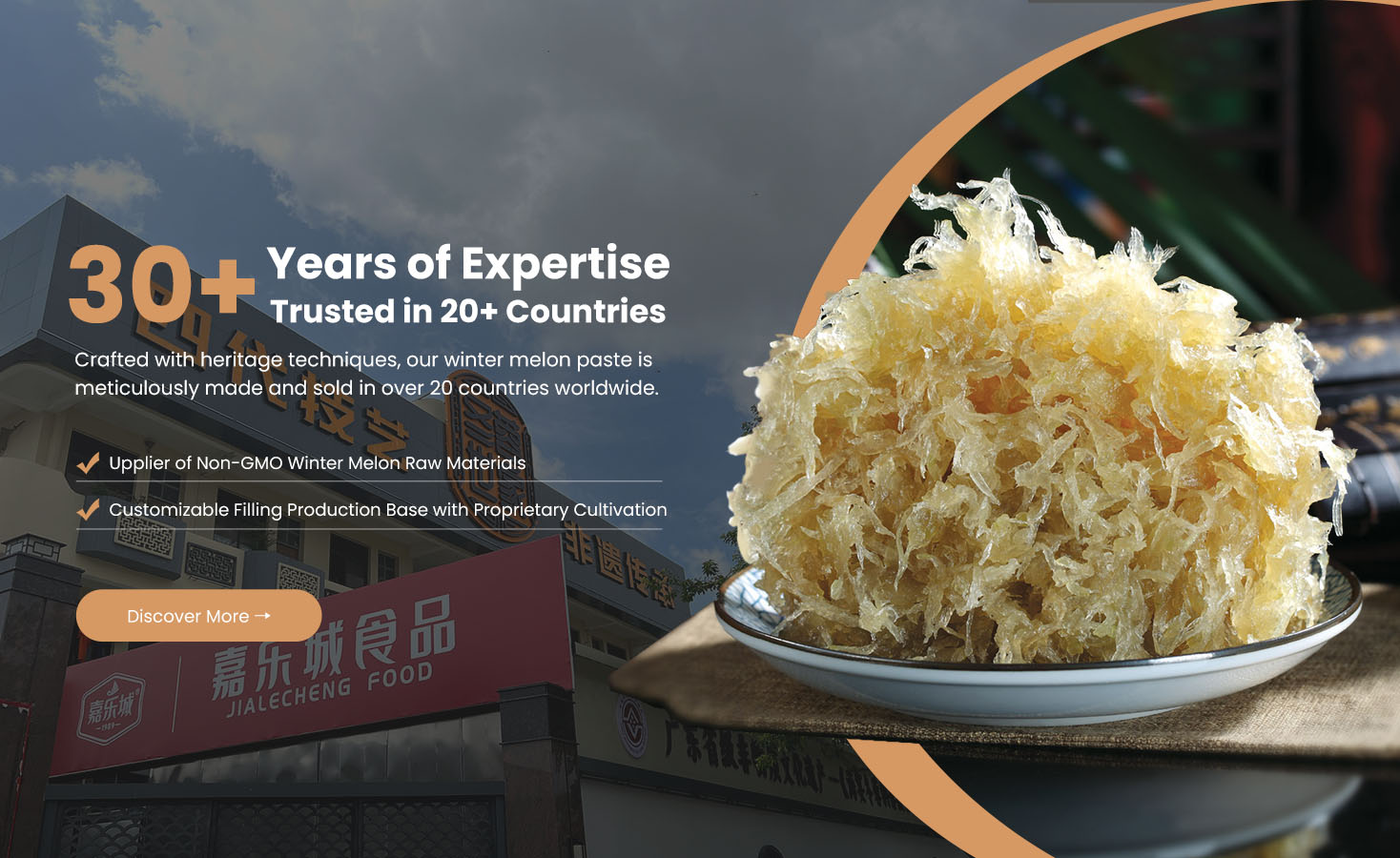
As gluten-free and vegan bakery categories continue to expand globally, ingredient selection must balance functionality, texture stability, labeling compliance, and large-scale production feasibility. winter melon paste offers a plant-based, naturally smooth, and moisture-stable filling solution that integrates well into both gluten-free and vegan bakery systems.
For bakery manufacturers sourcing ingredients at scale, selecting a winter melon paste manufacturer with structured production control, documented material standards, and export-ready compliance systems ensures consistent formulation performance across international markets.
Below are practical strategies for incorporating winter melon paste into gluten-free and vegan bakery formulations.
Table of Contents
- 1. Using winter melon paste As A Gluten-Free Filling Base
- 2. Supporting Vegan Formulations Without Animal-Derived Additives
- 3. Moisture Management In Gluten-Free Dough Systems
- 4. Sugar Optimization And Clean Label Opportunities
- 5. Texture Enhancement In Alternative Flour Systems
- 6. OEM Formulation Customization For Specialty Markets
- 7. Quality Control And Export Compliance Considerations
- Conclusion
1. Using winter melon paste As A Gluten-Free Filling Base
Winter melon paste is inherently gluten-free when produced under controlled manufacturing conditions without cross-contamination. In gluten-free bakery systems, it serves as:
A stable filling for gluten-free mooncakes
A center for rice flour pastries
A binder in gluten-free pastry rolls
A filling for gluten-free cookies and bars
Because gluten-free doughs often lack elasticity and structural strength, filling stability is critical. Winter melon paste provides:
Smooth, non-grainy texture
Controlled moisture content
Heat-resistant consistency during baking
Reduced risk of filling leakage
Buyers should confirm that the manufacturer implements allergen segregation and documented gluten-free production protocols.
2. Supporting Vegan Formulations Without Animal-Derived Additives
Winter melon paste is plant-based and does not require dairy, egg, or gelatin for structural stability when produced correctly.
In vegan bakery applications, it can replace:
Dairy-based custard fillings
Egg-thickened paste systems
Gelatin-stabilized fruit fillings
Its natural viscosity allows formulators to reduce reliance on artificial stabilizers. For vegan labeling compliance, buyers should verify:
No animal-derived emulsifiers
No dairy cross-contact
Transparent ingredient specification sheets
A manufacturer with structured raw material sourcing and quality checkpoints can provide the documentation required for vegan certification review.
3. Moisture Management In Gluten-Free Dough Systems
Gluten-free bakery formulations are sensitive to moisture imbalance. Excess water can cause crumbling, while insufficient hydration leads to dryness.
Winter melon paste contributes:
Controlled water activity
Uniform moisture distribution
Reduced surface cracking in baked products
Improved mouthfeel in rice-based dough systems
Because industrial production requires batch-to-batch consistency, moisture content must be standardized during paste cooking and blending. Buyers should evaluate:
Moisture testing protocols
In-process quality monitoring
Finished product stability reports
4. Sugar Optimization And Clean Label Opportunities
Winter melon paste provides natural sweetness and bulk, allowing partial reduction of refined sugar in certain formulations.
This supports:
Balanced sweetness profiles
Improved texture density
Reduced crystallization in gluten-free baked goods
Simplified ingredient declarations
For clean-label positioning, buyers should confirm the paste contains minimal additives and that ingredient declarations meet destination market regulations.
5. Texture Enhancement In Alternative Flour Systems
Gluten-free and vegan dough systems often rely on rice flour, tapioca starch, almond flour, or oat-based blends. These systems may lack structural elasticity.
Winter melon paste enhances:
Filling cohesion
Bite stability
Internal structure support
Smooth mouthfeel
Its semi-solid consistency works well in automated filling systems, supporting high-volume bakery production without equipment modification.
6. OEM Formulation Customization For Specialty Markets
In global gluten-free and vegan markets, sweetness preference and texture expectation vary by region.
A structured OEM/ODM process allows buyers to request:
Adjusted sweetness levels
Modified viscosity
Lower sugar variants
Ingredient blending with nuts or plant-based inclusions
Manufacturers with in-house blending control and pilot batch capability can fine-tune formulations without compromising food safety compliance.
7. Quality Control And Export Compliance Considerations
For gluten-free and vegan bakery production, traceability and certification readiness are essential.
Buyers should verify:
Allergen management systems
HACCP implementation
GMP production standards
Microbiological testing checkpoints
Batch traceability documentation
Export labeling compliance
Proper documentation ensures smooth customs clearance and supports retail certification audits.
Conclusion
Winter melon paste can be effectively incorporated into gluten-free and vegan bakery formulations by serving as a stable, plant-based filling with controlled moisture content, smooth texture, and adaptable sweetness. Its compatibility with alternative flour systems and clean-label positioning makes it suitable for modern specialty bakery applications.
For commercial-scale production, sourcing from a structured winter melon paste manufacturer with documented quality control checkpoints, allergen segregation management, OEM customization capability, and export compliance systems ensures consistent performance and regulatory reliability in international gluten-free and vegan bakery markets.