



How To Reduce Moisture Loss And Energy Consumption During The Production Of Winter Melon Paste?
winter melon paste is widely used as a filling in mooncakes, pastries, and baked desserts. In industrial production, two key operational challenges are moisture loss and high energy consumption during concentration and cooking processes. Efficient control of these factors not only improves product texture and shelf stability but also reduces manufacturing costs for large-scale food processors.
For manufacturers specializing in winter melon paste production, optimizing raw material handling, heating technology, and process control is essential to achieve consistent quality and energy-efficient output.
Table of Contents
- Manufacturing Background Of winter melon paste Production
- Manufacturing Process Overview
- Key Causes Of Moisture Loss During Production
- Energy Consumption In Winter Melon Paste Processing
- Technologies That Improve Moisture Retention And Energy Efficiency
- Raw Material Standards And Supply Chain Stability
- Quality Control Checkpoints During Production
- OEM And ODM Production Customization
- Export Market Compliance And Bulk Supply Considerations
- Conclusion
Manufacturing Background Of winter melon paste Production
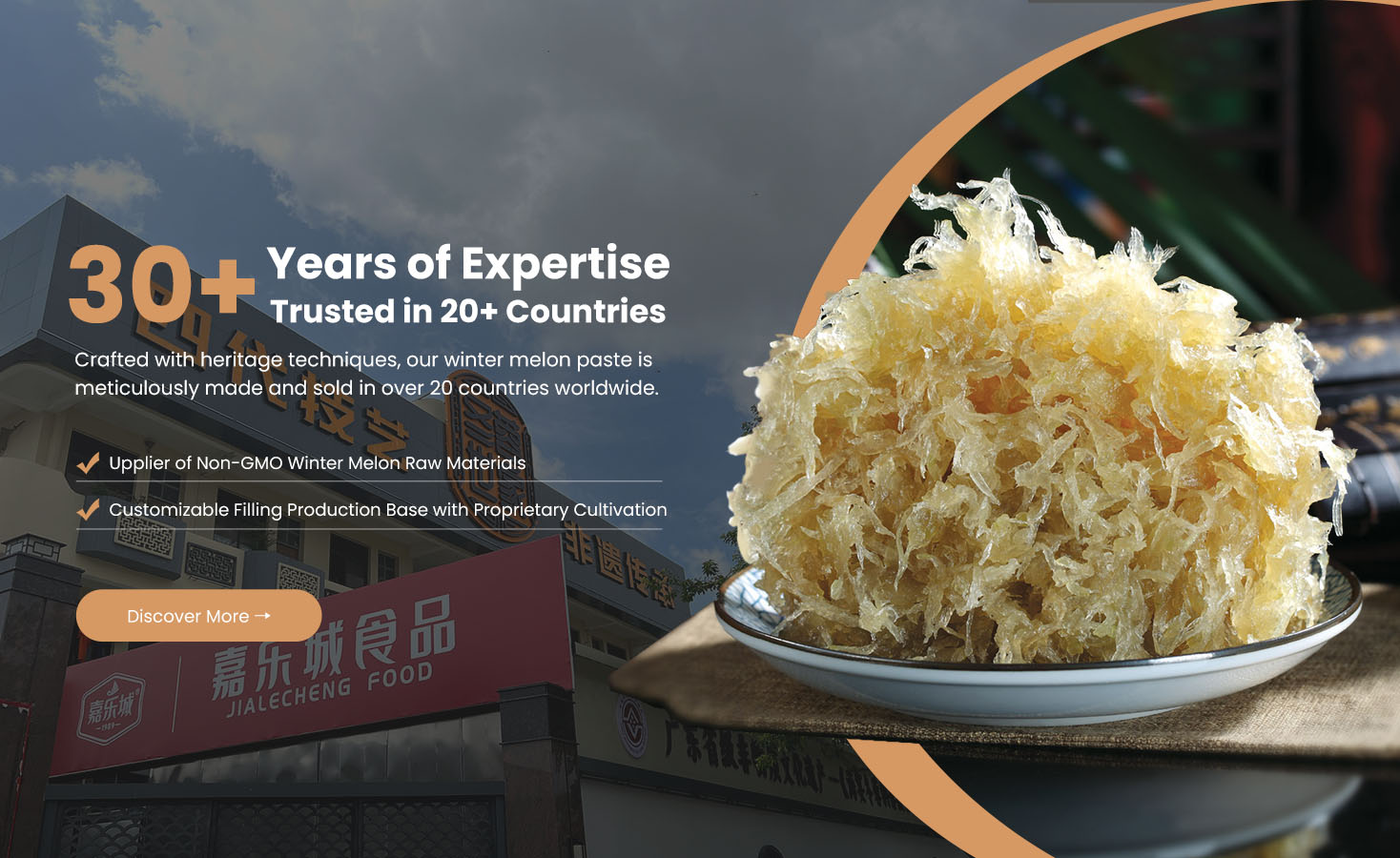
Professional manufacturers such as Jialecheng Foods focus on the research, production, and global supply of Winter Melon Paste Fillings used in bakery and confectionery industries. Founded in 1989, the company has decades of experience in winter melon paste processing and operates modern production facilities with structured quality management systems.
The factory integrates raw material cultivation, processing, and filling development, ensuring a stable supply of high-quality winter melon for industrial food applications. Its production base of more than 6,000 square meters includes specialized processing lines and food-grade manufacturing conditions designed for export markets.
Such vertically integrated production enables better control of moisture levels and energy efficiency throughout the entire paste manufacturing process.
Manufacturing Process Overview
Winter melon paste production generally involves several sequential stages designed to convert fresh winter melon into a stable filling suitable for large-scale bakery manufacturing.
Typical process stages include:
Raw material cleaning and sorting
Peeling and pulp removal
Cutting or shredding
Controlled cooking and sugar infusion
Dehydration and concentration
Continuous stirring and texture adjustment
Cooling and packaging
These steps combine traditional cooking techniques with industrial processing technology to maintain the natural aroma, fiber structure, and moisture balance of the final paste.
Among these stages, the concentration and dehydration phase has the greatest impact on moisture retention and energy consumption.
Key Causes Of Moisture Loss During Production
Moisture loss occurs mainly during the heating and evaporation stages. Several operational factors contribute to this issue.
Excessive Heating Temperature
When the cooking temperature is too high, water evaporates rapidly from the paste surface. This causes uneven dehydration, leading to a dry texture and loss of natural winter melon flavor.
Maintaining controlled heating profiles and using gradual temperature increases helps preserve internal moisture while still achieving the required paste density.
Long Cooking Duration
Traditional paste production methods may require long cooking times to reach the desired concentration level. Prolonged heating increases energy consumption and accelerates moisture evaporation.
Industrial manufacturers reduce this problem by optimizing batch size, heating efficiency, and stirring speed.
Poor Stirring Control
Uneven stirring can create localized overheating zones inside the paste mixture. These hotspots accelerate moisture loss and increase energy waste.
Continuous uniform stirring ensures consistent heat distribution and stable moisture retention throughout the batch.
Energy Consumption In Winter Melon Paste Processing
Energy use in winter melon paste production mainly comes from:
Steam heating systems
Industrial cooking kettles
Dehydration equipment
Mechanical stirring systems
Energy costs rise significantly when evaporation efficiency is low or when production lines lack automated temperature control.
Large-scale manufacturers therefore focus on process optimization to reduce overall energy intensity per production batch.
Technologies That Improve Moisture Retention And Energy Efficiency
Modern food ingredient manufacturers implement several technologies to address these challenges.
Controlled Low-Temperature Concentration
Using controlled lower-temperature heating combined with longer evaporation surfaces allows water removal while protecting the natural fiber structure of winter melon.
This method reduces both moisture loss and flavor degradation.
Vacuum Cooking Systems
Vacuum evaporation technology lowers the boiling point of water inside the paste mixture. This allows dehydration at significantly lower temperatures.
Benefits include:
Reduced energy consumption
Improved aroma preservation
Better control of moisture levels
Reduced caramelization risk
Automated Moisture Monitoring
Advanced production lines integrate moisture monitoring sensors that measure water content during cooking.
This enables operators to stop heating at the optimal concentration point, avoiding over-processing and unnecessary energy use.
Optimized Stirring Technology
Industrial paste kettles often use variable-speed stirring systems. These systems maintain uniform heat distribution and prevent burning or excessive evaporation at the bottom of the cooking vessel.
This also ensures that winter melon fibers remain evenly distributed throughout the paste.
Raw Material Standards And Supply Chain Stability
Moisture control begins with raw material quality. Winter melon with stable moisture content and consistent fiber density produces more predictable processing results.
Manufacturers with dedicated winter melon cultivation bases can maintain raw material standards and reduce variability during production. This also helps improve processing efficiency and reduce energy consumption during dehydration.
Stable raw material supply is particularly important for large-scale bakery manufacturers that rely on consistent paste viscosity and sweetness.
Quality Control Checkpoints During Production
To ensure consistent paste performance in industrial baking applications, manufacturers implement multiple quality control checkpoints:
Raw material inspection for freshness and moisture level
Sugar ratio control during candied processing
Temperature monitoring during cooking
Moisture testing before packaging
Texture and viscosity evaluation for filling performance
These checkpoints help maintain batch-to-batch consistency and reduce production waste.
For international buyers, such quality control systems also provide assurance that the filling will perform consistently during high-temperature baking processes.
OEM And ODM Production Customization
Many bakery manufacturers require customized winter melon paste formulations for different markets and product types.
Structured OEM and ODM services allow buyers to request:
Adjusted sweetness levels
Different fiber textures
Modified moisture content
Custom flavors blended with fruit or spices
Flexible formulation development enables food brands to create differentiated bakery products while maintaining efficient large-scale production.
Export Market Compliance And Bulk Supply Considerations
For international food processing companies, sourcing winter melon paste from an established manufacturer provides several advantages:
Stable bulk supply capacity
Export-ready food safety systems
Standardized packaging options
Consistent moisture specifications for industrial baking
Professional suppliers also implement internationally recognized quality systems such as ISO-based management processes and food manufacturing certifications, ensuring that their products meet global export requirements.
This level of compliance is essential for companies exporting bakery products to multiple international markets.
Conclusion
Reducing moisture loss and energy consumption during winter melon paste production requires a combination of raw material control, optimized cooking processes, and modern industrial equipment.
Key strategies include:
Controlled heating and evaporation systems
Vacuum concentration technology
Automated moisture monitoring
Efficient stirring and mixing equipment
Strict production quality control
Manufacturers with integrated cultivation bases, modern production lines, and structured quality systems are better equipped to deliver consistent winter melon paste for industrial bakery applications.
For large-scale food processors, selecting a specialized manufacturer with strong production management and OEM customization capability helps ensure stable product performance, lower manufacturing costs, and reliable supply for international markets.