



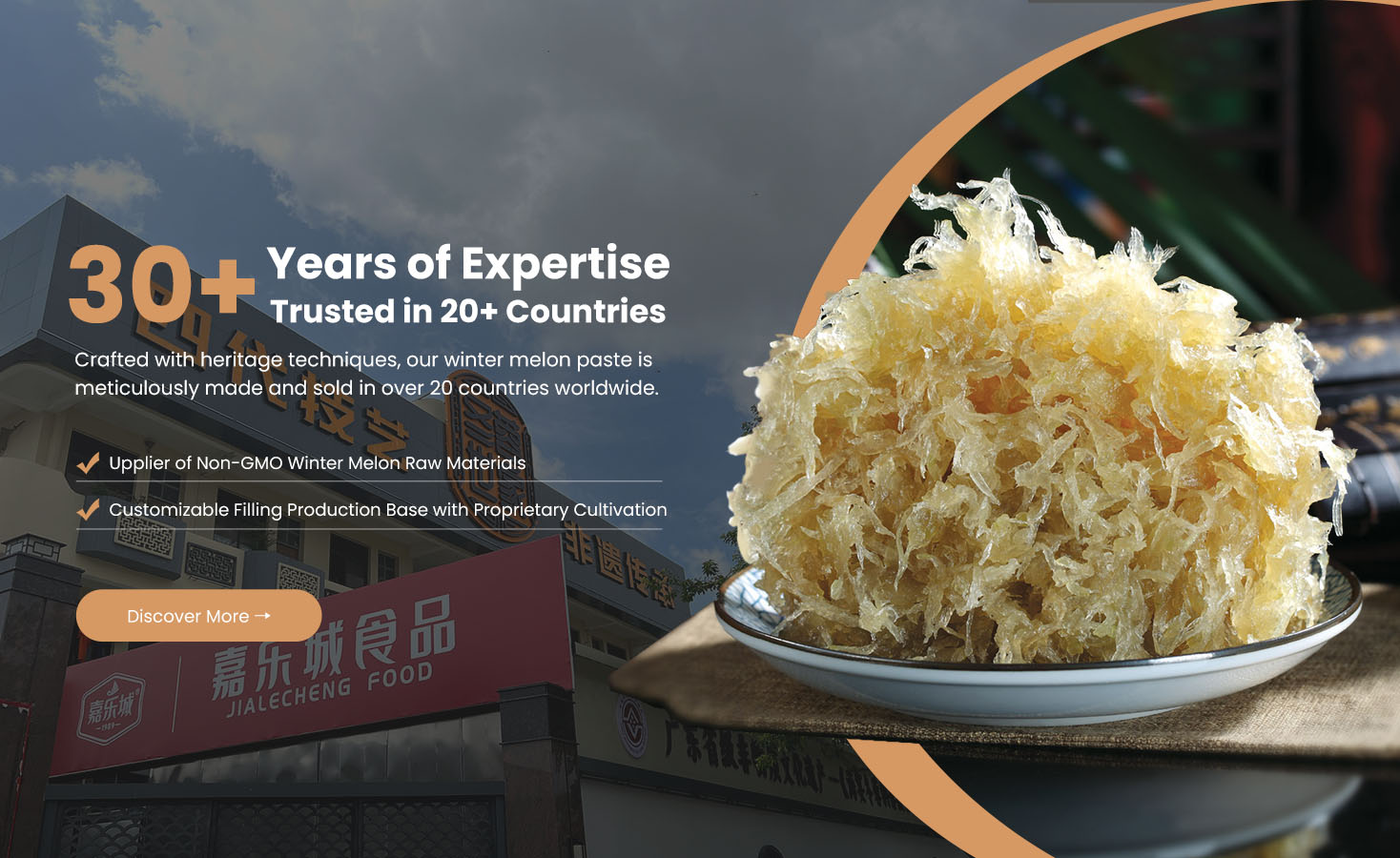
Fillings play a critical role in the texture, shelf life, and processing performance of bakery products. Industrial bakeries and pastry manufacturers often choose between winter melon-based fillings and fruit-based fillings depending on formulation stability, sweetness balance, processing behavior, and cost efficiency. Understanding the differences between these two filling categories helps food processors select the most suitable ingredient for large-scale production.
Table of Contents
- Raw Material Composition Differences
- Stability During Baking Processes
- Moisture Control And Shelf Stability
- Texture And Structural Performance
- Flavor Profile And Formulation Flexibility
- Manufacturing Process Considerations
- Bulk Supply And Industrial Procurement Considerations
- Export Compliance And Quality Control
- Conclusion
Raw Material Composition Differences
Winter Melon Fillings are primarily produced from mature winter melon pulp that undergoes controlled cooking, sugar infusion, and concentration to create a dense paste suitable for bakery applications. The natural fiber structure of winter melon remains stable after cooking, giving the paste a smooth yet structured texture.
Fruit-based fillings, on the other hand, are produced from fruits such as strawberry, blueberry, apple, or mango. These fruits contain higher natural acidity, volatile aroma compounds, and varying levels of natural pectin. Because of these characteristics, fruit fillings often require stabilizers, thickeners, or modified starch to maintain consistency during industrial processing.
Manufacturers specializing in winter melon paste production generally rely on a stable agricultural supply chain and dedicated processing lines to maintain consistent pulp quality and moisture levels.
Stability During Baking Processes
One of the most important differences between winter melon-based fillings and fruit-based fillings is thermal stability during baking.
Winter Melon Paste Fillings are known for their excellent heat resistance. During baking processes such as mooncake production, pastry baking, and filled bun manufacturing, winter melon paste maintains its structure without excessive melting or moisture release. The fiber matrix formed during concentration helps the filling retain its shape inside baked products.
Fruit fillings typically contain higher water content and natural acids. When exposed to high baking temperatures, these fillings may release moisture, leading to filling leakage or structural softening. For this reason, fruit fillings often require additional thickening agents or pectin stabilization to maintain baking stability.
In high-temperature bakery applications, winter melon paste therefore offers a more predictable and consistent filling performance.
Moisture Control And Shelf Stability
Moisture management is another key factor in filling formulation.
Winter melon paste is usually concentrated to a relatively low moisture level during production. The sugar infusion process combined with dehydration creates a filling with stable water activity. This contributes to longer shelf life and reduced microbial risk when used in packaged bakery products.
Fruit fillings often retain higher moisture content because their flavor and texture rely on preserving the natural fruit characteristics. While this improves taste freshness, it also increases the need for preservatives or modified formulations to maintain shelf stability during storage and transportation.
For export-oriented bakery production, stable moisture control in Winter Melon Fillings provides advantages in logistics and product consistency.
Texture And Structural Performance
Texture plays a significant role in the final consumer experience of filled bakery products.
winter melon fillings provide a dense, uniform texture that spreads evenly inside pastries and mooncakes. The fiber content allows the paste to hold its shape during cutting and packaging, which is particularly important for automated bakery production lines.
Fruit fillings typically produce a softer or more fluid texture depending on the fruit variety. Berry fillings may contain fruit particles, while apple fillings may rely on diced fruit pieces suspended in gel. These textures can enhance visual appeal but may require additional stabilizers to maintain uniform distribution.
For manufacturers producing high-volume bakery items, winter melon paste often offers better consistency in automated filling equipment.
Flavor Profile And Formulation Flexibility
Flavor characteristics also influence filling selection.
Winter melon paste has a mild and neutral base flavor. This allows manufacturers to easily modify the formulation by adjusting sweetness levels or adding additional ingredients such as nuts, seeds, or other flavor components. The neutral flavor profile makes it highly adaptable for different regional bakery products.
Fruit fillings deliver stronger natural flavors and aromas. While this can create distinctive product variations, it also limits formulation flexibility because the dominant fruit taste must remain balanced.
For food companies developing customized bakery products, winter melon paste provides a flexible formulation base that can be adjusted for different markets.
Manufacturing Process Considerations
The production processes of winter melon fillings and fruit fillings differ significantly in terms of processing control.
Winter melon paste production typically involves:
Raw material preparation
Shredding or pulping
Sugar infusion
Controlled cooking
Dehydration and concentration
Continuous stirring
Cooling and packaging
The resulting paste achieves a stable viscosity and moisture level suitable for industrial baking.
Fruit fillings require additional processing considerations such as pectin activation, acidity balance, flavor retention, and color stabilization. These steps can increase formulation complexity and production cost.
Manufacturers with specialized winter melon processing experience can maintain consistent product specifications for bakery and confectionery manufacturers.
Bulk Supply And Industrial Procurement Considerations
From a sourcing perspective, bakery companies often evaluate fillings based on supply reliability, formulation consistency, and customization capability.
Winter melon paste suppliers with integrated agricultural sourcing and dedicated processing facilities can offer stable bulk supply for large food production projects. This is particularly important for seasonal bakery products such as mooncakes that require large quantities of filling within short production cycles.
Fruit fillings may face seasonal supply fluctuations depending on fruit harvest conditions. This can affect price stability and raw material availability.
For large bakery factories or food brands producing high-volume pastry products, winter melon paste can provide a more predictable supply chain.
Export Compliance And Quality Control
International bakery manufacturers must ensure that filling ingredients meet food safety and export standards.
Professional winter melon paste producers typically implement strict quality control systems covering raw material inspection, cooking temperature monitoring, moisture control, and finished product testing. These processes ensure that the paste maintains consistent texture and microbial safety.
Food manufacturers sourcing fillings for export markets also evaluate compliance with international food safety management systems and ingredient traceability requirements.
Reliable suppliers with structured production management and standardized manufacturing processes can provide stable filling ingredients suitable for global bakery distribution.
Conclusion
Winter melon-based fillings and fruit-based fillings each serve important roles in bakery product formulation, but their stability and processing characteristics differ significantly.
Winter melon paste offers strong advantages in thermal stability, moisture control, texture consistency, and bulk supply reliability. These characteristics make it particularly suitable for industrial bakery production and export-oriented food manufacturing.
Fruit fillings provide vibrant flavor profiles and visual appeal but may require more complex stabilization techniques to achieve similar processing stability.
For bakery manufacturers seeking consistent filling performance, long shelf stability, and flexible formulation options, winter melon-based fillings remain a reliable ingredient choice for large-scale production environments.