


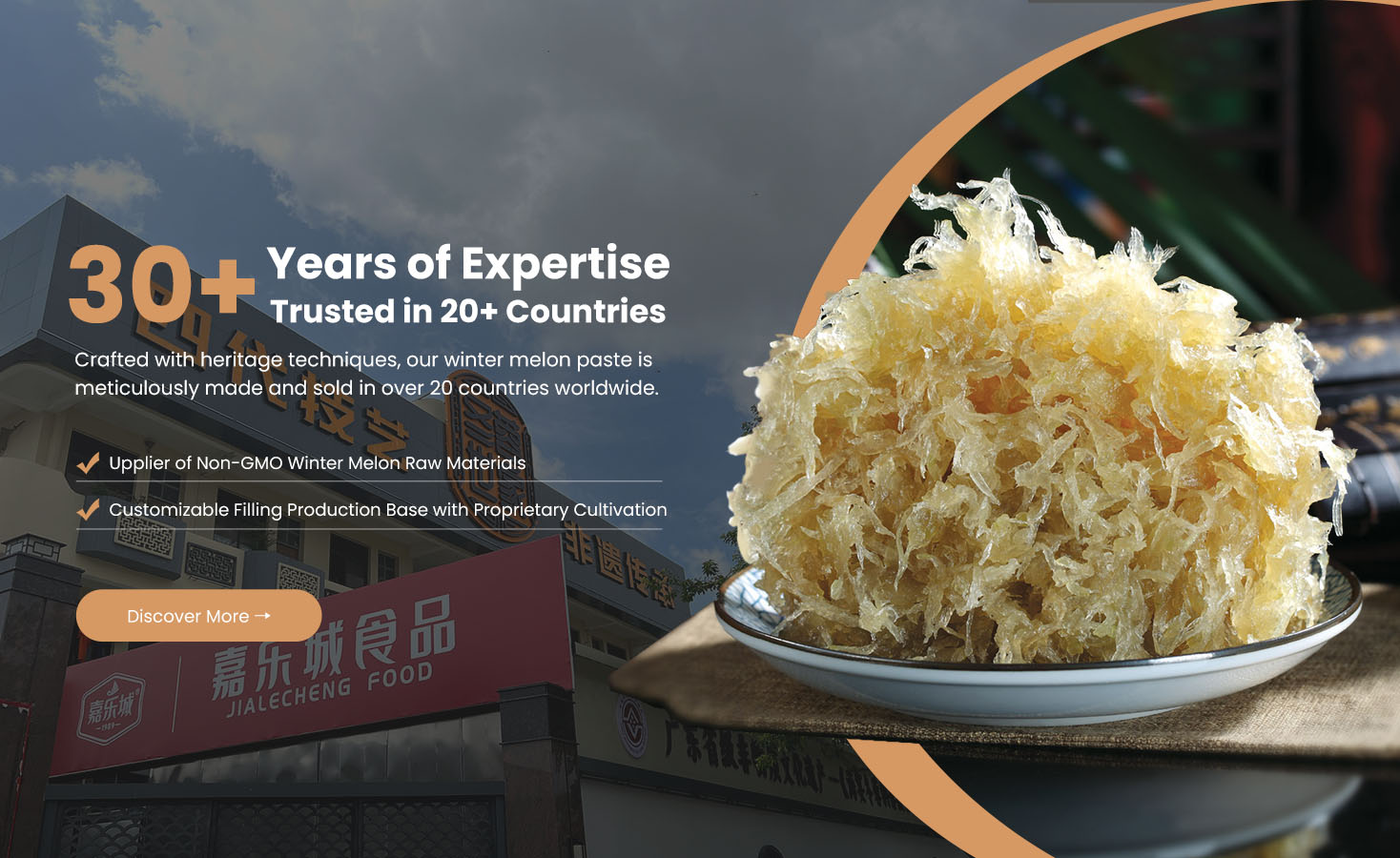
Winter melon pulp is widely used as a core ingredient in bakery fillings, pastry products, traditional desserts, and processed food ingredients. In industrial food production, manufacturers often combine winter melon pulp with selected food additives to improve stability, texture, sweetness balance, and shelf life. These additives must comply with food safety regulations while supporting large-scale processing efficiency.
Professional winter melon pulp manufacturers with integrated production facilities typically design formulations that balance natural raw materials with controlled additive use. This ensures that the finished product maintains consistent quality for bakery manufacturers and food processors sourcing bulk ingredients.
Table of Contents
- Sweeteners Used In Winter Melon Pulp Formulations
- Texture Stabilizers And Thickening Agents
- Moisture Retention And Humectants
- Preservatives For Shelf Stability
- Color Stabilizers And Flavor Enhancers
- Manufacturing Control And Quality Assurance
- Bulk Supply And Formulation Customization
- Export Compliance Considerations
- Conclusion
Sweeteners Used In Winter Melon Pulp Formulations
Sweeteners are among the most common additives in winter melon pulp processing. The natural flavor of winter melon is relatively mild, so sugar components are used to develop the characteristic taste of Winter Melon Paste Fillings.
Common sweeteners include:
Sucrose
Sucrose remains the most widely used sweetener in winter melon pulp formulations. It provides stable sweetness, supports the caramelization process during cooking, and contributes to the dense texture required for bakery fillings. Sucrose also helps reduce water activity, which improves the storage stability of the finished paste.
Glucose Syrup
Glucose syrup is frequently used alongside sucrose to adjust sweetness intensity and control crystallization during the concentration process. In large-scale production, glucose syrup helps maintain a smooth paste texture and prevents graininess during long storage periods.
Maltose Syrup
Maltose syrup is commonly used in traditional pastry fillings because it delivers moderate sweetness and a glossy appearance. It also improves the stretchability of the paste, which helps maintain a uniform filling structure during pastry processing.
Texture Stabilizers And Thickening Agents
To maintain consistent viscosity and structural stability, winter melon pulp formulations often include stabilizers and thickening agents. These additives help maintain paste texture during cooking, storage, and baking.
Modified Starch
Modified starch is widely used in industrial filling production. It enhances the body of winter melon paste and improves resistance to heat during baking processes such as mooncake production. Modified starch also helps maintain uniform viscosity in automated filling equipment.
Pectin
Pectin is a natural stabilizer derived from fruit sources. It improves gel formation and moisture retention in winter melon pulp formulations. When used in controlled amounts, pectin helps maintain a stable texture without affecting the natural appearance of the filling.
Carrageenan
Carrageenan is sometimes used to enhance structural firmness and prevent moisture separation during storage. In winter melon pulp formulations, it helps maintain uniform paste density in bulk packaging conditions.
Moisture Retention And Humectants
Maintaining proper moisture levels is essential for preventing the filling from becoming too dry during processing or storage.
Glycerol
Glycerol is commonly used as a humectant in paste fillings. It helps retain moisture inside the winter melon pulp, maintaining a soft texture and preventing excessive dehydration during storage.
Sorbitol
Sorbitol functions both as a mild sweetener and a moisture stabilizer. It helps reduce water activity fluctuations while maintaining smooth texture in concentrated paste formulations.
Preservatives For Shelf Stability
Industrial winter melon pulp products intended for export or long-distance distribution may include preservatives to ensure microbial safety and extended shelf life.
Potassium Sorbate
Potassium sorbate is widely used in bakery filling formulations to inhibit mold and yeast growth. It is particularly effective in sugar-rich paste products stored under ambient conditions.
Sodium Benzoate
Sodium benzoate may also be used in small amounts to prevent microbial growth in concentrated fruit and vegetable pastes. Its application depends on the formulation and target export regulations.
Manufacturers must carefully control preservative levels to comply with international food safety standards.
Color Stabilizers And Flavor Enhancers
Although winter melon pulp typically has a natural pale color, manufacturers sometimes use stabilizers or flavor modifiers to maintain consistent product appearance and taste.
Natural Flavor Enhancers
In certain formulations, mild flavor enhancers may be used to strengthen the characteristic aroma of winter melon paste without overpowering the product's natural taste.
Food-Grade Color Stabilizers
Some formulations include minimal color stabilizers to ensure that the paste maintains a consistent visual appearance during cooking and storage.
Manufacturing Control And Quality Assurance
Professional winter melon pulp manufacturers implement strict formulation control to ensure that additives support product performance without compromising safety or taste.
Typical quality control measures include:
Raw material inspection before processing
Precise additive ratio control during formulation
Cooking temperature monitoring during concentration
Moisture level testing before packaging
Finished product microbial testing
These procedures ensure that the additives function effectively while maintaining compliance with international food safety requirements.
Bulk Supply And Formulation Customization
Large bakery manufacturers often require customized winter melon pulp formulations based on their product lines. For example, mooncake producers may request fillings with specific sweetness levels, moisture content, or baking stability.
Manufacturers offering OEM and ODM services can adjust additive combinations to meet these requirements. Custom formulations may include modified sugar ratios, specific stabilizer blends, or reduced additive systems designed for clean-label products.
For international buyers sourcing winter melon pulp in bulk, suppliers with integrated production facilities and structured formulation management can provide consistent ingredient performance across multiple production batches.
Export Compliance Considerations
Food additives used in winter melon pulp must comply with regulatory frameworks in target export markets. Manufacturers exporting to global markets must ensure that additives meet international food safety standards and labeling requirements.
Compliance may involve adherence to food safety systems such as HACCP-based manufacturing management and internationally recognized ingredient standards. Proper documentation of additive use is also essential for food processors importing winter melon pulp for commercial production.
Conclusion
Food additives play an important role in optimizing winter melon pulp formulations for industrial food manufacturing. The most commonly used additives include sweeteners such as sucrose and glucose syrup, stabilizers such as modified starch and pectin, moisture regulators such as glycerol and sorbitol, and preservatives like potassium sorbate.
When used under strict formulation control, these additives help improve texture stability, moisture balance, shelf life, and processing performance in bakery and dessert applications.
For large-scale food processors and bakery manufacturers, sourcing winter melon pulp from an experienced manufacturer with strong formulation expertise and reliable bulk production capacity helps ensure consistent product performance and regulatory compliance in international markets.