



What Are The Strategies for Using Natural Antioxidants To Extend The Shelf Life Of Winter Melon Products?
Natural antioxidants work best when they are part of a full manufacturing system, not a single ingredient fix. For winter melon paste, filling, and candied winter melon products, oxidation control starts with raw material freshness, controlled cutting, low temperature concentration, fast cooling, and oxygen managed packing. Common natural options include ascorbic acid systems, mixed tocopherols, and rosemary extract, but selection must match sugar level, oil content, target flavor, and export market rules. FDA regulations recognize several antioxidant substances for food use under good manufacturing practice, and rosemary extract is approved in the EU as E392 for defined food applications.
Table of Contents
Why Manufacturer Capability Matters More Than Trading
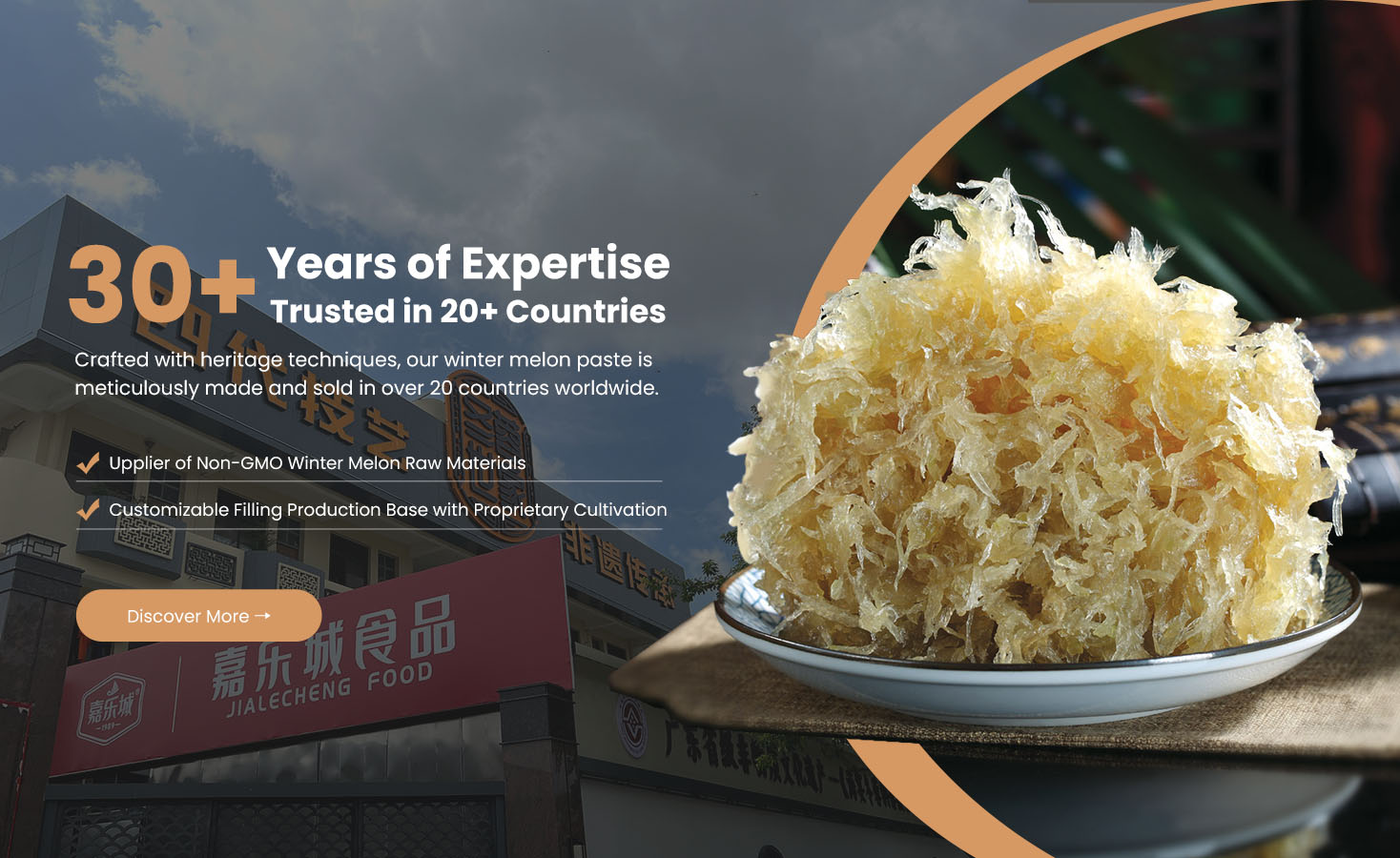
A direct manufacturer can adjust formula, moisture, sweetness, fiber texture, and pack format during product development. That matters because shelf life is influenced by more than antioxidant dosage. JIALECHENG was established in 1989 and focuses on Winter Melon Paste Filling R&D, production, and sales, with OEM and ODM support for recipe and packaging customization. Its pastry filling products show moisture control in the 40 to 43 percent range, which is a critical baseline for texture stability and shelf life design.
Manufacturing Process Overview
A practical strategy for natural antioxidants in winter melon products includes:
selecting stable raw winter melon with consistent solids
reducing oxidation during cutting and concentration
adding natural antioxidants at the correct thermal stage
controlling final water activity, pH, and filling viscosity
using oxygen barrier packaging for bulk supply
validating shelf life through retained sample testing
JIALECHENG also highlights monitored processing, inline metal detection, and batch traceability, which are stronger indicators of a manufacturer than a trader.
Quality Control Checkpoints
| Checkpoint | Shelf life impact |
|---|---|
| Raw material screening | Reduces unstable batches |
| Moisture control | Helps limit texture drift |
| Antioxidant addition timing | Protects color and flavor |
| Metal detection and hygiene | Supports food safety |
| Oxygen barrier packing | Slows oxidation |
| Batch traceability | Improves export compliance |
OEM And ODM Process For Bulk Supply
For project sourcing, buyers should confirm formula customization, antioxidant declaration, label compliance, pack sizes, traceability records, and cold chain or storage conditions. JIALECHENG states that OEM and ODM projects can adjust sweetness, moisture content, and packaging format, which is useful for private label, industrial bakery filling, and export market development.
Material Standards And Export Compliance
Natural antioxidant strategies must align with market rules. Ingredient lists in the United States must declare components by common or usual name, and international buyers increasingly expect HACCP, GMP, ISO based food safety systems, origin traceability, and food grade packaging documentation. For a winter melon products manufacturer, that means the best shelf life strategy combines formula design, process control, packaging validation, and export ready documentation rather than relying on preservatives alone.
Conclusion
The most effective approach to extend the shelf life of winter melon products is to combine natural antioxidants with disciplined manufacturing. That includes controlled moisture, precise processing, suitable packaging, and verified compliance. For buyers comparing a winter melon paste manufacturer with a trader, the supplier that can document OEM development, bulk supply stability, quality checkpoints, and export market compliance will usually deliver lower long term risk and more consistent results.