



Why Is Winter Melon Filling Widely Used In Pastries
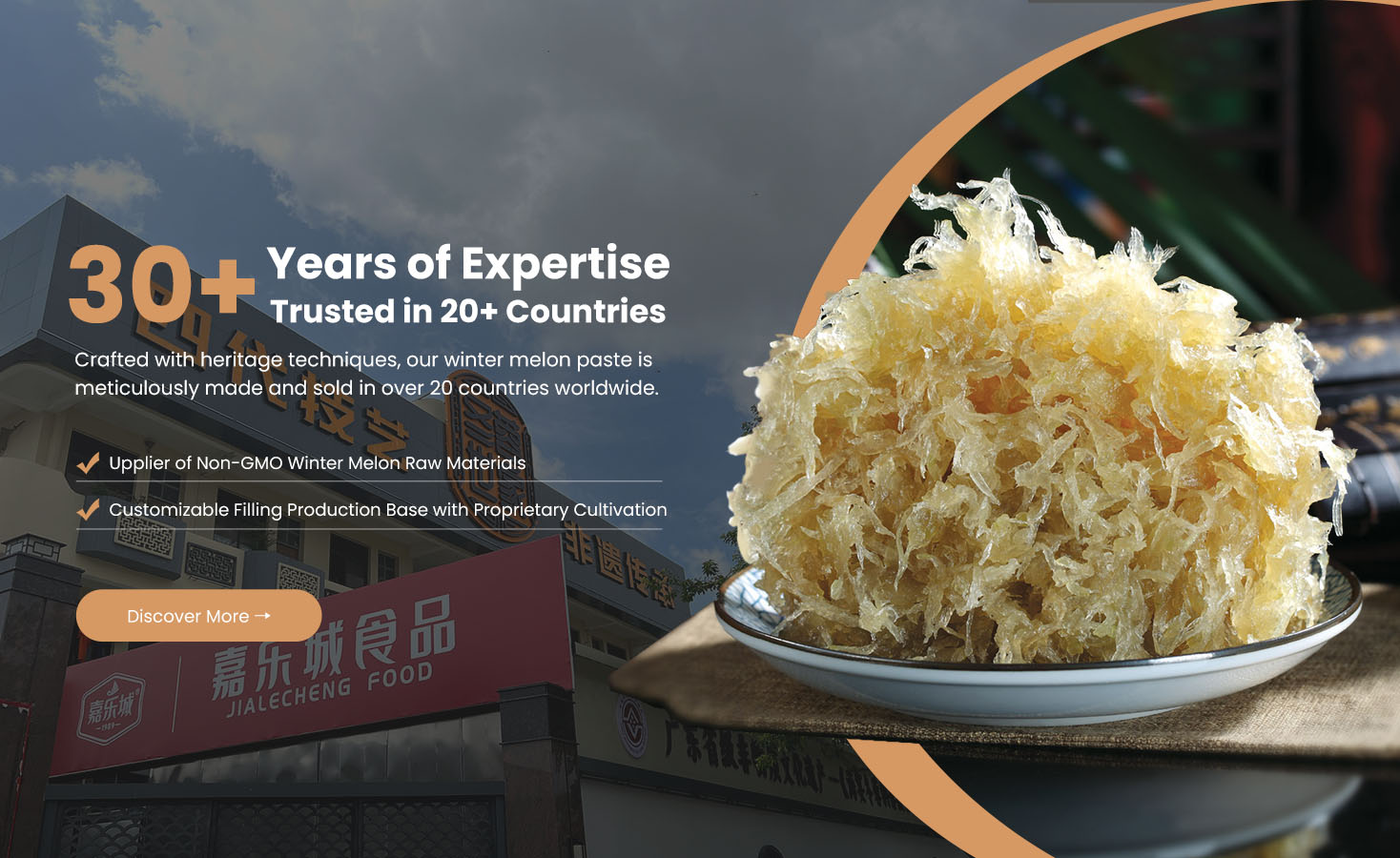
Winter Melon Filling is widely used in pastries because it combines a clean, mild sweetness with a texture that stays soft, cohesive, and stable during shaping and baking. On JIALECHENG’s pastry product page, the filling is described as light golden to light amber, soft and delicate, with moderate winter melon fiber and natural gloss. The same page also notes that the formula is optimized for high-temperature baking, with good heat resistance and adhesion, helping reduce oil leakage, collapse, and deformation in finished pastries.
Table of Contents
Why It Fits Pastry Manufacturing So Well
In pastry production, a filling must do more than taste good. It needs to deposit smoothly, hold shape in forming, stay stable in the oven, and keep an appealing bite after cooling. JIALECHENG states that its Winter Melon Filling uses advanced homogenization technology to keep the texture smooth while retaining natural fiber, which improves layering and overall pastry flavor. This balance between smoothness and structure is one reason winter melon filling performs well in products such as wife cakes, Su-style pastries, and Cantonese-style mooncakes.
Manufacturer Vs Trader
The reason a direct manufacturer matters is simple: pastry filling performance depends on process control. JIALECHENG presents itself as an end-to-end producer with in-house melon farming, strict hygiene standards, and OEM and ODM capability. That means it can manage raw material quality, moisture consistency, sweetness level, and packaging format inside one production system, while a trader usually has less control over those variables. For repeated pastry production, that difference directly affects batch consistency and supply stability.
Manufacturing Process Overview
JIALECHENG’s public process flow shows the basic production route as clean, peel, remove the pulp, cut into shreds, cook, dehydrate, stir fry, and finish. Its pastry filling page adds that the product is made from selected fresh winter melons refined through washing, cutting, candying, and multiple boiling processes. These steps help create the texture profile that pastry manufacturers need: soft enough to bite cleanly, but stable enough to resist collapse during baking. The product page lists moisture at 40 to 43 percent and supports OEM and ODM supply, showing that the filling is designed for controlled commercial use rather than only traditional handmade production.
Quality Control Checkpoints
| Checkpoint | Why it matters in pastries |
|---|---|
| Raw material selection | Helps keep sweetness and fiber consistent |
| Moisture control | Reduces leakage and collapse |
| Homogenization | Improves smoothness and layering |
| Heat resistance testing | Supports baking stability |
| Packaging options | Matches different production scales |
| Batch traceability | Improves repeat-order reliability |
These checkpoints are especially important for bulk supply. JIALECHENG offers 5 kg, 2.5 kg, and 250 g packaging for pastry filling, which helps different production models manage usage and storage more efficiently.
OEM ODM Process And Project Sourcing Checklist
For pastry projects, winter melon filling is popular because it is highly adaptable. JIALECHENG highlights OEM and ODM services on its site, and its pastry page notes that the filling can pair with nuts, bean paste, and coconut flakes to support diverse flavor development. A practical sourcing checklist should include target sweetness, fiber level, moisture range, baking temperature, pack size, lead time, and batch coding requirements. When these details are controlled by the manufacturer, pastry output tends to be more stable across repeat orders and seasonal demand cycles.
Material Standards Used And Export Market Compliance
Another reason winter melon filling remains widely used is that it can fit export-oriented production when supported by proper hygiene and labeling systems. Codex General Principles of Food Hygiene identifies essential food hygiene principles across the food chain and recommends a HACCP-based approach to food safety. For markets such as the United States, FDA labeling rules require ingredients to be declared by common or usual name and listed in descending order by weight. For pastry filling suppliers, this means product usability and compliance readiness need to move together.
Conclusion
Winter melon filling is widely used in pastries because it delivers the combination pastry manufacturers need most: mild flavor, smooth yet structured texture, baking stability, and strong compatibility with both traditional and blended formulas. JIALECHENG’s integrated production model, homogenization process, OEM and ODM flexibility, and packaging options make that value even stronger for commercial pastry supply.