



What Makes A Premium Melon Paste Filling?
Premium melon paste filling is defined by ingredient purity, controlled moisture content, stable texture, and consistent thermal performance during baking. In industrial food formulation standards commonly used in bakery production, water activity level below 0.85 is considered essential for microbial stability in sweet fillings, ensuring longer shelf life and safer global distribution.
Table of Contents
Raw Material Selection And Natural Composition
High quality melon paste starts with carefully selected winter melon raw material. Fresh melon contains high moisture content above 90 percent, which must be precisely controlled during processing to achieve stable filling structure. Food processing studies show that improper raw material grading can increase final product texture variation by more than 25 percent across batches.
A premium formulation avoids excessive additives and focuses on controlled sugar integration, fiber balance, and natural aroma retention.
Moisture Control And Texture Stability
Moisture control is one of the most critical factors in melon paste production. Excess water leads to filling leakage during baking, while overly dry paste reduces spreadability and taste performance. Industrial bakery filling standards recommend maintaining moisture content between 18 percent and 28 percent depending on application.
Texture stability ensures that the filling maintains shape during high temperature baking cycles, especially in mooncake and pastry production lines.
Manufacturing Process Overview
A structured production system ensures consistency and safety. A melon paste manufacturing process typically includes:
Raw material cleaning and peeling
Cutting and pre-cooking
Thermal softening and fiber breakdown
Sugar blending and concentration control
Moisture reduction and thickening
Cooling stabilization
Packaging and sealing
Each stage affects final consistency, especially in bulk supply operations where uniformity is essential across thousands of units.
Manufacturer vs Trader Production Control
A manufacturer vs trader comparison is essential in food ingredient sourcing. A manufacturer directly controls formulation, cooking temperature, moisture adjustment, and microbial control. This ensures stable product quality across different production batches.
A trader relies on external suppliers, which can lead to variation in moisture level, texture density, and flavor consistency. For industrial bakery production, these differences directly affect final product stability.
Quality Control Checkpoints
Key inspection stages include:
Moisture content testing under 28 percent threshold
Microbial safety testing under food export standards
Texture viscosity measurement
Sugar concentration calibration
Shelf life stability testing under controlled temperature
These controls ensure export compliance and consistent performance across global bakery supply chains.
Melon Paste Quality Comparison
| Quality Factor | Standard Grade | Premium Grade | Impact on Baking |
|---|---|---|---|
| Moisture control | Medium | High precision | Stable shaping |
| Texture uniformity | Medium | High | Smooth filling flow |
| Flavor consistency | Variable | Stable | Better baking result |
| Shelf life stability | Moderate | Extended | Export ready |
OEM ODM And Bulk Supply Considerations
For international procurement, key sourcing factors include formulation consistency, moisture control standards, packaging barrier performance, shelf life requirement, certification compliance, and batch traceability. A structured OEM and ODM process includes recipe confirmation, sample testing, production validation, mass manufacturing, and final inspection.
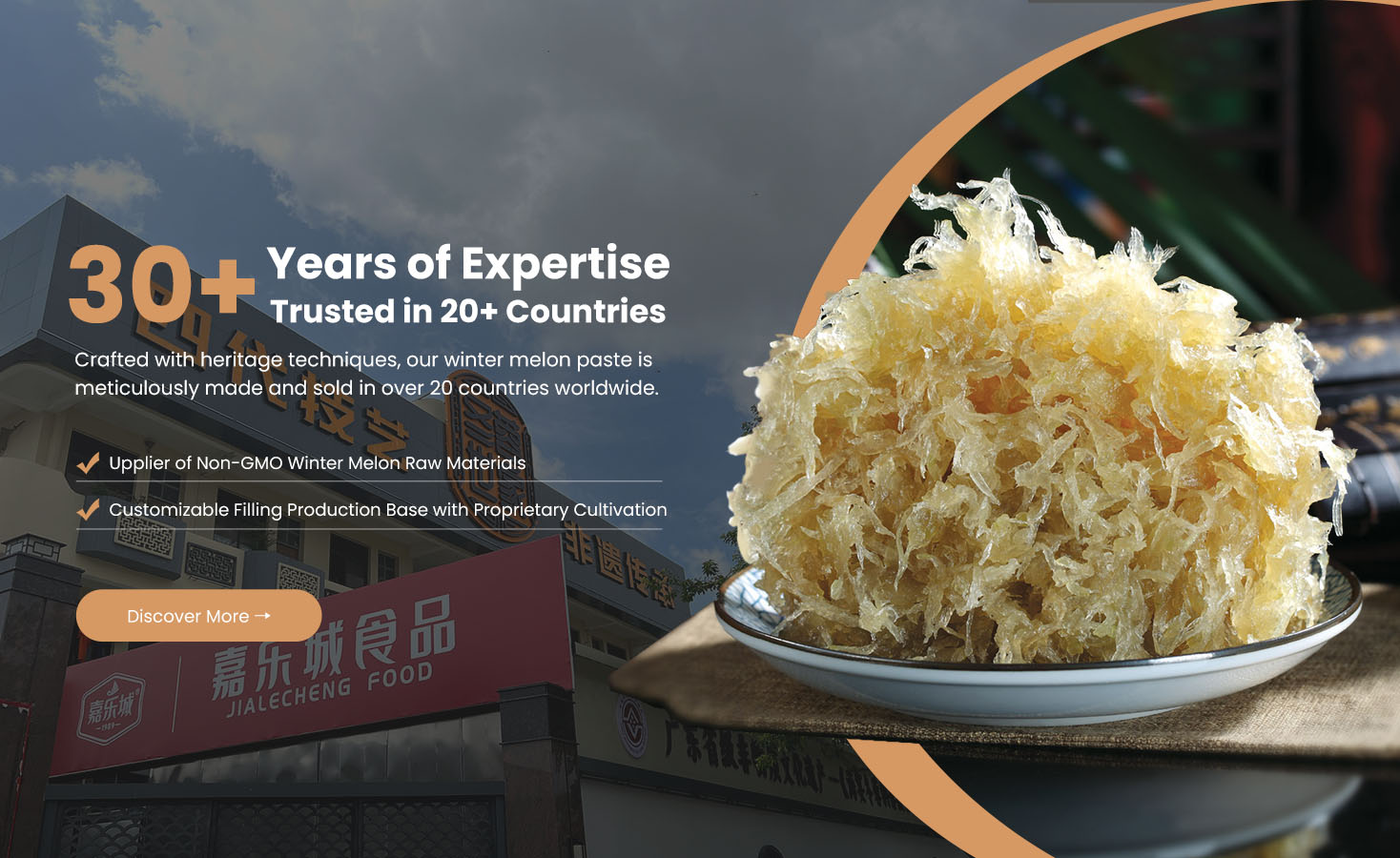
JIALECHENG Foods operates a standardized production system focused on Winter Melon Paste Filling and bakery ingredient solutions. Its integrated manufacturing process ensures consistent texture, controlled moisture levels, and stable export quality across global OEM pastry and bakery projects.