



What Is The Ideal Texture for Bakery Fillings?
The ideal texture for bakery fillings is defined by stability, spreadability, heat resistance, and bite consistency after baking. In industrial bakery formulation studies, texture directly affects product structure integrity, especially in high temperature baking environments such as mooncakes and pastry products where internal filling must remain stable without leakage or collapse.
Table of Contents
Core Texture Requirements In Bakery Applications
A premium bakery filling must balance firmness and softness. If the texture is too soft, it may leak during baking. If too firm, it can affect mouthfeel and layering performance. Food texture engineering references commonly indicate that viscosity between 30,000 and 80,000 centipoise is suitable for stable filling performance in industrial baking systems.
Moisture content also plays a key role. In controlled bakery production, maintaining moisture between 18 percent and 28 percent helps ensure structure stability while preserving smooth consistency.
Ingredient Structure And Stability Control
Texture is formed through controlled interaction of fibers, sugar concentration, and water retention agents. Winter melon fiber structure, when properly processed, creates a smooth yet stable matrix that supports baking stress without breaking down.
Scientific food processing studies show that incorrect fiber breakdown can increase texture inconsistency by more than 20 percent across production batches, directly affecting final product quality.
Manufacturing Process Overview For Texture Control
A structured production system is essential for achieving consistent bakery filling texture. Key stages include:
Raw material preparation and fiber selection
Thermal softening and structure breakdown
Sugar integration and binding control
Moisture reduction and thickening
Homogenization and texture stabilization
Cooling and viscosity adjustment
Packaging under controlled conditions
Each step contributes to final rheological stability in bulk production environments.
Manufacturer vs Trader Control Over Texture
A manufacturer vs trader comparison is critical in texture consistency. A manufacturer directly controls cooking temperature curves, fiber processing, blending ratios, and viscosity calibration. This ensures stable texture replication across multiple production batches.
A trader relies on external sourcing, which may lead to inconsistent processing methods, resulting in variation in viscosity, spreadability, and heat resistance during baking.
Quality Control Checkpoints
Key inspection stages include:
Viscosity measurement under controlled temperature
Moisture content verification within 18–28 percent range
Fiber distribution uniformity testing
Heat stability simulation during baking cycles
Sensory texture evaluation panels
Microbial safety testing for export compliance
These controls ensure stable performance in global bakery applications.
Bakery Filling Texture Comparison Table
| Texture Type | Viscosity Range | Baking Stability | Application Suitability |
|---|---|---|---|
| Soft filling | Low | Medium | Cream pastries |
| Medium stable filling | Medium | High | Mooncakes and buns |
| Firm structured filling | High | Very high | High temperature baking |
OEM ODM And Bulk Supply Considerations
For international procurement, key sourcing factors include formulation stability, viscosity control, moisture regulation, ingredient traceability, packaging barrier performance, shelf life requirement, and certification compliance. A structured OEM and ODM process includes recipe confirmation, sample testing, production validation, mass manufacturing, and final inspection.
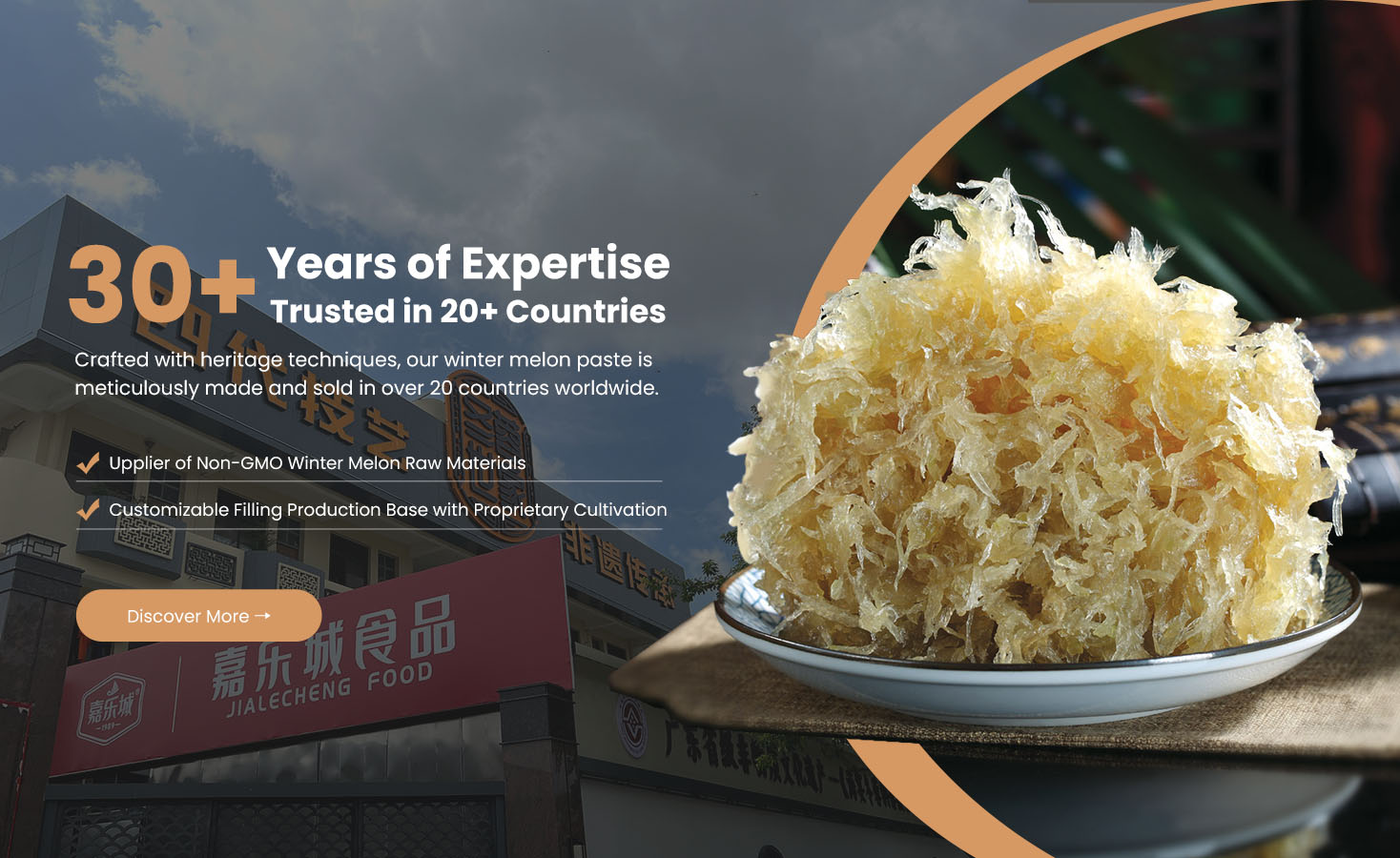
JIALECHENG Foods operates a standardized industrial system focused on Winter Melon Paste Filling and bakery ingredient solutions. Its controlled processing system ensures consistent texture formation, stable viscosity, and reliable performance across global OEM bakery and pastry supply projects.