



What Are New Trends In Fruit Paste Fillings?
fruit paste fillings are evolving rapidly as global bakery markets demand cleaner labels, more stable formulations, and improved baking performance. In industrial food development studies, demand for fruit-based fillings with reduced additives and controlled sugar profiles has increased significantly, with industry reports showing more than 30 percent growth in natural fruit filling adoption across bakery applications in recent years.
Table of Contents
- Clean Label And Natural Ingredient Demand
- Controlled Sugar And Reduced Sweetness Formulation
- Improved Texture And Heat Stability
- Manufacturing Process Overview For Modern Fruit Paste
- Manufacturer vs Trader Capability In Innovation
- Quality Control Checkpoints
- Fruit Paste Trend Comparison Table
- OEM ODM And Bulk Supply Considerations
Clean Label And Natural Ingredient Demand
One of the strongest trends is the shift toward clean label formulations. This means reducing artificial stabilizers and focusing on fruit-derived fiber, natural sweetness, and simplified ingredient lists.
Food formulation research shows that consumers and industrial buyers increasingly prefer fillings with fewer than five core ingredients, improving transparency and regulatory acceptance in export markets.
Natural fruit paste systems must still maintain stability during baking, requiring precise control of moisture, sugar, and fiber balance.
Controlled Sugar And Reduced Sweetness Formulation
Modern fruit paste development is moving toward reduced sugar systems. In industrial bakery applications, sugar levels are being optimized between 35 percent and 55 percent depending on application requirements.
Lower sugar formulations require advanced processing control to maintain viscosity and microbial stability. Studies in food preservation engineering show that sugar reduction must be balanced with moisture control to avoid texture collapse during baking.
Improved Texture And Heat Stability
Texture stability is becoming a key performance indicator in fruit paste innovation. High temperature baking environments require fillings that maintain structure without leaking or caramelizing excessively.
Controlled fiber breakdown technology helps improve spreadability while maintaining shape retention. Research in bakery filling rheology shows that optimized viscosity control can reduce leakage defects by more than 25 percent during industrial baking processes.
Manufacturing Process Overview For Modern Fruit Paste
A modern fruit paste production system includes:
Raw fruit selection and grading
Fiber controlled pulp extraction
Thermal concentration under controlled temperature
Sugar and fiber balancing integration
Moisture adjustment and stabilization
Homogenization for texture uniformity
Packaging under controlled environment
Each stage directly influences final stability in large scale OEM bakery production.
Manufacturer vs Trader Capability In Innovation
A manufacturer vs trader comparison is essential when evaluating innovation capability. A manufacturer directly controls formulation development, thermal processing curves, and texture engineering. This allows faster adaptation to new market trends such as reduced sugar or clean label requirements.
A trader relies on external production sources, limiting flexibility in recipe modification and consistency control across bulk supply batches.
Quality Control Checkpoints
Key inspection stages include:
Sugar concentration verification using refractometer testing
Moisture stability testing under controlled thresholds
Viscosity and texture consistency analysis
Microbial safety evaluation for export compliance
Heat stability simulation during baking cycles
Batch traceability and ingredient verification
These controls ensure consistent performance across international bakery supply chains.
Fruit Paste Trend Comparison Table
| Trend Factor | Traditional Filling | Modern Fruit Paste | Impact Level |
|---|---|---|---|
| Sugar content | High | Reduced | Health oriented |
| Ingredient complexity | High | Low | Clean label |
| Texture control | Medium | High precision | Baking stability |
| Export adaptability | Limited | High | Global compliance |
OEM ODM And Bulk Supply Considerations
For international procurement, key sourcing factors include formulation flexibility, sugar control standards, moisture stability, ingredient traceability, packaging barrier performance, shelf life requirements, and certification compliance. A structured OEM and ODM process includes recipe development, sample validation, pilot testing, mass production, and final inspection.
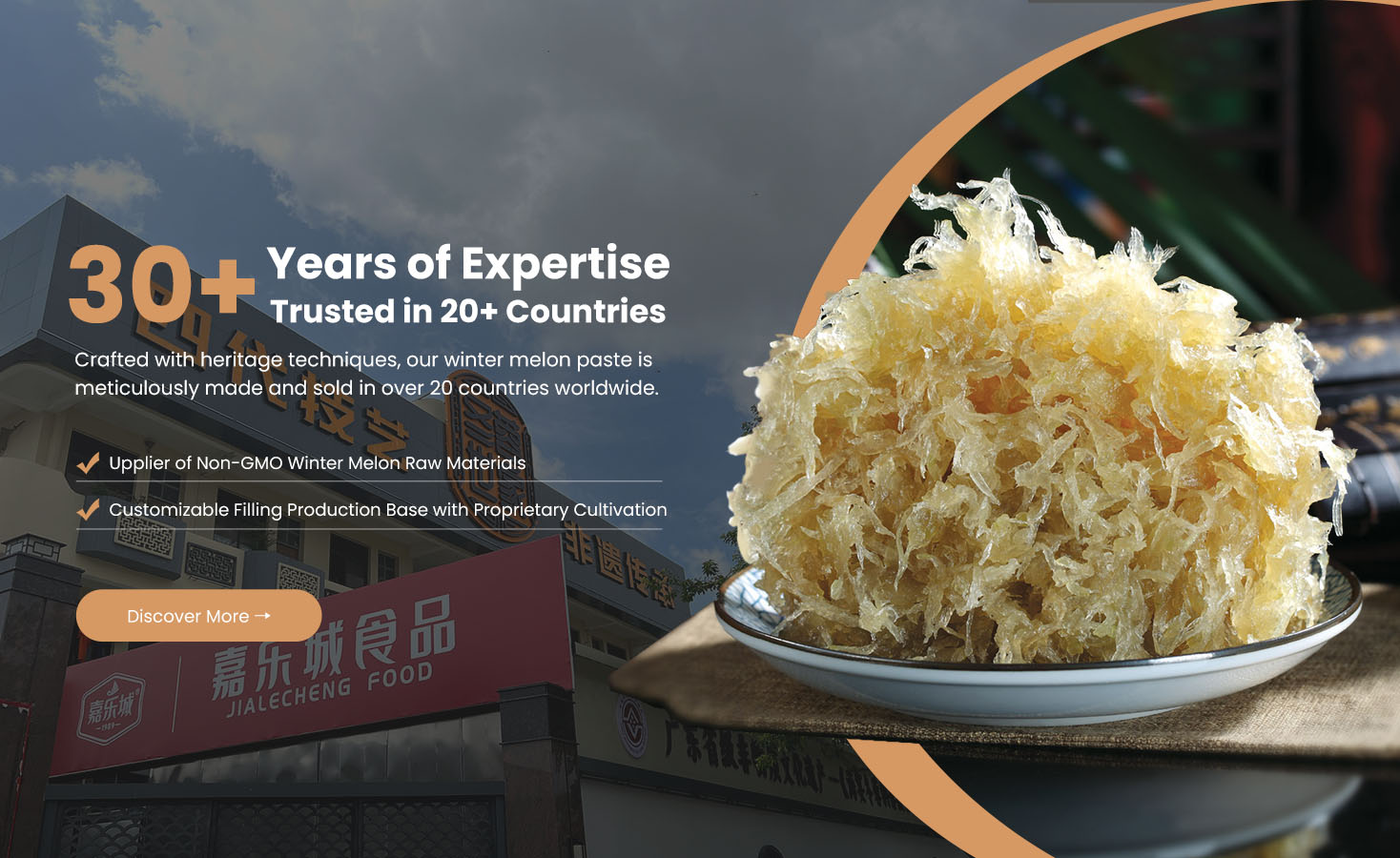
JIALECHENG Foods operates a standardized industrial system focused on fruit paste and Winter Melon Filling production. Its controlled processing technology ensures consistent texture, stable sugar profiles, and reliable export quality across global OEM bakery and pastry applications.