



How To Prevent Paste Separation During Baking?
Paste separation during baking is a common quality concern for mooncakes, pastries, and bakery products using filling ingredients. When oil, moisture, or solid components separate during heating, the final product may show uneven texture, reduced appearance quality, or unstable filling performance.
Preventing paste separation requires control of ingredient balance, production processes, baking conditions, and storage management. For manufacturers, stable filling performance starts long before the baking stage.
Table of Contents
Main Causes Of Paste Separation
Several factors can influence whether melon paste maintains a stable structure during baking.
| Cause | Impact On Paste Performance |
|---|---|
| Excess moisture | Creates uneven texture and weak structure |
| Improper ingredient ratio | Causes oil or liquid separation |
| Unstable cooking process | Affects paste consistency |
| Incorrect storage conditions | Changes texture before baking |
Moisture migration is one of the main reasons for filling instability. Food science studies show that water activity plays an important role in food texture, shelf life, and microbial stability. Maintaining proper moisture balance helps improve baking performance.
Manufacturing Process Control For Stable Paste Structure
Preventing paste separation starts during production. A professional melon paste manufacturer controls ingredient preparation, cooking temperature, concentration time, mixing process, cooling, and packaging.
Important production controls include:
Accurate ingredient measurement
Stable cooking temperature
Controlled moisture content
Uniform mixing process
Batch consistency testing
During cooking, insufficient concentration may leave excessive moisture inside the paste, while over-processing may affect texture and flavor. A balanced production process helps maintain a smooth structure that performs better during baking.
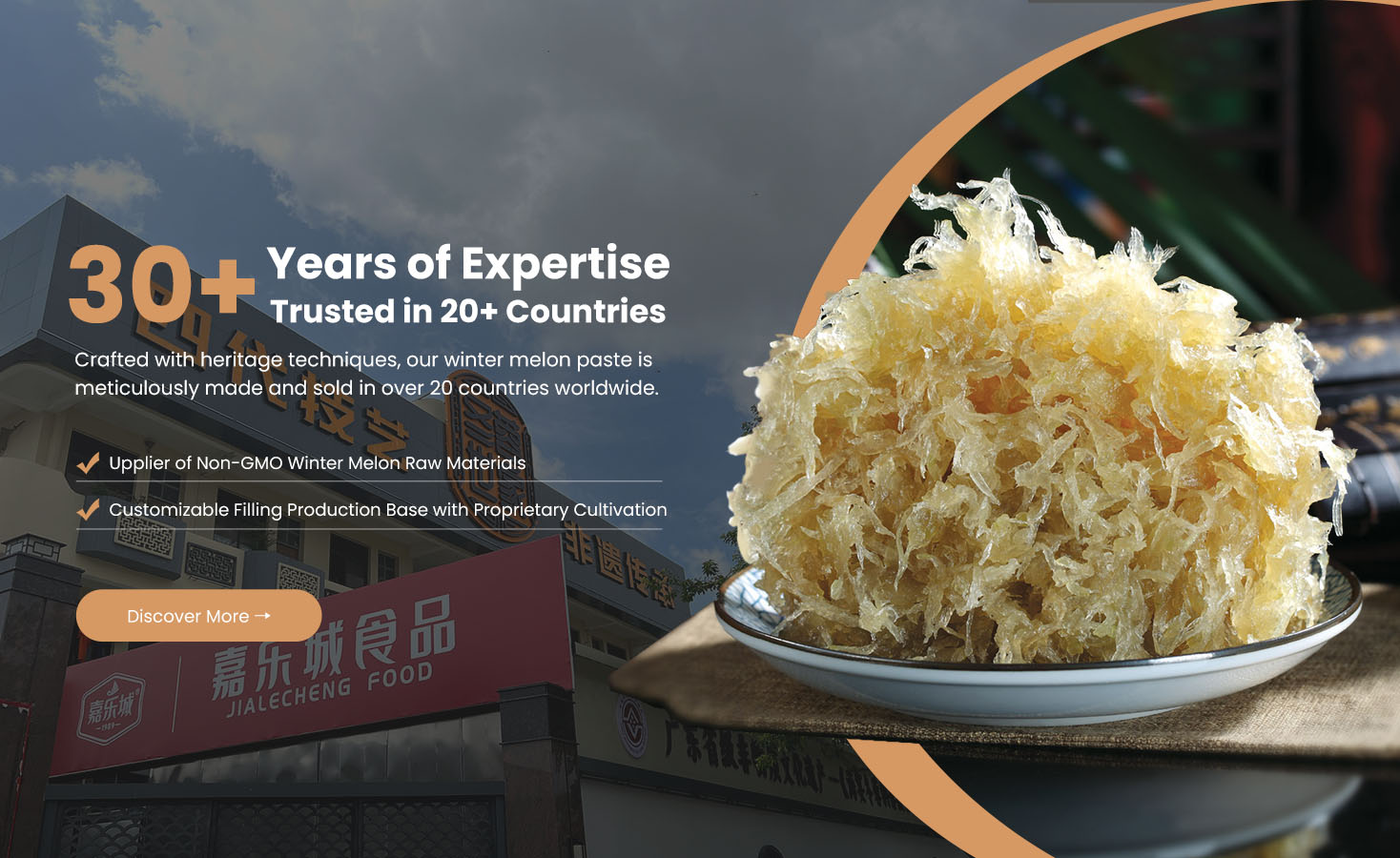
JIALECHENG combines traditional winter melon paste production techniques with modern manufacturing management. Through standardized processes and quality inspection systems, the company focuses on providing stable filling products for mooncakes, pastries, and bakery applications.
Manufacturer Control In OEM And ODM Projects
Direct manufacturer cooperation provides stronger control over paste quality compared with a trader-based supply model. Manufacturers can directly manage formulas, production parameters, testing procedures, and product improvements.
For OEM and ODM projects, the process usually includes:
Product requirement confirmation
Formula adjustment
Sample production
Baking performance evaluation
Process optimization
Bulk production approval
This allows customized filling solutions based on different recipes, baking temperatures, packaging formats, and market requirements.
Quality Control Checklist For Baking Performance
For large-volume paste production, quality inspection should cover both finished products and baking performance.
Important checkpoints include:
Moisture content testing
Texture and viscosity evaluation
Oil separation inspection
Color consistency checking
Flavor stability assessment
Packaging integrity testing
Storage condition monitoring
A complete sourcing checklist should also include ingredient standards, production capacity, delivery schedule, shelf life requirements, and export documentation.
Food ingredients supplied to international markets must meet different safety and labeling regulations. Proper quality management helps ensure filling products maintain stable performance during transportation, storage, and final baking applications.
Improving Filling Reliability Through Process Management
Stable paste performance depends on the combination of ingredient control, manufacturing technology, and continuous inspection. Preventing separation during baking requires attention to every production detail rather than a single quality check.
JIALECHENG specializes in winter melon paste manufacturing with experience in product development, customized solutions, and quality management. By combining traditional processing knowledge with standardized production systems, the company supports reliable filling solutions for bakery and pastry manufacturers.