



High Moisture Filling vs Low Moisture Filling: Which Improves Product Quality?
Low moisture filling often provides better stability for commercial bakery products, while high moisture filling creates a softer texture experience but requires stricter production and storage control.
Table of Contents
- What Is the Difference Between High Moisture Filling and Low Moisture Filling?
- Which Filling Provides Better Product Stability?
- Which Filling Creates Better Texture Experience?
- Which Filling Is More Suitable for Mooncake Production?
- Which Filling Performs Better During Transportation?
- Which Filling Is Better for Different Bakery Applications?
- Which Filling Provides Better Production Efficiency?
- Why Does Moisture Control Matter in Filling Production?
- How Should Buyers Choose Between High and Low Moisture Filling?
- Conclusion
What Is the Difference Between High Moisture Filling and Low Moisture Filling?
High moisture filling and low moisture filling are two different formulation approaches used in bakery and pastry production.
High moisture filling contains a higher water content, creating a softer texture, smoother mouthfeel, and fresher eating experience. It is commonly used in products where softness and moisture are important characteristics.
Low moisture filling contains reduced water content, providing a firmer structure and better storage stability. It is often selected for products requiring longer shelf life, easier transportation, and stable processing performance.
The main difference is that high moisture filling focuses on softness and freshness, while low moisture filling focuses on stability and durability.
Which Filling Provides Better Product Stability?
Product stability is a key concern for commercial food manufacturers.
Low moisture filling generally provides advantages because reduced water content helps control texture changes and improves storage performance. It can reduce issues related to moisture migration between filling and outer pastry layers.
High moisture filling provides a softer eating experience but requires more careful control of storage conditions because moisture can influence product quality over time.
For manufacturers producing products for wider distribution, low moisture filling often provides stronger stability advantages.
Which Filling Creates Better Texture Experience?
Texture directly affects consumer satisfaction.
High moisture filling creates a soft, smooth, and fresh mouthfeel. It is suitable for products where a delicate texture is the main selling point.
Low moisture filling provides a denser and more stable texture. It maintains structure better and works well in products requiring controlled shaping.
| Comparison Factor | High Moisture Filling | Low Moisture Filling |
|---|---|---|
| Texture | Soft and moist | Firm and stable |
| Consumer Experience | Fresh and smooth | Rich and structured |
| Storage Performance | Requires more control | Better stability |
| Processing Performance | More sensitive | Easier to manage |
The better choice depends on whether the product prioritizes softness or stability.
Which Filling Is More Suitable for Mooncake Production?
Mooncake production requires careful balance between texture and storage performance.
Low moisture filling is commonly preferred for many commercial mooncake applications because it helps maintain shape, reduces texture changes, and supports longer storage periods.
High moisture filling can create a softer and fresher taste but requires precise formulation and storage management to maintain quality.
For large-scale mooncake production, low moisture filling often provides stronger production advantages.
Which Filling Performs Better During Transportation?
Transportation conditions can affect product quality.
Low moisture filling provides better resistance to texture changes during transportation because its structure is more stable.
High moisture filling may require additional protection because temperature changes and storage conditions can influence moisture balance.
For export markets and long-distance shipping, low moisture filling offers practical advantages.
Which Filling Is Better for Different Bakery Applications?
Different bakery products require different filling characteristics.
High moisture filling is suitable for:
Soft cakes
Fresh desserts
Products requiring smooth texture
Short-term consumption products
Low moisture filling is suitable for:
Mooncakes
Baked pastries
Export bakery products
Products requiring longer storage
Manufacturers need to select filling characteristics based on the final product requirements.
Which Filling Provides Better Production Efficiency?
Production efficiency depends on filling behavior during manufacturing.
Low moisture filling generally provides easier handling during shaping, wrapping, and automated production. Its stable structure helps manufacturers maintain consistent output.
High moisture filling may require more precise equipment settings and process control to avoid issues during production.
For industrial bakery production, low moisture filling provides stronger operational efficiency.
Why Does Moisture Control Matter in Filling Production?
Moisture content influences texture, shelf stability, processing performance, and consumer experience.
Professional filling manufacturers adjust moisture levels according to product requirements. The goal is not simply to increase or reduce moisture, but to create the right balance between taste and performance.
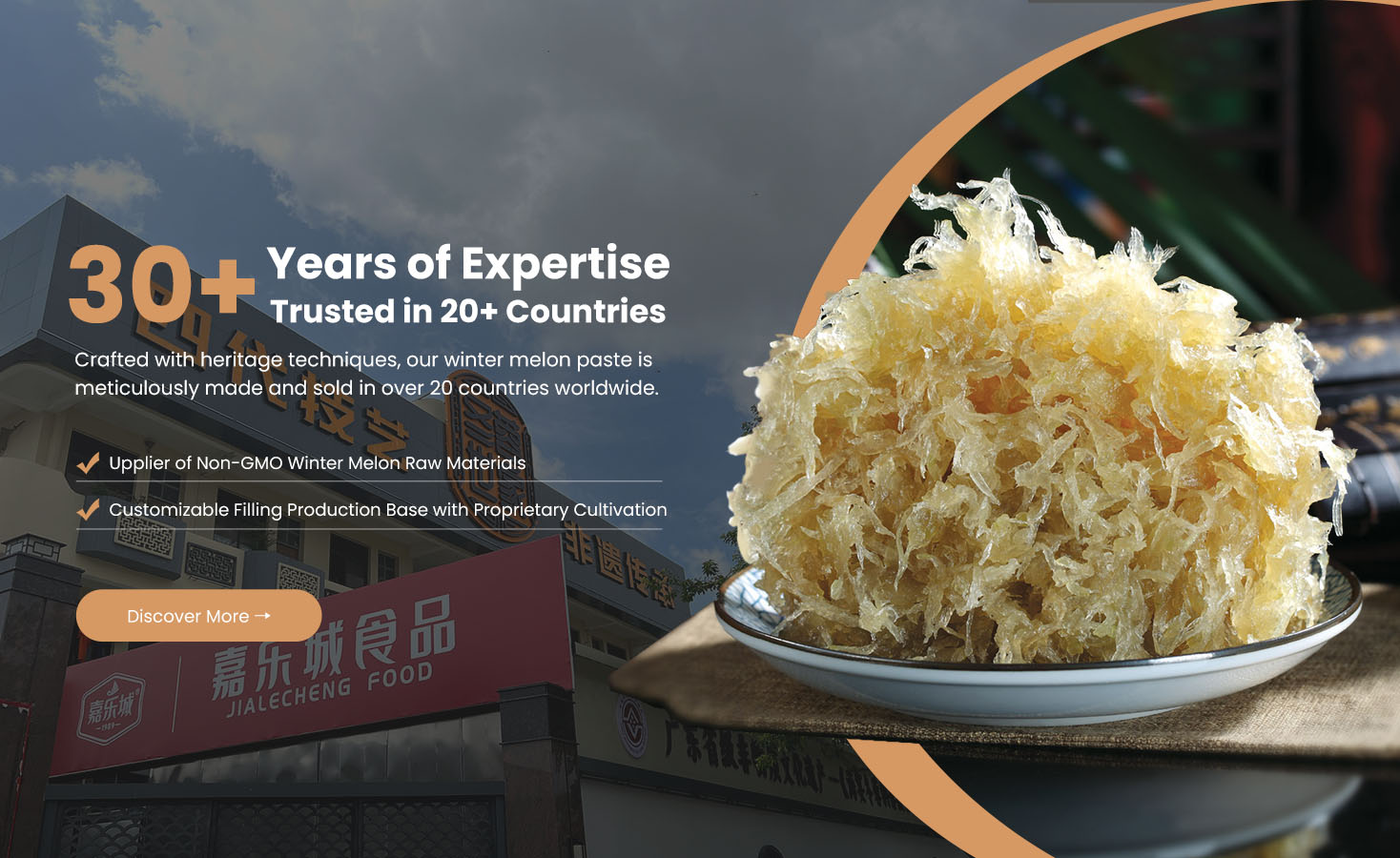
For example, Winter Melon Filling for traditional pastries requires suitable moisture control to achieve both smooth texture and stable storage performance.
How Should Buyers Choose Between High and Low Moisture Filling?
The choice depends on product goals:
Choose high moisture filling for products requiring soft texture and fresh taste.
Choose low moisture filling for products requiring stability, transportation flexibility, and longer storage.
Consider product type, production method, and market requirements before selecting a filling formulation.
For commercial bakery manufacturers, the ideal moisture level depends on balancing consumer experience with production needs.
Conclusion
High moisture filling and low moisture filling serve different product purposes. High moisture filling provides a softer and fresher eating experience, while low moisture filling delivers stronger stability, processing performance, and storage advantages. For large-scale bakery production and wider distribution, selecting the right moisture level is essential for maintaining consistent product quality.