



What Factors Determine The Cost Competitiveness Of Winter Melon Paste in Global Supply Chains?
Cost competitiveness in global supply chains is not decided by price alone. For winter melon paste, the real advantage comes from raw material stability, process efficiency, packaging design, traceability, and export readiness. A supplier that controls these factors can reduce waste, shorten lead times, and keep quality more stable across repeat orders. FAO notes that 13.8 percent of food produced globally is lost between harvest and retail, which shows how much cost can be added by weak handling, storage, and supply coordination.
Table of Contents
Manufacturer vs trader
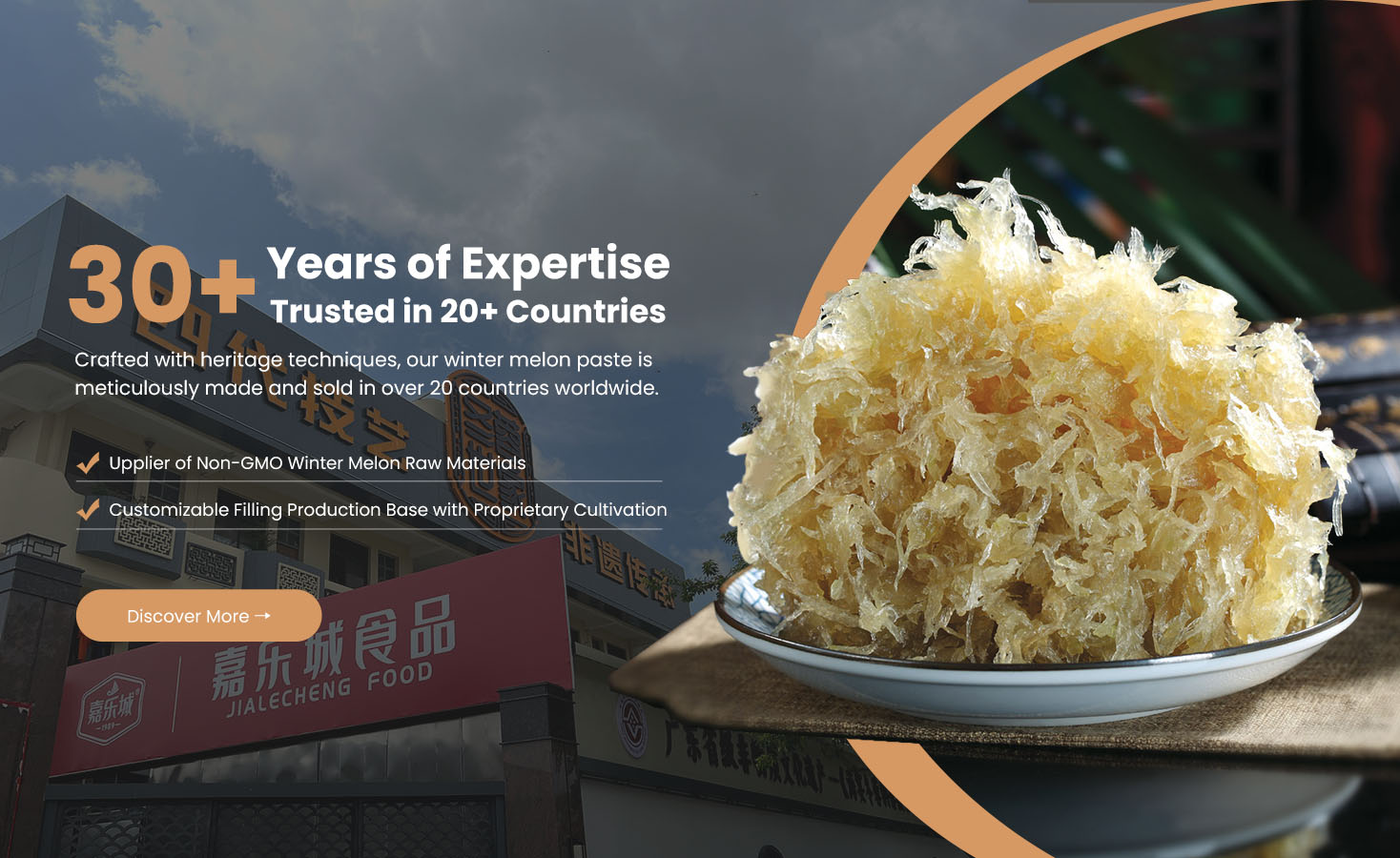
A direct winter melon paste manufacturer usually has a stronger cost structure than a trader because production, quality control, and delivery planning are managed in one system. JIALECHENG states that it uses an integrated company plus farmer model for raw material sourcing, which helps stabilize quality and traceability from the beginning of the supply chain. This matters because unstable raw material quality often raises rework, sorting, and complaint costs later.
Manufacturing process overview
The manufacturing process overview has a direct effect on final cost. JIALECHENG’s published process includes raw material inspection, moisture and Brix sampling, controlled cooking, concentration, and packaging. When these steps are standardized, yield loss can be reduced and batch consistency can improve. Intelligent handling of moisture, fiber density, and solids also helps avoid unnecessary variation in texture and sweetness, which lowers the risk of returns and reformulation.
Quality control checkpoints
| Cost factor | Effect on competitiveness |
|---|---|
| Raw material grading | Reduces unstable batches |
| Moisture and Brix control | Improves yield consistency |
| Standardized cooking | Lowers rework risk |
| Packaging accuracy | Cuts freight and damage loss |
| Batch traceability | Speeds problem resolution |
| Export documentation | Reduces customs delays |
These quality control checkpoints are especially important for bulk supply. Poor traceability and weak documentation can turn a low quoted price into a higher landed cost when shipments are delayed, relabeled, or rejected. FDA says stronger traceability records support faster identification and removal of potentially contaminated food, which also reduces risk exposure in cross-border trade.
OEM and ODM process
The OEM and ODM process also affects cost competitiveness. JIALECHENG says it supports recipe development and customized packaging, which can help match sweetness, moisture content, and pack size to different markets. This is important because the wrong formula or pack format can increase storage pressure, transport inefficiency, and shelf life risk. For project sourcing, buyers should check raw material standards, batch coding, pack sizes, pallet efficiency, retained sample rules, and compliance support before comparing unit prices.
Export market compliance
Export market compliance is another cost driver. Markets increasingly expect traceable sourcing, standardized processing, and clear documentation from raw material intake to finished packaging. JIALECHENG’s own export-focused content highlights this connection between traceability and certification readiness. In practice, the most cost-competitive winter melon paste supplier is the one that combines manufacturing control, quality checkpoints, OEM flexibility, and compliance support into one dependable supply model.