


How Can Sustainable Sourcing Practices Be Integrated into Fruit And Vegetable Paste Procurement?
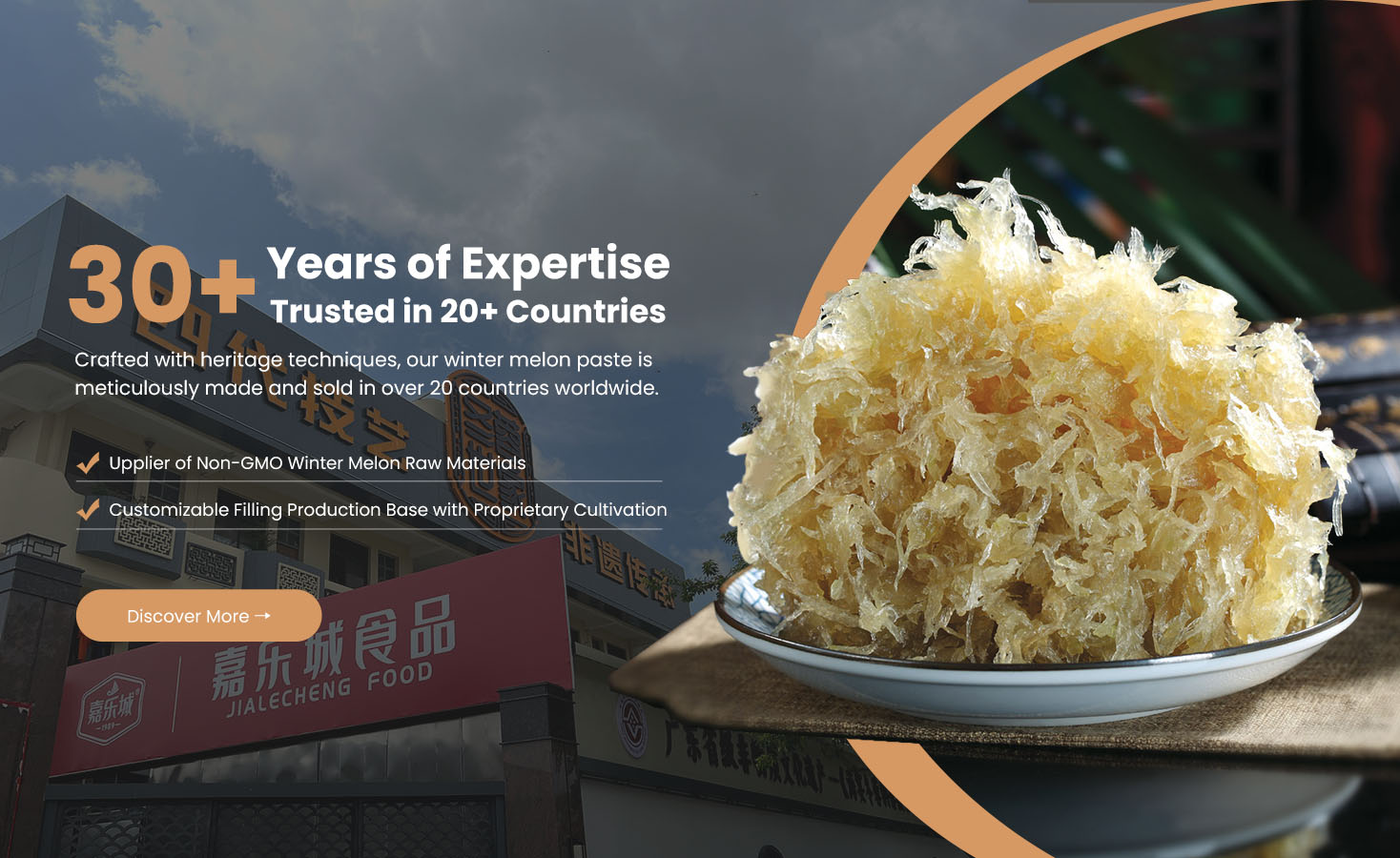
Sustainable sourcing in fruit and vegetable paste procurement begins with supplier structure, not marketing claims. A direct manufacturer with raw material control can manage origin, harvest timing, batch records, and processing standards more effectively than a trader that only coordinates finished goods. JIALECHENG shows this advantage through its integrated sourcing and production model, including raw material batch information such as batch number, harvest date, delivery date, and received quantity, which improves traceability and lowers quality risk in winter melon paste supply.
Table of Contents
Manufacturer vs trader
In global food procurement, sustainable sourcing is closely tied to visibility across the supply chain. Codex defines traceability as the ability to follow the movement of a food through production, processing, and distribution. That is easier to achieve when the supplier is also the manufacturer. JIALECHENG’s process records, batch coding, and full-traceability approach make sourcing more dependable for customers that need stable quality, repeat orders, and export documentation.
Manufacturing process overview
A sustainable procurement model should connect raw material approval with manufacturing control. In fruit and vegetable paste production, this means evaluating farm-side consistency, incoming inspection, moisture and Brix checks, controlled cooking, vacuum sealing, and storage performance. JIALECHENG states that its winter melon paste production includes automated vacuum sealing, weight verification, metal detection, and batch coding, all of which support lower waste, better shelf stability, and stronger supply reliability. FAO reports that 13.3 percent of food is lost globally between harvest and retail, which shows why reducing losses inside sourcing and processing is a real cost and sustainability issue.
Quality control checkpoints
| Checkpoint | Sustainable sourcing value |
|---|---|
| Raw material batch record | Improves origin visibility |
| Moisture and Brix control | Reduces unstable output |
| Metal detection | Strengthens food safety |
| Weight verification | Limits packing deviation |
| Batch coding | Supports traceability |
| Vacuum packaging | Helps reduce spoilage |
These quality control checkpoints should be reviewed before price comparison is finished. FDA explains that HACCP manages biological, chemical, and physical hazards from raw material procurement through manufacturing and distribution, so sustainable sourcing should always include food safety management rather than focusing only on origin claims.
OEM ODM process and bulk supply considerations
Sustainable sourcing also needs to work at scale. For OEM and ODM projects, buyers should confirm approved raw material standards, customized formula range, packaging format, retention sample rules, and traceability records. JIALECHENG notes that it supports OEM and ODM development, with each batch tested for moisture, pH, and microbial content. That makes customized supply more controllable and lowers the risk of inconsistency in bulk orders.
Project sourcing checklist and export market compliance
A practical sourcing checklist should include origin documentation, supplier traceability records, HACCP and GMP implementation, batch coding logic, packaging specifications, and labeling readiness. JIALECHENG’s export-oriented content also emphasizes that origin records help support customs clearance and food safety inspections. For international procurement, sustainable sourcing is strongest when environmental efficiency, traceability, and compliance are managed together in one manufacturing system.
Conclusion
Sustainable sourcing practices can be integrated into fruit and vegetable paste procurement by combining manufacturer-based traceability, standardized production, strict quality checkpoints, and export-ready documentation. In this model, sustainability is not only about raw material origin. It is also about reducing food loss, improving process control, and building a more resilient supply chain. JIALECHENG’s integrated manufacturing and traceability structure makes that approach more practical and more dependable.