



What Innovations in Texture And Flavor Development Are Shaping The Future Of Food Pastes?
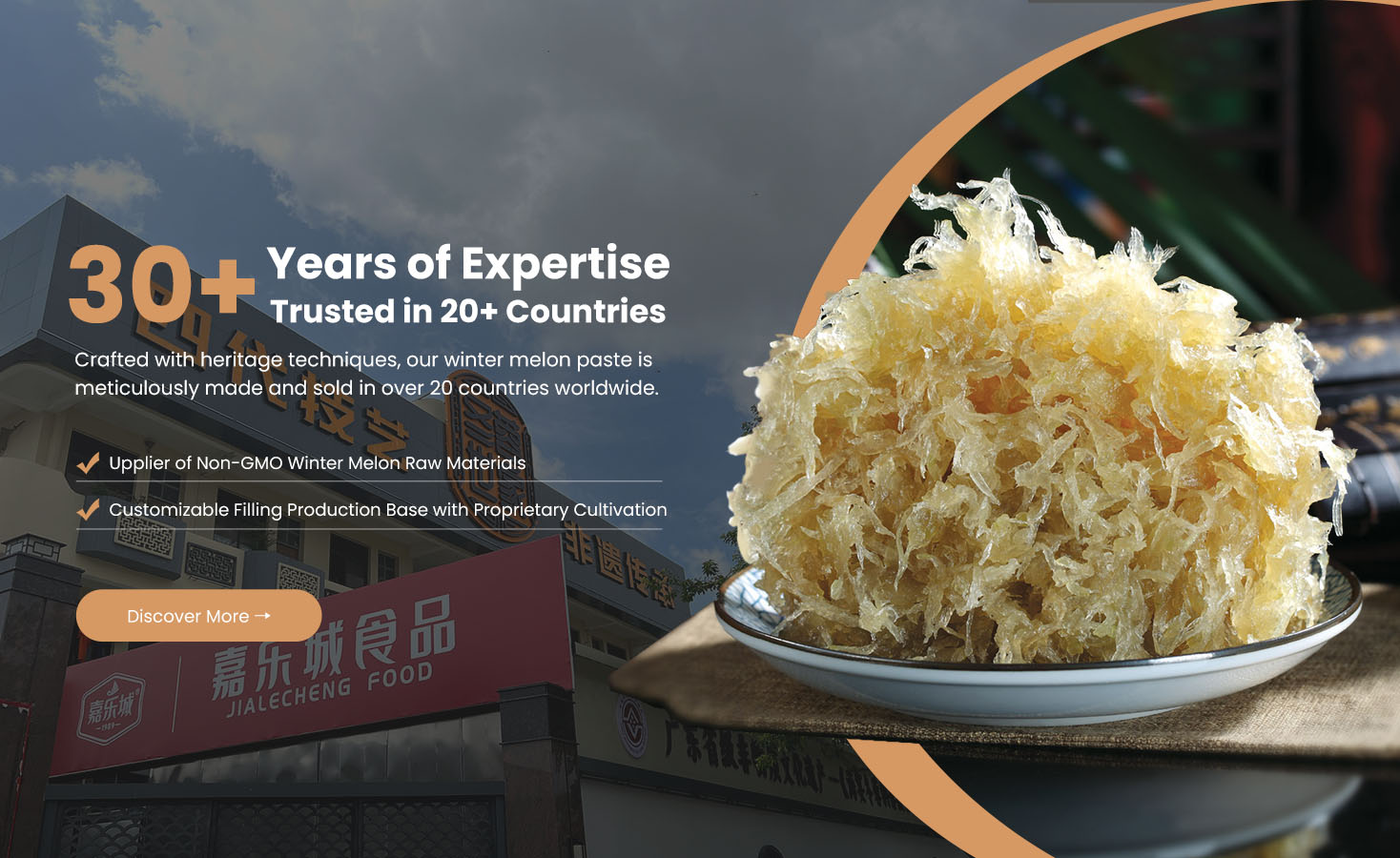
Texture and flavor innovation is moving food pastes away from one standard formula toward more precise sensory design. In fruit and vegetable pastes, the future is being shaped by smoother structure without losing natural fiber, layered flavor profiles, lower temperature concentration, and cleaner label formulation. JIALECHENG already reflects this direction in its winter melon paste range by offering customizable sweetness, color depth, fiber thickness, and compound flavors such as pandan, osmanthus, coconut, and pineapple for different pastry applications.
Table of Contents
Manufacturer vs trader
A direct manufacturer has a clear advantage in flavor and texture development because product tuning happens inside the production line. JIALECHENG presents itself as an integrated manufacturer with R and D, production, and OEM and ODM support, while its product pages show that texture can be adjusted from smooth and dense to more fiber-forward styles depending on end use. That is much harder to control through a trading model that mainly resells finished goods.
Manufacturing process overview
Process technology is one of the biggest innovation drivers. JIALECHENG states that its industrial winter melon paste line uses vacuum concentration at about 70 to 80 degrees Celsius, which helps remove excess moisture while preserving natural aroma and color. It also highlights homogenization technology to keep the filling smooth while retaining natural fiber feel. Together, these methods support a more refined mouthfeel, cleaner flavor release, and better batch repeatability in large-scale production.
Quality control checkpoints
| Innovation point | Value for future paste products |
|---|---|
| Fiber thickness control | Creates differentiated mouthfeel |
| Vacuum concentration | Protects aroma and color |
| Homogenization | Improves smoothness and layering |
| Compound flavor design | Expands product portfolio |
| Moisture and Brix checks | Keeps texture stable |
| Batch traceability | Supports repeat consistency |
These checkpoints matter because future food pastes are expected to deliver both sensory quality and manufacturing stability. Codex General Principles of Food Hygiene sets food businesses on a framework built around good hygiene practices and HACCP, while FDA describes HACCP as a systematic method for identifying and controlling food safety hazards. For paste manufacturers, this means innovation must be supported by verifiable process control, not only recipe ideas.
OEM and ODM process
The strongest flavor innovation now comes from customization. JIALECHENG supports OEM and ODM development for sweetness, fiber feel, color depth, packaging specifications, and multi-flavor combinations. This is important for bulk supply because customers increasingly want differentiated filling systems rather than generic paste. A practical project sourcing checklist should include target texture, flavor profile, solids range, shelf life goal, packaging format, and retained sample standards before scale-up begins.
Material standards and export market compliance
Another force shaping the future is clean label demand. Recent industry analysis shows growing interest in simpler ingredient systems and minimal processing, while JIALECHENG’s own development direction emphasizes natural fiber retention and flavor customization rather than overprocessing. For export market compliance, that innovation still needs to be backed by traceability, consistent specifications, and hygiene management so new textures and flavors can scale across different markets with lower risk.
Conclusion
The future of food pastes will be shaped by finer texture engineering, multi-layer flavor development, cleaner label processing, and more flexible OEM and ODM capability. JIALECHENG’s use of vacuum concentration, homogenization, fiber control, and compound flavor customization shows how a manufacturer can move beyond basic paste supply and build products with stronger differentiation, better consistency, and better fit for global pastry markets.