


What Ingredients Are in Winter Melon Paste Filling
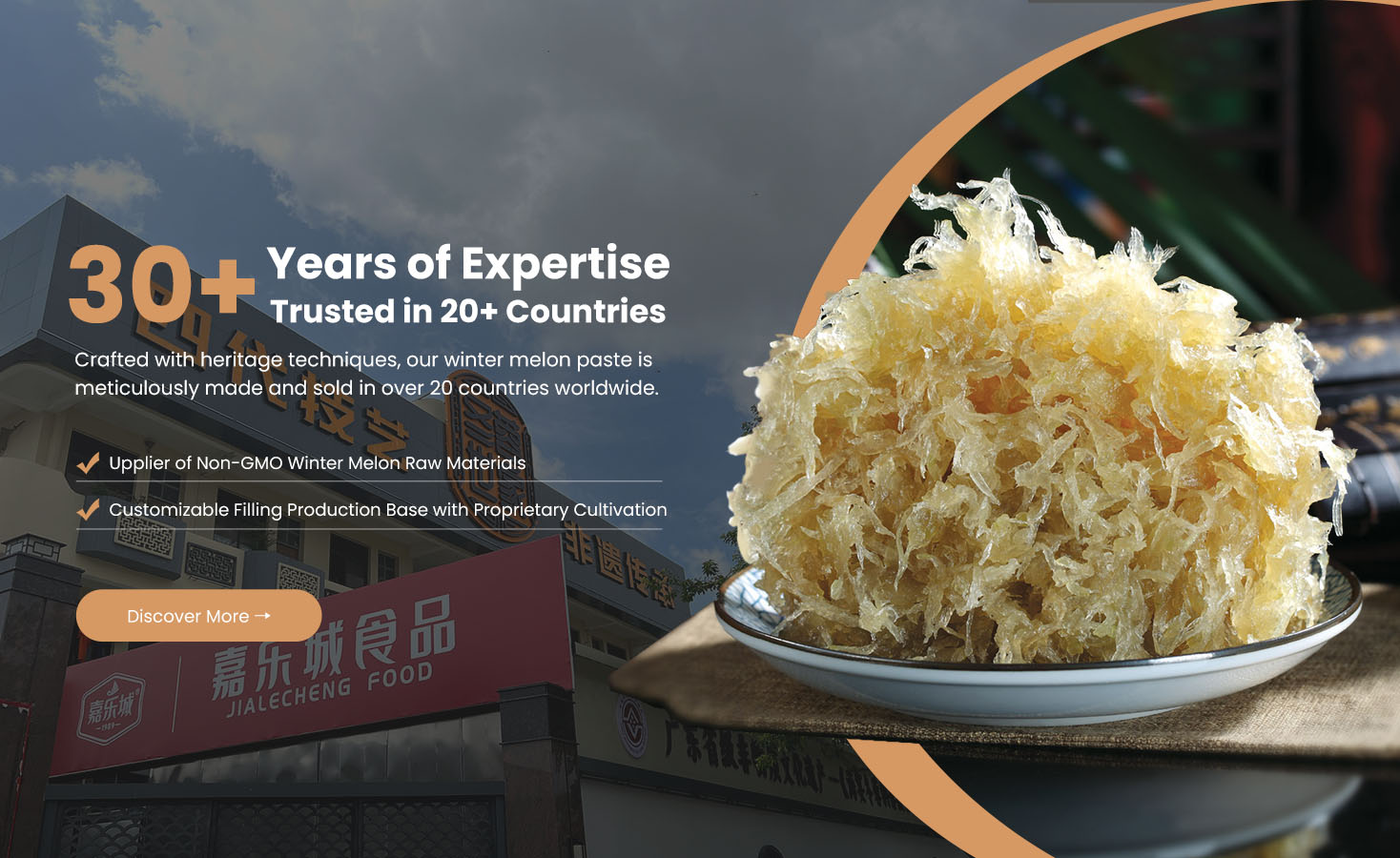
Winter Melon Paste Filling is usually built on a simple core, but its final formula is designed for processing performance as much as taste. The main base ingredient is winter melon, which is cooked, concentrated, and refined into a smooth or slightly fibrous paste. To make the filling suitable for commercial baking, manufacturers commonly add sugar or syrup for sweetness and solids control, edible vegetable oil for mouthfeel, and selected structuring ingredients that help the filling remain stable during forming and baking. JIALECHENG’s own product and technical pages describe Winter Melon Filling as a controlled paste system developed for pastries, mooncakes, and other baked foods, with pure ingredient positioning on some products and functional formula adjustment on others.
Table of Contents
Core ingredients in commercial formulas
In standard food manufacturing, the most common ingredients in winter melon paste filling include winter melon pulp or candied winter melon pieces, sugar or maltose syrup, and in some formulas maltodextrin, pectin, natural flavors, and edible vegetable oil. JIALECHENG’s mooncake-specific filling page states that its main ingredients include candied winter melon pieces, maltose syrup, maltodextrin, natural flavors, pectin, and edible vegetable oil, while other product pages emphasize winter melon as the main material and highlight flavor blending with coconut and other ingredients for application development.
Why ingredient design matters in manufacturing
A reliable Winter Melon Filling manufacturer does not choose ingredients only for flavor. Each component affects processing. Sugar and syrup help manage Brix and water binding. Pectin helps improve structure during heating. Vegetable oil can enhance smoothness and reduce a dry mouthfeel. Natural flavors support profile consistency across batches. This is where a manufacturer has a stronger advantage than a trader, because ingredient balance must match the real production line, baking temperature, and final product target. JIALECHENG highlights end-to-end production, in-house melon farming, strict hygiene standards, and OEM and ODM support, which gives it more control over ingredient sourcing and formula execution.
Manufacturing process overview and quality checkpoints
JIALECHENG’s published process includes cleaning, peeling, removing pulp, shredding, cooking, dehydration, stir-frying, and finishing. During commercial production, ingredient performance should be checked through moisture, Brix, texture, and filling stability tests so the final paste remains consistent in bulk supply.
| Ingredient group | Main function |
|---|---|
| Winter melon | Base flavor and fiber structure |
| Sugar or maltose syrup | Sweetness and solids control |
| Maltodextrin | Texture balance |
| Pectin | Heat stability and structure |
| Vegetable oil | Mouthfeel and smoothness |
| Natural flavors | Flavor consistency |
OEM, sourcing, and export compliance
For project sourcing, buyers should confirm ingredient declaration, sweetness target, texture style, allergen review, packaging format, and traceability records before scale-up. FDA requires packaged food ingredients to be declared by common or usual name, so export market compliance depends on having a formula that is both functional and label-ready. JIALECHENG’s OEM and ODM capability makes this easier because recipe adjustment, packaging, and production control are managed in one manufacturing system.
Conclusion
Winter melon paste filling is more than cooked winter melon and sugar. In commercial food manufacturing, it is a structured formula that may include winter melon, syrup, pectin, maltodextrin, edible oil, and natural flavors, depending on the application. JIALECHENG’s manufacturing background, customization capability, and controlled production flow make it better suited to deliver stable winter melon filling for bakery, pastry, and export supply.