


How Is Winter Melon Paste Made for Commercial Use
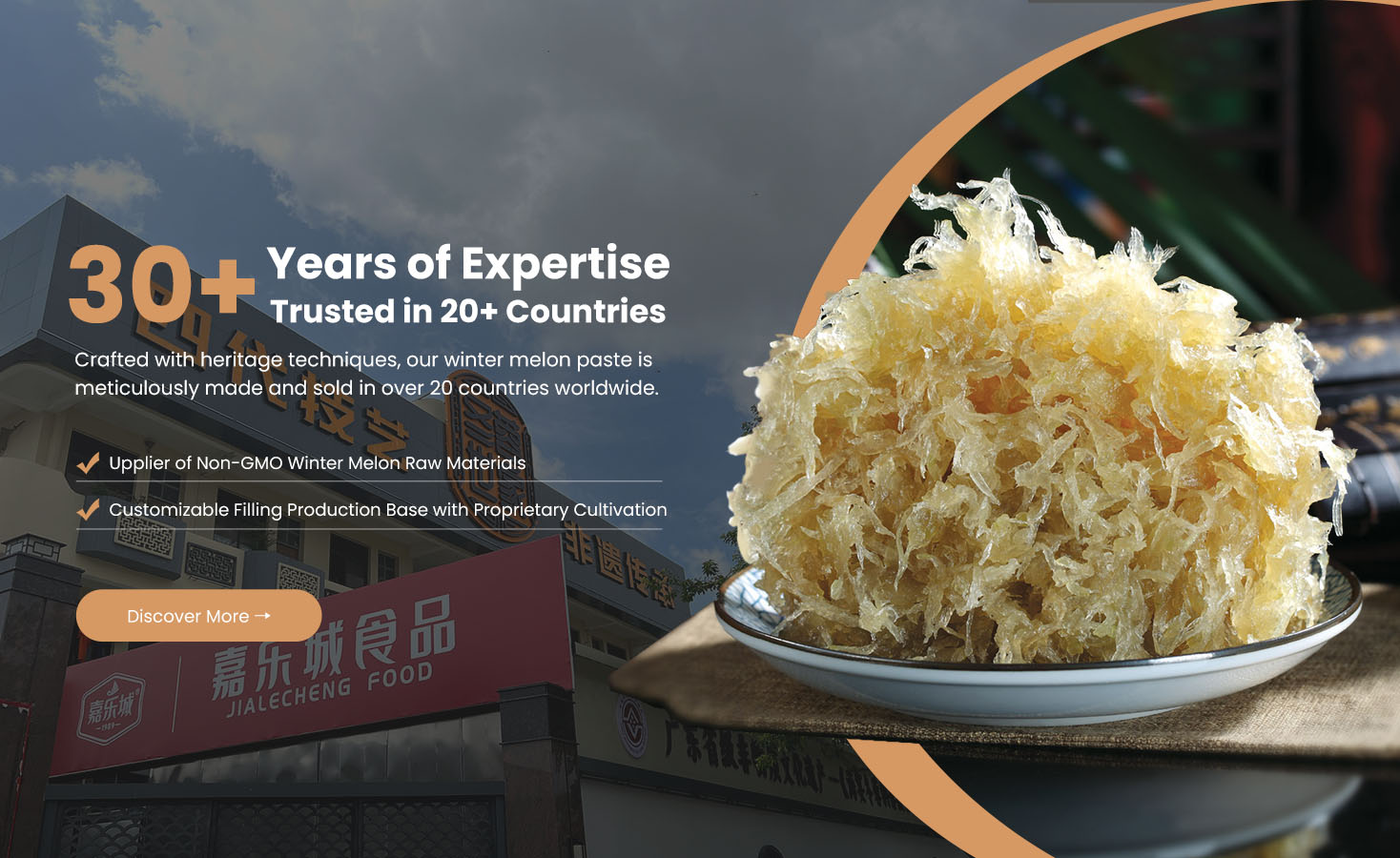
winter melon paste for commercial use is made through a controlled process that turns fresh winter melon into a stable filling ingredient for bakery and pastry production. In an industrial setting, the goal is not only flavor, but also repeatable texture, moisture balance, filling performance, and shipping stability. JIALECHENG presents itself as a direct manufacturer established in 1989, with in-house farming, R&D, production, and OEM and ODM support, which gives it stronger control over raw material quality and bulk supply consistency than a trading model.
Table of Contents
Manufacturer Vs Trader
A trader can arrange supply, but a manufacturer can control the actual production variables that define commercial quality. JIALECHENG highlights end-to-end production with in-house melon farming, advanced facilities, strict hygiene standards, and customization support. For buyers, this matters because winter melon paste quality depends on raw melon condition, cooking accuracy, solids control, sealing, and batch traceability, all of which are easier to manage inside one factory system.
Manufacturing Process Overview
JIALECHENG’s published process shows the main commercial flow clearly: clean, peel, remove the pulp, cut into shreds, cook, dehydrate, stir fry, and finish. Its product descriptions also note washing, cutting, candying, multiple boiling steps, grinding, and homogenization for different paste and filling types. This kind of process design helps create a smooth but structured texture, controlled sweetness, and stable moisture for bakery applications such as mooncakes and pastries.
Quality Control Checkpoints
| Checkpoint | Why it matters |
|---|---|
| Raw material grading | Improves batch consistency |
| Moisture and Brix checks | Controls texture and sweetness |
| Temperature-controlled cooking | Reduces overprocessing risk |
| pH and microbial testing | Supports food safety |
| Sealing and weight checks | Improves packing stability |
| Batch traceability | Strengthens recall readiness |
JIALECHENG states that its automated production lines use temperature-controlled cooking and sealing systems, and that each batch is tested for moisture, pH, and microbial content. Those checkpoints are especially important for commercial winter melon paste because bakery customers need stable filling behavior across repeated lots.
OEM ODM Process And Bulk Supply Considerations
For commercial use, winter melon paste often needs more than a standard formula. JIALECHENG says its in-house R&D team can adjust sweetness, texture, and flavor intensity, while also supporting customized packaging from retail pouches to industrial vacuum bags. A practical project sourcing checklist should include target sweetness, texture standard, packaging size, batch coding, shelf life target, and export documents before mass production starts.
Material Standards Used And Export Market Compliance
Commercial food ingredients must be made under recognized hygiene and labeling rules. Codex states that the General Principles of Food Hygiene cover hygiene practices from primary production through final consumption and include the HACCP system, while FDA guidance says food ingredients on packaged foods must be listed by common or usual name and that packaged foods must list ingredients for allergy protection. For export market compliance, that means the manufacturing process, ingredient declaration, and packaging records all need to align from the start.
Conclusion
Winter melon paste made for commercial use is not simply cooked fruit. It is a controlled food ingredient produced through raw material selection, cutting, cooking, dehydration, texture refinement, safety testing, and sealed packaging. JIALECHENG’s integrated manufacturing model, OEM and ODM capability, full-process quality control, and export-oriented packaging options make it well suited for customers that need reliable commercial supply with consistent bakery performance.