



What Is The Difference Between Winter Melon Paste And Fruit Fillings
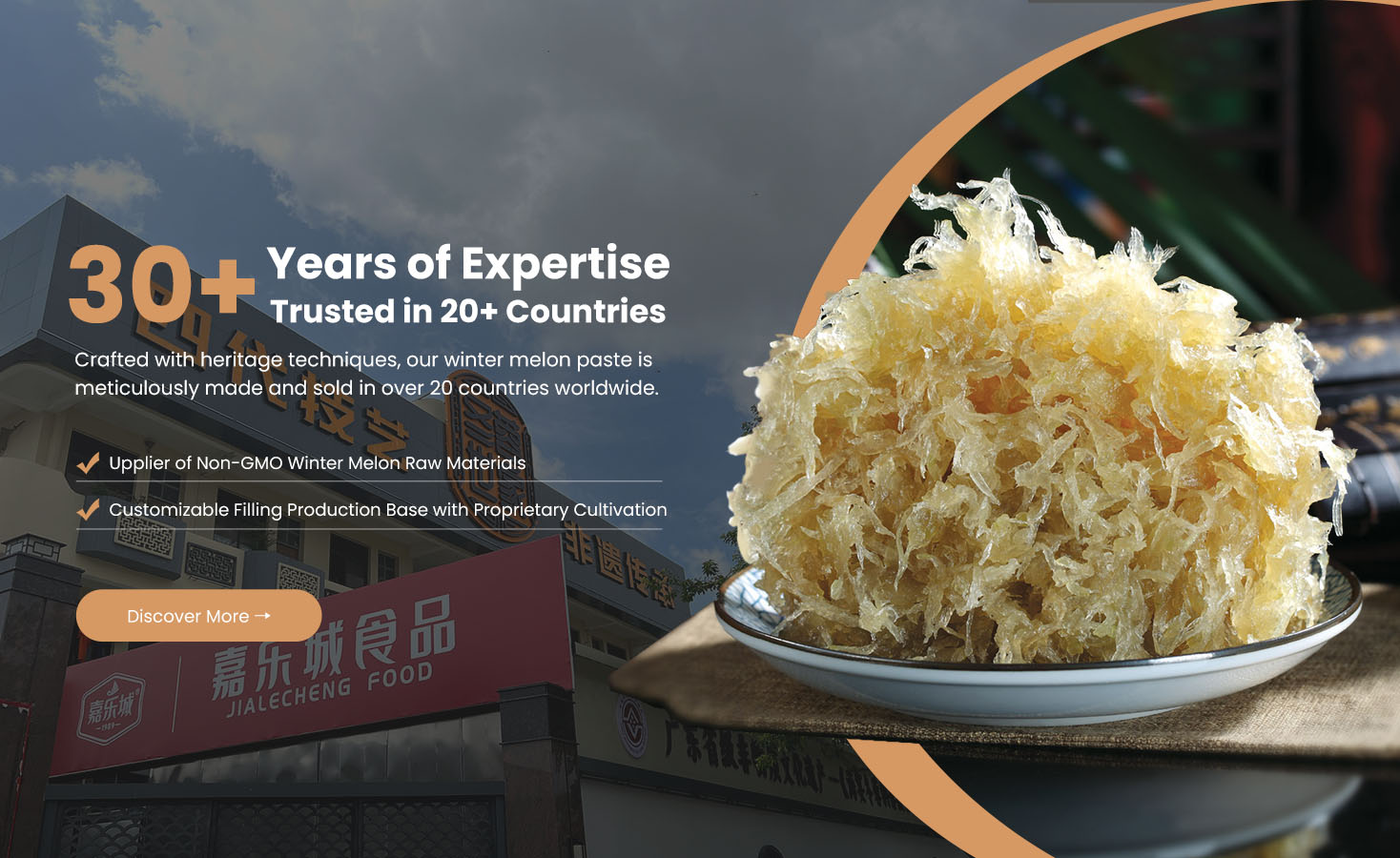
winter melon paste and fruit fillings may look similar in bakery applications, but they serve different manufacturing purposes. Winter melon paste is typically built on chopped or shredded winter melon cooked with sugar or maltose until it becomes thick, smooth, and slightly fibrous. JIALECHENG describes its Winter Melon Filling as translucent amber, moist, dense, easy to spread, and naturally carrying a light candied aroma. That makes it less like a jam-style fruit filling and more like a structured bakery base with stronger shaping stability.
Table of Contents
Base Material And Flavor Profile
The biggest difference is the raw material logic. Standard fruit fillings are usually designed around the identity of one fruit such as strawberry, mango, or pineapple, so the flavor profile is the main selling point. Winter melon paste works differently. Its flavor is lighter and more neutral, which allows it to act as a standalone filling or as a carrier for other flavors. JIALECHENG notes that winter melon paste can absorb fruit essences well and be developed into mixed fillings, which gives it broader flexibility in pastry manufacturing.
Manufacturing Process Overview
Winter melon paste is also different in process design. JIALECHENG’s pastry filling is made from selected winter melons through washing, cutting, candying, and multiple boiling steps, while its mooncake-specific filling adds ingredients such as maltose syrup, maltodextrin, pectin, natural flavors, and edible vegetable oil for better structure and thermal stability. Fruit fillings, by contrast, are often built to highlight fruit pieces, fruit acidity, or a more fluid spreadable texture.
Key Manufacturing Difference
| Item | Winter melon paste | Fruit fillings |
|---|---|---|
| Base flavor | Mild and neutral | Fruit-led and distinctive |
| Texture | Dense and fibrous | Softer or more gel-like |
| Function | Filling base and flavor carrier | Fruit flavor delivery |
| Baking behavior | Stronger shape retention | Depends on fruit and pectin system |
This difference matters in bulk supply because texture stability affects depositing, forming, baking, and storage performance. That is why direct manufacturer control is often more valuable than trading coordination.
Manufacturer Vs Trader And OEM Value
A manufacturer can adjust sweetness, fiber feel, moisture, and pack format according to application, while a trader usually cannot control the formula itself. JIALECHENG positions its Winter Melon Filling as a customizable industrial ingredient for pastries and mooncakes, which is useful for OEM and ODM projects that need repeatable texture and stable batch performance. For project sourcing, buyers should check formula range, batch coding, moisture target, packaging format, and retained sample practice before comparing only price.
Quality Control And Export Compliance
Another difference appears in compliance and labeling. FDA rules require ingredients to be declared by their common or usual names, and packaged foods must clearly list ingredients for label accuracy. Codex hygiene principles also place HACCP and good hygiene practices at the center of food production for international trade. For winter melon paste and fruit fillings alike, that means ingredient control, traceability, and process verification are part of the product value, not extra paperwork.
Conclusion
Winter melon paste differs from fruit fillings in base ingredient, flavor logic, texture structure, and manufacturing role. Fruit fillings usually highlight a specific fruit taste, while winter melon paste offers a more neutral and stable foundation for traditional pastries and compound flavor development. With direct production control, OEM and ODM support, and application-focused process design, JIALECHENG shows why winter melon paste remains a distinct category rather than simply another fruit filling.