



How Does Winter Melon Paste Compare To Bean Paste
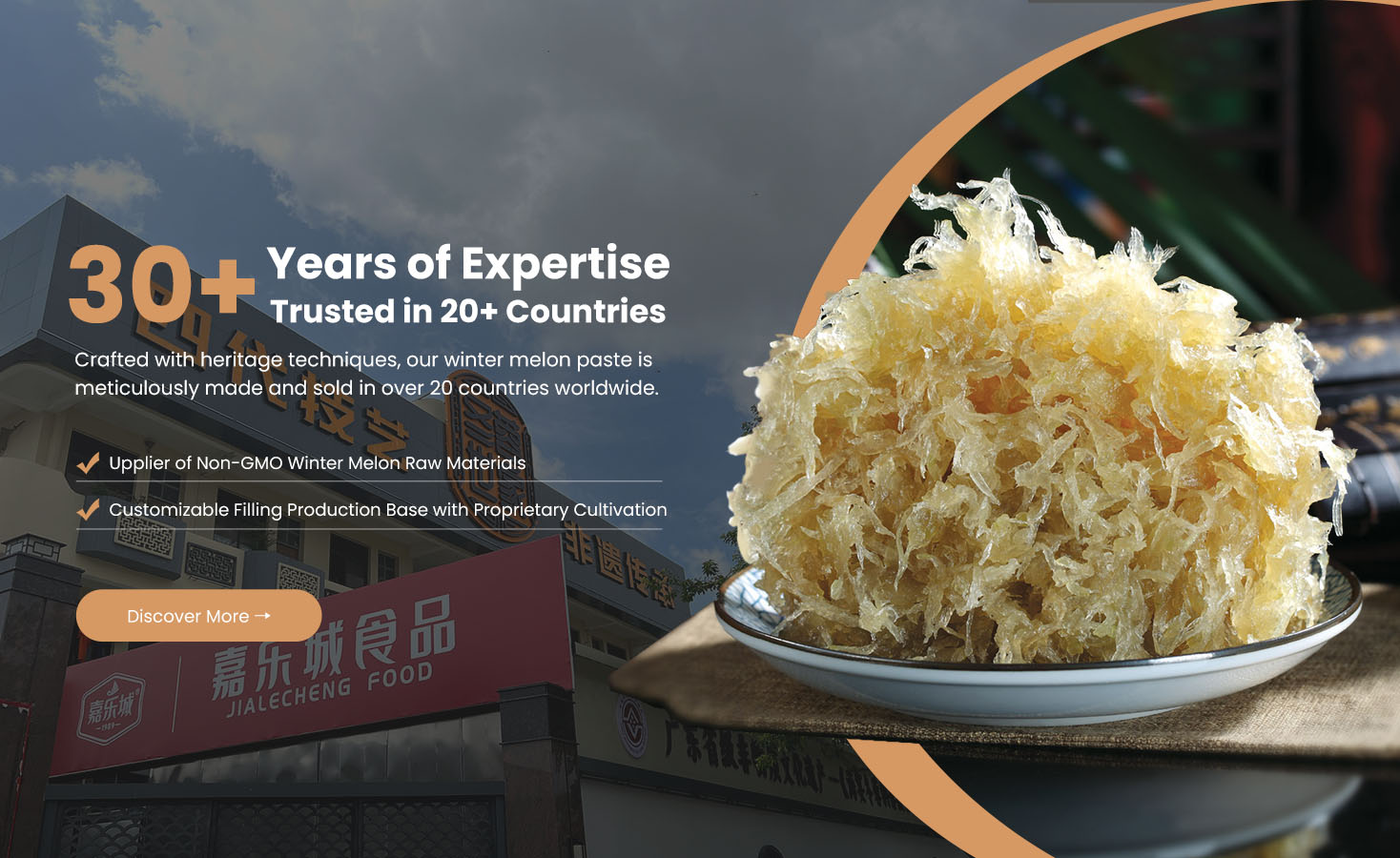
winter melon paste and bean paste are both widely used in pastry manufacturing, but they serve different product goals. Winter melon paste offers a lighter aroma, cleaner sweetness, and a more adaptable base for flavor blending, while bean paste usually delivers a denser body and a more distinct legume flavor. JIALECHENG describes its Winter Melon Filling for pastries as soft, delicate, lightly golden to amber, and made from selected fresh winter melons through washing, cutting, candying, and multiple boiling processes. Its own comparison content also notes that Winter Melon Filling stands out for its neutral flavor, glossy texture, heat stability, and cost-effectiveness in pastry use.
Table of Contents
Flavor And Texture Difference
The most visible difference is sensory profile. Bean paste is usually richer and heavier, which works well in products that need a strong filling identity. Winter melon paste is milder and more transparent in flavor, so it can function as both a standalone filling and a carrier for compound flavors. JIALECHENG supports this approach with OEM and ODM winter melon paste that can be customized with pandan, osmanthus, coconut, pineapple, and other compound flavor combinations, making it more flexible for dessert innovation.
Manufacturing Process Overview
From a manufacturing view, winter melon paste is designed around moisture control, fiber balance, and smooth processing performance. JIALECHENG states that its pastry filling is refined through multiple steps, and it also offers control over sweetness, color depth, and winter melon fiber thickness. That gives a direct manufacturer more room to tune filling performance for mooncakes, pastries, and festival foods than a trader that only resells finished goods.
Key Comparison In Commercial Use
| Item | Winter melon paste | Bean paste |
|---|---|---|
| Base flavor | Mild and neutral | Richer and more distinct |
| Texture | Glossy and lightly fibrous | Dense and heavier |
| Flavor flexibility | Strong for blended fillings | More limited by base taste |
| Baking use | Stable and versatile | Traditional and flavor-led |
This difference matters in bulk supply because filling behavior affects forming, baking, and repeat consistency. JIALECHENG also notes that winter melon paste supports viscosity control and layered pastry structures, which strengthens its value in large-scale production.
Quality Control And Export Readiness
For project sourcing, the practical checklist should include sweetness target, fiber level, moisture range, batch consistency, packaging format, and traceability records. JIALECHENG states that it supports full OEM and ODM services for private labels, and its consistency controls include documenting customized formulations and repeating them precisely for every batch. On export market compliance, food labels must generally list ingredients by common or usual name and in descending order by weight, while Codex places good hygiene practices and HACCP at the center of safe food manufacturing.
Conclusion
Winter melon paste compares to bean paste as a lighter, more flexible, and more blend-friendly filling base. Bean paste remains important for traditional flavor depth, but winter melon paste gives manufacturers broader room for customization, process stability, and compound flavor development. With OEM and ODM support, fiber and sweetness adjustment, and a controlled production process, JIALECHENG makes winter melon paste a strong option for modern pastry manufacturing.