



What Is Winter Melon Paste Used for in Baking?
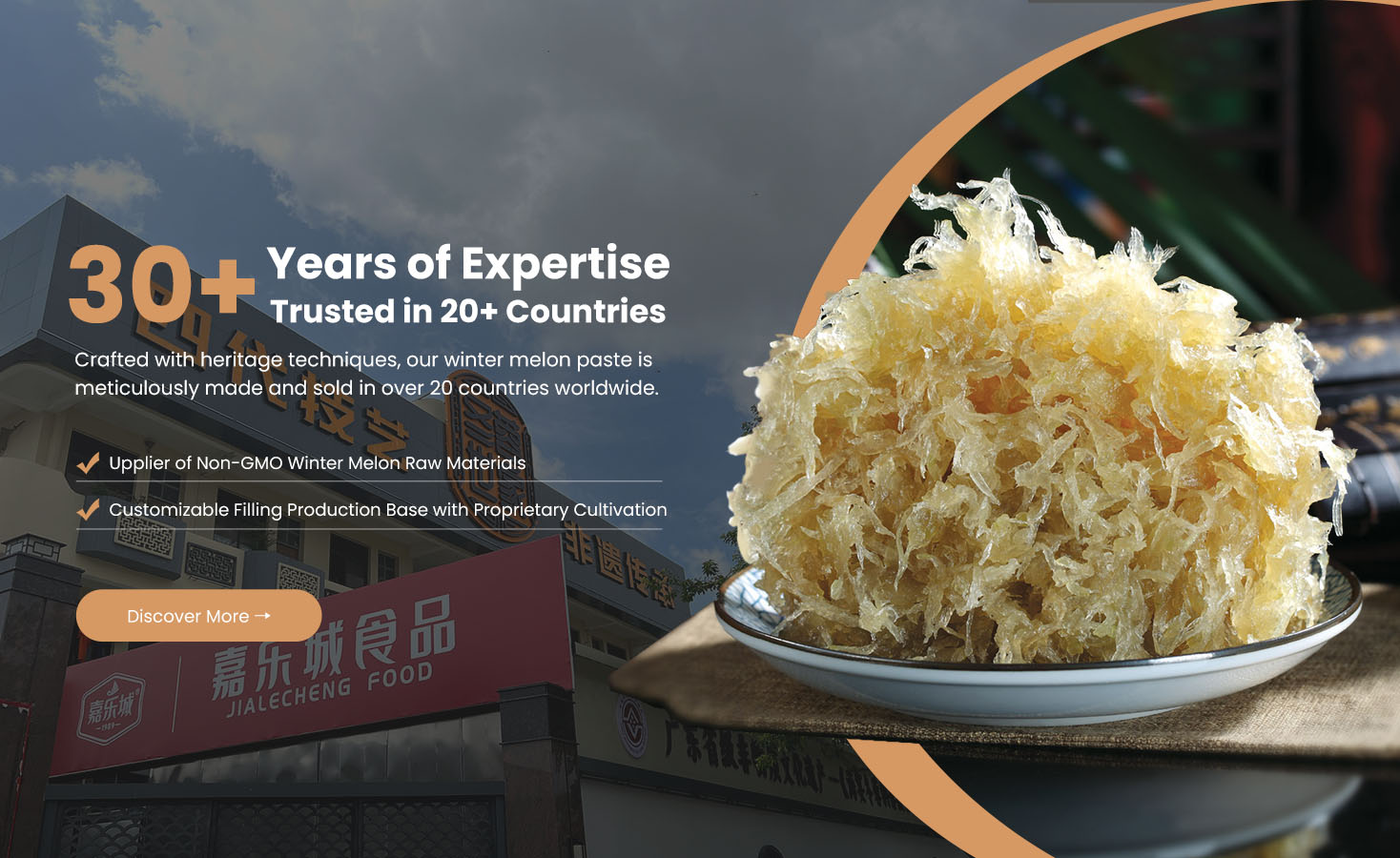
winter melon paste is used in baking as a functional filling ingredient that adds body, mild sweetness, and stable texture to finished products. In commercial production, it is commonly applied in mooncakes, wife cakes, pastries, bakery interlayers, and other filled desserts because it can stay soft while still holding shape during forming and baking. JIALECHENG’s baking-grade product page describes its Sweet Winter Melon Paste as specially customized for the baking industry and suitable for fillings and interlayers in both Chinese and Western baked products.
Table of Contents
Why Bakers Choose It
One reason winter melon paste is widely used is its balanced sensory profile. JIALECHENG describes the product as light amber, delicate, soft in texture, moderately glossy, and carrying a pure sweet winter melon aroma. That makes it useful when a bakery needs a filling that is not too heavy, not overly acidic, and easy to pair with other ingredients. Its mild base also makes it suitable for compound flavor development, which is important for seasonal pastry lines and customized product programs.
Manufacturer Vs Trader In Baking Supply
For baking applications, the difference between a manufacturer and a trader is practical. A trader may supply standard goods, but a manufacturer can adjust texture, sweetness, fiber level, and color depth according to the baking process. JIALECHENG states that it was established in 1989 and specializes in Winter Melon Paste Filling research, production, and sales. Its OEM and ODM service also allows customized sweetness, color depth, and winter melon fiber thickness, which is more useful for repeat bakery production than a fixed off-the-shelf filling.
Manufacturing Process Overview
Winter melon paste for baking is not simply cooked fruit. JIALECHENG’s industrial process overview starts with raw material selection and inspection, including checks on maturity, moisture, fiber density, and Brix level. After that, the product moves through controlled processing steps that build stable solids, smooth texture, and consistent sweetness. Its Semi-Finished Mashed Winter Melon Paste is also positioned as a base ingredient for compound fillings, which shows how the material can be adapted to different bakery formulas.
Quality Control Checkpoints
| Checkpoint | Why it matters in baking |
|---|---|
| Raw material grading | Supports stable sweetness and fiber |
| Moisture and Brix checks | Helps control filling consistency |
| Texture adjustment | Improves depositing and shaping |
| Batch traceability | Reduces supply risk |
| Packaging control | Protects storage and transport stability |
These checkpoints matter because a baking filling must remain reliable across repeated lots, especially in bulk supply. JIALECHENG’s process content emphasizes traceable sourcing and controlled batch inspection, which are stronger indicators of a production-focused supplier than a simple trading model.
OEM ODM, Sourcing, And Export Compliance
For project sourcing, winter melon paste is attractive because it can be customized without changing the whole product platform. A practical checklist should include target texture, sweetness range, fiber style, packaging format, batch coding, and labeling compliance. In export markets, ingredient names generally need to be declared by common or usual name, and food hygiene systems are expected to follow Codex principles built around good hygiene practices and HACCP. FDA also notes that packaged foods must list ingredients, including allergen-related information where required.
Conclusion
Winter melon paste is used in baking because it gives manufacturers a filling that is mild in flavor, stable in texture, and flexible in application. It works well in pastries, mooncakes, and layered bakery products, while also supporting OEM and ODM development for different market needs. JIALECHENG’s direct manufacturing model, process control, and customization capability make winter melon paste a practical ingredient for large-scale baking supply.