


What Are The Main Ingredients in Melon Paste Filling?
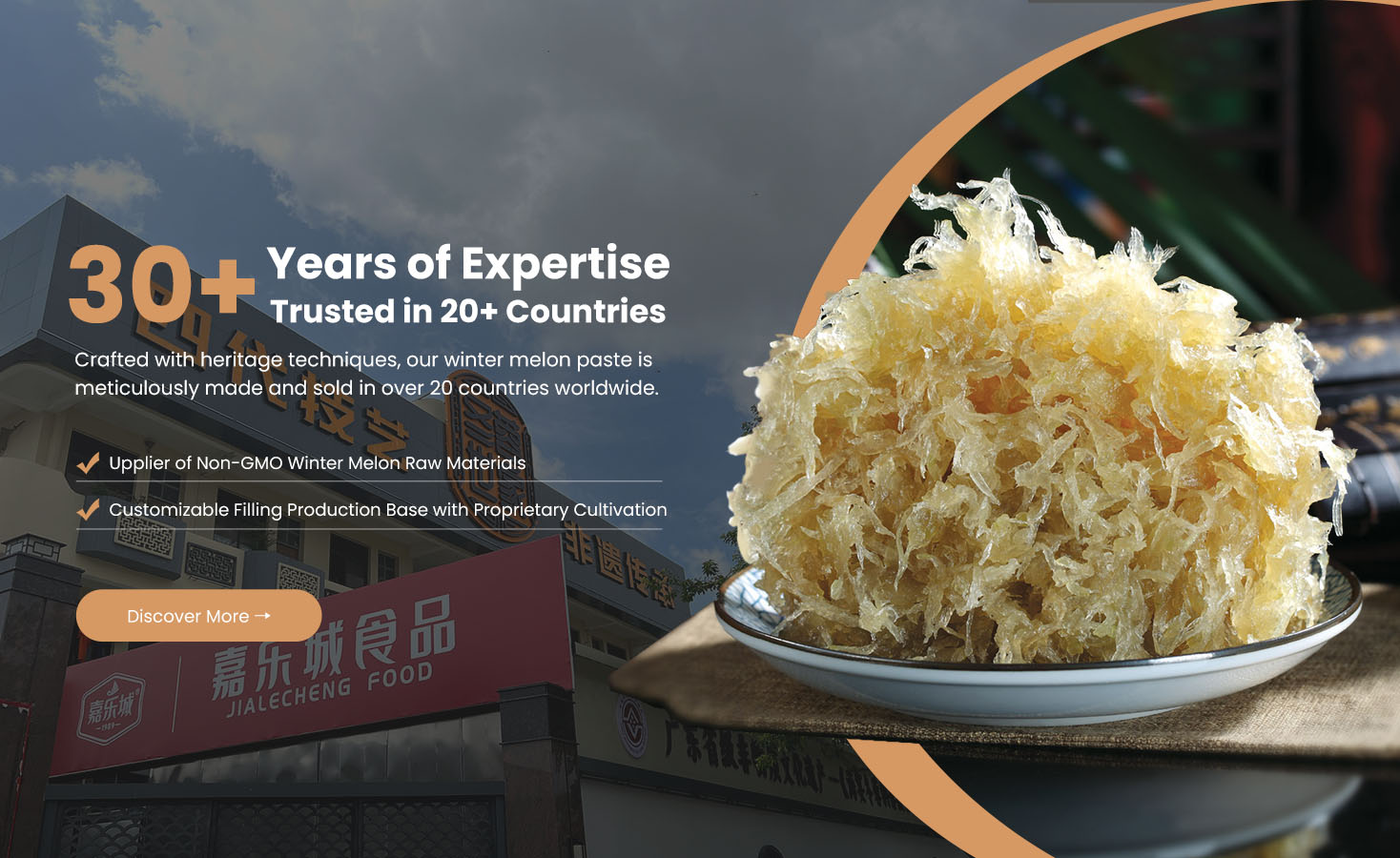
Melon paste filling is typically built around winter melon as the core raw material, then supported by sweeteners and texture-balancing ingredients that make the product suitable for bakery and pastry manufacturing. On JIALECHENG’s product pages, standard Winter Melon Filling is described as being made from chopped winter melon simmered with sugar or maltose until it becomes soft, smooth, sticky, and easy to spread. Its Sweet Winter Melon Paste is also introduced as a translucent filling made by slowly cooking finely chopped winter melon with refined sugar.
Table of Contents
Core Ingredients In Commercial Melon Paste Filling
In commercial production, the main ingredients usually include winter melon, white sugar or refined sugar, and maltose or glucose syrup. JIALECHENG’s ingredient-focused article explains that winter melon provides the natural fiber, mild sweetness, and base texture, while sugar adds sweetness and helps reduce excess moisture. Maltose or glucose syrup contributes gloss, elasticity, and a chewy consistency while helping reduce crystallization.
For more specialized bakery applications, the formula may also include maltodextrin, pectin, edible vegetable oil, and natural flavors. JIALECHENG’s mooncake-specific melon filling lists candied winter melon pieces, maltose syrup, maltodextrin, natural flavors, pectin, and edible vegetable oil as key ingredients. Another JIALECHENG semi-finished product page shows that mashed winter melon paste can also serve as a base for compound fillings, allowing food manufacturers to adjust sweetness and consistency for different recipes.
What Each Ingredient Does
The value of these ingredients is not only in taste. Each one supports industrial performance.
| Ingredient | Main function |
|---|---|
| Winter melon | Base flavor, natural fiber, body |
| Sugar | Sweetness, solids control, preservation support |
| Maltose or glucose syrup | Gloss, elasticity, smoother mouthfeel |
| Maltodextrin | Texture balance and filling stability |
| Pectin | Structure and heat stability |
| Vegetable oil | Smoothness and richer mouthfeel |
| Natural flavors | Flavor consistency and product variation |
FDA notes that food ingredients are commonly used for sweetening, thickening, stabilizing, emulsifying, and preserving, and they must meet the same safety standard whether naturally or artificially derived.
Manufacturer Vs Trader
This is where a direct manufacturer has a stronger advantage than a trader. A trader may only offer a fixed recipe, but a manufacturer can adjust sweetness, fiber level, texture, and ingredient balance to match actual applications such as mooncakes, pastries, and baked fillings. JIALECHENG’s product system shows both standard Winter Melon Filling and Semi-Finished Mashed Winter Melon Paste for customized blending, which reflects real OEM and ODM flexibility rather than simple resale.
Manufacturing Process Overview
A high-quality melon paste filling depends on both ingredients and process control. JIALECHENG’s related production content shows that winter melon paste is developed through chopping or shredding, controlled cooking, moisture reduction, and fine processing until the filling reaches the desired softness, gloss, and stability. Historical process notes on the site also explain that removing excess moisture and cooking winter melon with sugar and oil creates a dense, stable paste with longer shelf life, which is one reason winter melon filling became practical for large-scale pastry production.
Quality Control Checkpoints
For bulk supply, ingredient quality must be supported by production discipline. A practical sourcing checklist should include raw material grade, sweetness target, moisture range, fiber style, ingredient declaration, packaging format, and batch traceability. Codex General Principles of Food Hygiene places good hygiene practices and HACCP at the center of food production, while FDA requires packaged foods to list ingredients and uses common or usual ingredient names in labeling. These requirements matter for export market compliance as much as for product safety.
Conclusion
The main ingredients in melon paste filling are usually winter melon, sugar, and maltose or glucose syrup, with optional additions such as maltodextrin, pectin, edible vegetable oil, and natural flavors depending on the target application. In food manufacturing, the best formula is not simply the sweetest one, but the one that gives stable texture, reliable baking performance, and clear export-ready labeling. JIALECHENG’s direct manufacturing model, flexible formula structure, and application-based product range make it well suited for OEM, bulk order, and commercial pastry supply.