



Is Winter Melon Paste Healthy for Desserts?
winter melon paste can be a healthier dessert filling when it is designed with controlled sugar, clean ingredients, and stable manufacturing standards. The raw winter melon itself is naturally low in calories, with about 13 calories and roughly 3 grams of carbohydrates per 100 grams, which helps explain why it is often seen as a lighter base ingredient than many rich dessert fillings.
Table of Contents
Why The Ingredient Base Matters
Health value starts with the raw material. JIALECHENG describes Sweet Winter Melon Paste as a filling made by slowly cooking finely chopped winter melon and refined sugar, while other company content highlights lower-sugar development and clean-label direction for winter melon products. Because winter melon has a mild natural taste, manufacturers can use it as a base for desserts without relying only on heavy fat systems or very strong flavor masking.
Manufacturer Vs Trader
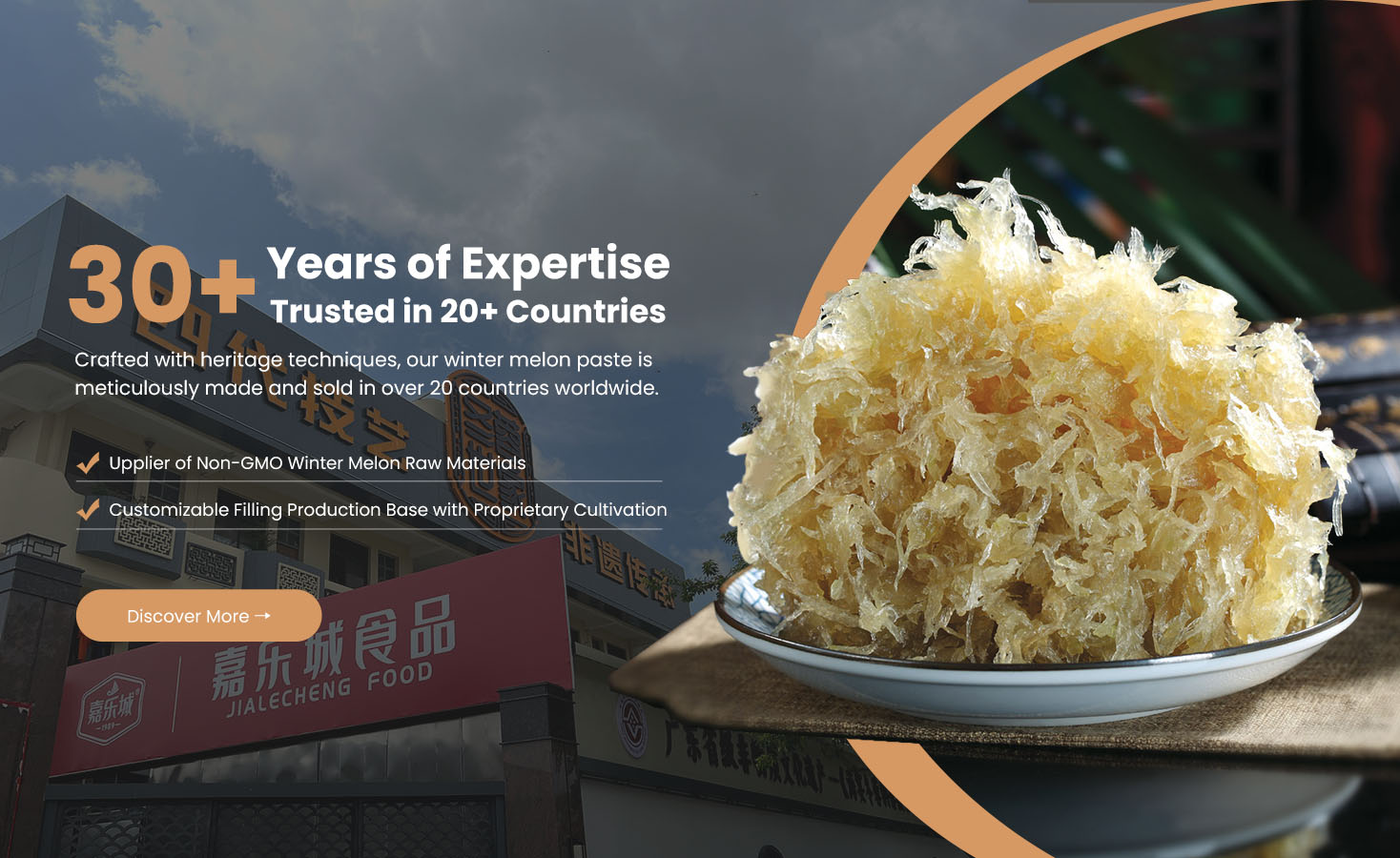
For dessert applications, health positioning depends on process control as much as ingredients. A trader can resell a standard formula, but a direct manufacturer can adjust sweetness, moisture, fiber level, and pack format for different bakery uses. JIALECHENG presents itself as a winter melon paste manufacturer with OEM and ODM capability, which is important when a customer needs lower-sugar filling, cleaner ingredient lists, or more stable repeat batches.
Manufacturing Process Overview
A healthier dessert filling is not simply one with fewer calories. It also needs reliable process control. JIALECHENG’s public content emphasizes recipe customization, moisture management, and packaging adjustment, which are useful for balancing sweetness and shelf stability. In practical terms, a good winter melon paste for desserts should control sugar level, maintain soft texture, and avoid unnecessary additive complexity when the target market values a cleaner label.
Quality Control Checkpoints
| Checkpoint | Why it matters |
|---|---|
| Raw material selection | Supports cleaner flavor and stable quality |
| Sugar control | Helps balance taste and nutrition positioning |
| Moisture control | Improves texture and shelf stability |
| Batch traceability | Reduces sourcing risk |
| Ingredient declaration | Supports export and label compliance |
Codex General Principles of Food Hygiene states that food production should follow essential hygiene principles across the food chain and recommends a HACCP-based approach. FDA also notes that food ingredients must meet the same safety standard whether naturally or artificially derived. That means a healthier dessert filling should be judged by ingredient quality, processing discipline, and labeling clarity together.
OEM ODM, Bulk Supply, And Export Compliance
For project sourcing, buyers should review more than the taste profile. A practical checklist should include ingredient list, sweetness target, nutritional positioning, batch consistency, allergen labeling, and export documentation. FDA requires packaged foods to list ingredients, and ingredient names generally need to use their common or usual names. This makes direct manufacturer support more valuable in bulk supply, because recipe adjustment and compliance preparation can be handled in one system.
Conclusion
Winter melon paste can be healthy for desserts when it is developed as a balanced filling rather than only a sweet base. Its value comes from a naturally light raw material, the possibility of lower-sugar formulation, and strong manufacturing control over quality and compliance. JIALECHENG’s manufacturer model, OEM and ODM flexibility, and clean-label product direction make winter melon paste a practical choice for dessert products that aim for both indulgence and better ingredient positioning.