


How Does Moisture Affect Baking Fillings?
Moisture is one of the most important factors affecting the quality, stability, and application performance of baking fillings. Whether used in mooncakes, pastries, or other bakery products, filling moisture levels directly influence texture, shelf life, processing performance, and the final consumer experience.
For food manufacturers, moisture control is not simply about measuring water content. The key factor is water activity, which determines how much water is available for microbial growth and quality changes. The U.S. Food and Drug Administration explains that controlling water activity helps manage food safety and product stability because microorganisms require available moisture to grow.
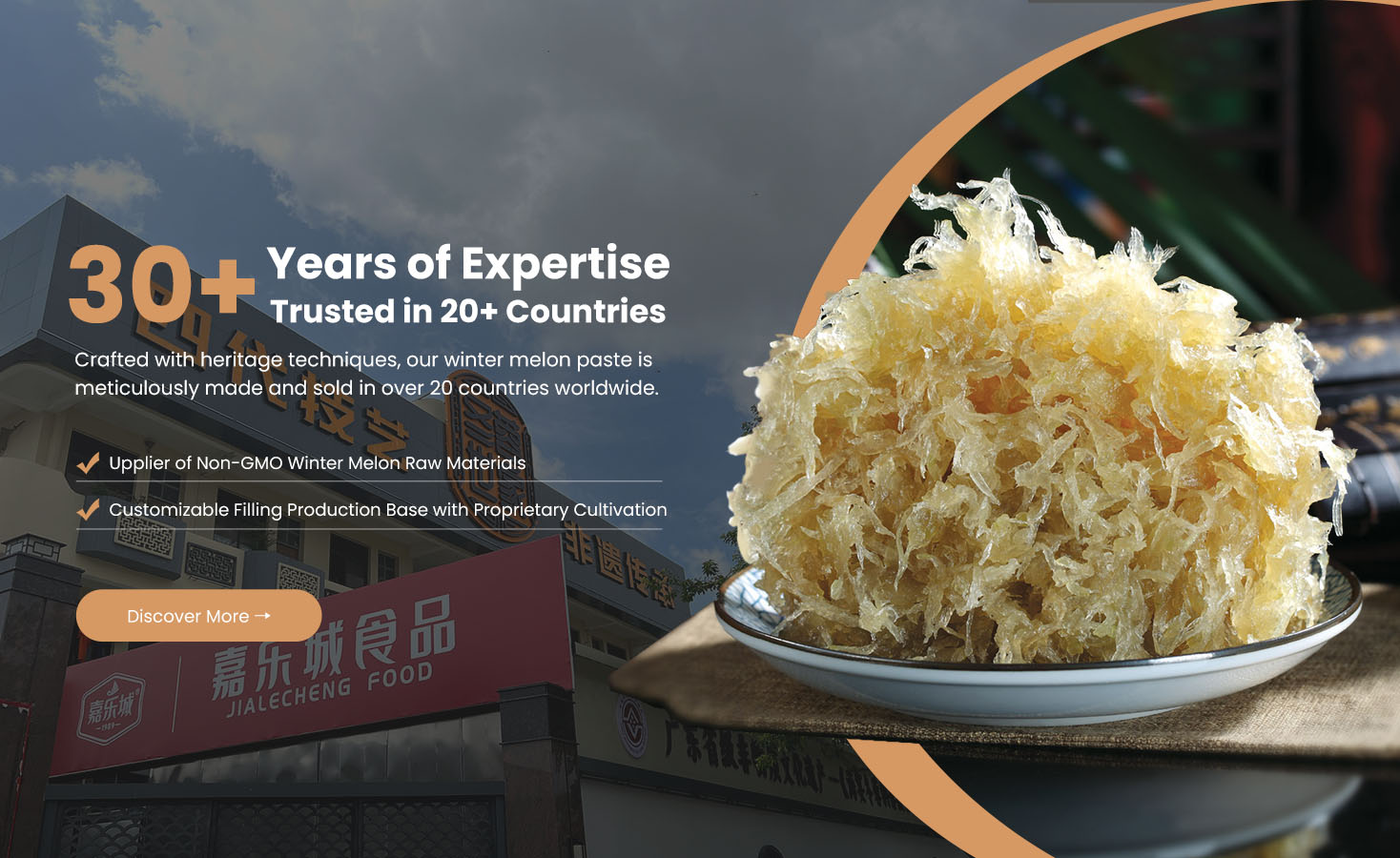
As a professional Winter Melon Paste Filling manufacturer, JIALECHENG Foods understands that precise moisture management is essential for creating fillings with stable texture, consistent flavor, and reliable production performance. Since 1989, we have focused on developing and manufacturing traditional filling solutions by combining traditional craftsmanship with modern food processing technology.
Table of Contents
- Why Moisture Control Matters In Baking Fillings
- How Moisture Influences Filling Texture
- Moisture Migration Between Filling And Bakery Shell
- Manufacturing Process Overview For Moisture-Controlled Fillings
- How Manufacturers Optimize Moisture During OEM And ODM Development
- Material Standards Used For Stable Filling Performance
- Quality Control Checkpoints For Moisture Management
- Bulk Supply Considerations For Baking Fillings
- Project Sourcing Checklist For Filling Products
- Export Market Compliance And Filling Quality
- Creating Better Bakery Products Through Moisture Control
Why Moisture Control Matters In Baking Fillings
Moisture affects almost every characteristic of a baking filling. Too much moisture may reduce shelf stability, while insufficient moisture can make fillings dry, hard, or difficult to process.
| Moisture Condition | Possible Impact On Filling |
|---|---|
| Excess moisture | Shorter shelf life and unstable texture |
| Balanced moisture | Smooth texture and stable application |
| Low moisture | Dryness and reduced mouthfeel |
Water activity is different from total moisture content. Moisture content measures the amount of water in a product, while water activity measures how much water is available for chemical reactions and microbial growth.
For bakery fillings, controlling available moisture helps manufacturers maintain:
Consistent texture
Stable flavor
Better storage performance
Reliable production efficiency
How Moisture Influences Filling Texture
Texture is one of the most important factors determining the quality of bakery fillings. Moisture levels influence softness, smoothness, and processing behavior.
A suitable moisture balance allows fillings to achieve:
Smooth spreading performance
Good shaping ability
Stable internal structure
Pleasant mouthfeel
For example, mooncake filling requires a texture that is soft enough for molding but stable enough to maintain product shape after baking.
If moisture is too high:
Filling may become sticky
Baking performance may change
Product structure may become unstable
If moisture is too low:
Filling may become harder
Processing becomes more difficult
Eating experience may decrease
JIALECHENG develops winter melon paste fillings with controlled processing techniques to maintain suitable texture characteristics for different bakery applications.
Winter Melon Paste Filling Solutions
Moisture Migration Between Filling And Bakery Shell
One challenge in bakery production is moisture migration between different components.
During storage, water can move from areas with higher water activity to areas with lower water activity. This may cause changes in pastry texture, including softer crusts or harder fillings.
| Moisture Migration Problem | Production Impact |
|---|---|
| Filling moisture moves into pastry | Shell loses crispness |
| Pastry moisture enters filling | Filling texture changes |
| Uneven moisture distribution | Product consistency decreases |
For this reason, filling manufacturers need to evaluate not only the filling itself but also how it interacts with different bakery products.
Manufacturing Process Overview For Moisture-Controlled Fillings
Moisture management begins during the manufacturing process. Each production stage affects the final water content and texture.
| Manufacturing Stage | Moisture Control Purpose |
|---|---|
| Raw Material Selection | Ensure ingredient consistency |
| Cleaning And Preparation | Remove impurities |
| Cooking | Develop flavor structure |
| Dehydration | Control available moisture |
| Stir Frying | Adjust texture and consistency |
| Cooling | Maintain product stability |
| Packaging | Protect moisture balance |
JIALECHENG follows a traditional winter melon paste production process including cleaning, peeling, pulp removal, cutting, cooking, dehydration, stir-frying, and final processing.
Through controlled production procedures, we help maintain consistent filling characteristics across different batches.
How Manufacturers Optimize Moisture During OEM And ODM Development
Different bakery products require different moisture characteristics. A filling suitable for mooncakes may not perform the same way in other pastry applications.
Through OEM and ODM development, manufacturers can adjust:
| Customization Area | Moisture-Related Optimization |
|---|---|
| Texture | Modify softness and consistency |
| Sweetness | Balance formulation structure |
| Application | Adapt to baking conditions |
| Storage | Improve product stability |
Compared with a trader, a direct manufacturer has stronger control over production adjustments, processing parameters, and quality consistency.
JIALECHENG provides customized filling solutions by combining raw material management, production experience, and application knowledge.
Material Standards Used For Stable Filling Performance
The quality of raw materials directly affects moisture behavior during production.
Important considerations include:
Raw material freshness
Natural ingredient characteristics
Processing suitability
Storage stability
For winter melon paste fillings, selecting suitable winter melon varieties is an important part of maintaining consistent texture and flavor.
JIALECHENG works with controlled raw material sources and has its own winter melon cultivation base to support stable ingredient quality.
Quality Control Checkpoints For Moisture Management
A professional filling manufacturer needs a complete quality control system to monitor moisture-related performance.
| Quality Checkpoint | Purpose |
|---|---|
| Raw Material Testing | Confirm ingredient quality |
| Moisture Analysis | Control product consistency |
| Water Activity Testing | Evaluate stability |
| Texture Evaluation | Maintain mouthfeel |
| Finished Product Testing | Verify quality standards |
| Packaging Inspection | Protect product performance |
Water activity control is widely used in food manufacturing because it helps evaluate shelf life, safety, and quality stability.
Bulk Supply Considerations For Baking Fillings
For large-volume production, moisture consistency becomes even more important. Small differences between batches can affect final bakery products.
Before selecting a filling manufacturer, important considerations include:
Production capacity
Moisture control system
Quality inspection procedures
Packaging options
Storage requirements
Export experience
A reliable manufacturer helps maintain stable filling performance from the first batch to long-term supply.
Project Sourcing Checklist For Filling Products
Before starting a new filling project, consider:
Product application
Required texture
Sweetness level
Moisture requirements
Packaging format
Expected quantity
Target market standards
Delivery requirements
Clear project information allows manufacturers to develop more suitable filling solutions.
Export Market Compliance And Filling Quality
Different markets have different requirements for food safety, labeling, packaging, and storage. Manufacturers need to consider export market compliance throughout product development and production.
JIALECHENG Foods has obtained ISO 9001 certification, WIT certification, and export food qualifications. Our products are exported to more than 20 countries and regions, including the United States, Canada, the UK, and Belgium.
Creating Better Bakery Products Through Moisture Control
Moisture is a key factor that determines the performance of baking fillings. From texture and shelf life to processing stability and product consistency, every stage of filling development depends on precise moisture management.
With decades of winter melon paste manufacturing experience, JIALECHENG Foods combines traditional techniques with modern production control to create filling solutions suitable for different bakery applications. Through OEM/ODM support, quality management systems, and controlled manufacturing processes, we help develop fillings with stable performance and reliable quality.