


What Is The Role Of Pectin In Fruit Paste?
Pectin plays an important role in determining the texture, stability, and processing performance of fruit paste products. Although pectin is naturally present in many fruits and plants, its functional value in food manufacturing goes far beyond being a natural component. It helps control viscosity, improve structure, bind moisture, and create the smooth texture expected in high-quality fruit-based fillings.
According to food science research, pectin is a natural polysaccharide widely used as a gelling, thickening, and stabilizing ingredient because of its ability to interact with water and form structured networks. These properties make pectin especially valuable in fruit pastes, jams, bakery fillings, and confectionery products.
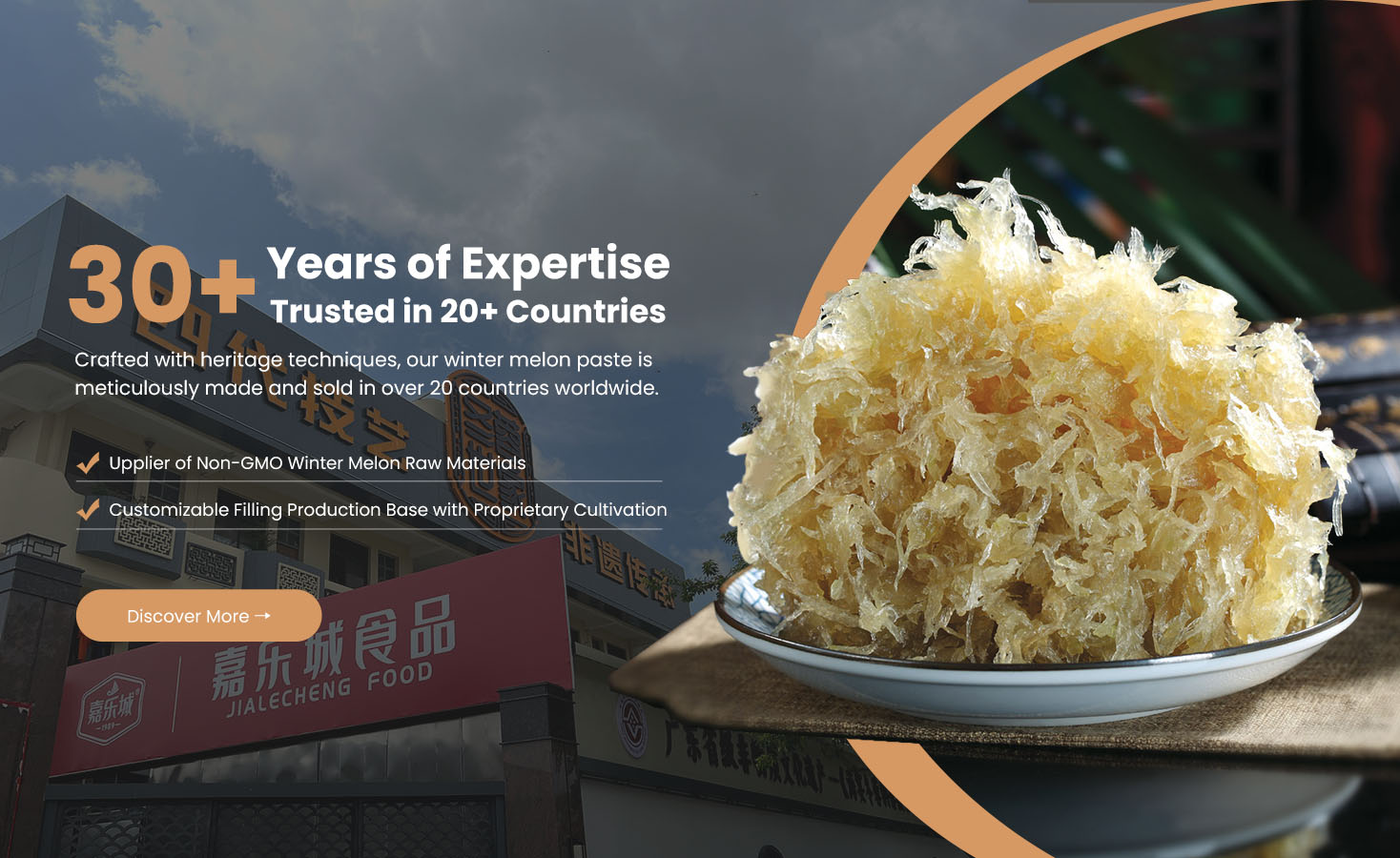
As a professional fruit paste manufacturer, JIALECHENG Foods understands that controlling pectin behavior is essential for creating fillings with consistent texture and reliable application performance. Since 1989, we have focused on Winter Melon Paste Filling production, combining traditional processing methods with modern manufacturing technology to develop stable filling solutions.
Table of Contents
- Why Is Pectin Important In Fruit Paste Production?
- How Does Pectin Affect Fruit Paste Texture?
- The Relationship Between Pectin And Moisture Control
- Manufacturing Process Overview For Pectin-Based Fruit Paste
- How Manufacturers Optimize Pectin Performance Through OEM And ODM
- Material Standards Used For Fruit Paste Manufacturing
- Quality Control Checkpoints For Pectin-Based Fillings
- Bulk Supply Considerations For Fruit Paste Projects
- Export Market Compliance For Fruit Paste Products
- Creating Better Fruit Paste Through Ingredient Control
Why Is Pectin Important In Fruit Paste Production?
Pectin naturally exists in plant cell walls and contributes to the firmness and structure of fruits. During food processing, pectin can interact with water and other ingredients to create the desired texture.
In fruit paste manufacturing, pectin helps provide:
| Pectin Function | Impact On Fruit Paste |
|---|---|
| Gel formation | Creates stable filling structure |
| Water binding | Reduces moisture separation |
| Texture control | Improves smoothness and consistency |
| Viscosity adjustment | Supports better processing performance |
| Stability improvement | Helps maintain product quality |
Scientific studies show that pectin can immobilize water through thickening and gel-forming mechanisms, allowing food products to maintain a stable structure instead of becoming too liquid or separating. (科学直通车)
For fruit fillings, this means pectin directly influences how the product behaves during production, storage, and final application.
How Does Pectin Affect Fruit Paste Texture?
Texture is one of the most important characteristics of fruit paste. A suitable pectin structure helps create a filling that is smooth, spreadable, and stable.
Different pectin levels and processing conditions can influence:
Softness
Elasticity
Firmness
Moisture retention
Mouthfeel
| Pectin Performance | Product Result |
|---|---|
| Balanced pectin structure | Smooth and stable filling |
| Insufficient structure | Loose texture and moisture separation |
| Excessive structure | Too firm or less flexible filling |
Research on pectin-based food gels shows that pectin concentration can significantly influence rheological properties and texture characteristics. Higher pectin levels generally strengthen gel networks, affecting firmness and elasticity.
For bakery fillings such as mooncake filling, the ideal texture requires a balance between stability and softness. The filling needs to maintain its shape while still providing a pleasant eating experience.
The Relationship Between Pectin And Moisture Control
Moisture management is a major challenge in fruit paste manufacturing. Excess moisture can cause filling instability, while insufficient moisture may result in a dry texture.
Pectin helps solve this challenge by binding water within its structure.
| Moisture Challenge | Role Of Pectin |
|---|---|
| Water separation | Helps retain moisture |
| Texture instability | Builds filling structure |
| Storage changes | Supports consistency |
| Processing variation | Improves stability |
Food science research explains that pectin interacts with water through complex physical and chemical mechanisms, and factors such as temperature, pH, sugar content, and pectin structure influence final performance.
This is why professional fruit paste manufacturing requires precise control of ingredients and processing conditions.
Manufacturing Process Overview For Pectin-Based Fruit Paste
The role of pectin is closely connected with the entire production process. Every manufacturing stage can affect how pectin performs.
A typical fruit paste production process includes:
| Production Stage | Purpose |
|---|---|
| Raw Material Selection | Ensure ingredient quality |
| Cleaning | Remove impurities |
| Preparation | Improve ingredient consistency |
| Cooking | Develop flavor and texture |
| Moisture Control | Adjust filling structure |
| Stir Frying | Create final consistency |
| Cooling | Stabilize product characteristics |
| Quality Inspection | Confirm product standards |
For winter melon paste production, JIALECHENG follows traditional processing methods including cleaning, peeling, pulp removal, cutting, cooking, dehydration, and stir-frying. These processes help control moisture, texture, and flavor consistency.
How Manufacturers Optimize Pectin Performance Through OEM And ODM
Different bakery products require different filling characteristics. A filling designed for mooncakes may require different texture performance compared with pastry or dessert applications.
Through OEM and ODM development, manufacturers can adjust:
| Customization Direction | Development Goal |
|---|---|
| Texture adjustment | Create softer or firmer fillings |
| Moisture control | Improve application stability |
| Sweetness adjustment | Match market preferences |
| Processing optimization | Improve production compatibility |
Compared with a trader, a direct manufacturer has stronger control over:
Ingredient selection
Production parameters
Texture adjustment
Quality consistency
Product improvement
JIALECHENG provides customized filling solutions by combining manufacturing experience with application knowledge.
Material Standards Used For Fruit Paste Manufacturing
Pectin performance depends not only on pectin itself but also on the quality of other raw materials.
Important material considerations include:
Fruit ingredient quality
Natural flavor characteristics
Sugar balance
Moisture level
Processing compatibility
For winter melon paste fillings, selecting suitable winter melon raw materials is important for achieving stable texture and authentic flavor.
JIALECHENG manages raw material selection and production processes to maintain consistent product performance across different batches.
Quality Control Checkpoints For Pectin-Based Fillings
A reliable fruit paste manufacturer needs strict quality control throughout production.
| Quality Checkpoint | Purpose |
|---|---|
| Raw Material Inspection | Verify ingredient quality |
| Moisture Testing | Control water balance |
| Texture Evaluation | Maintain filling consistency |
| Production Monitoring | Ensure process stability |
| Finished Product Testing | Confirm quality standards |
| Packaging Inspection | Protect product performance |
Quality control is especially important for bulk supply because even small differences in texture or moisture can affect final bakery products.
Bulk Supply Considerations For Fruit Paste Projects
When sourcing fruit paste fillings for large-scale production, manufacturers need to evaluate more than product price.
Important considerations include:
Production capacity
Batch consistency
Raw material stability
Quality management system
Packaging solutions
Export experience
A professional manufacturer helps ensure that every production batch maintains similar texture, flavor, and application performance.
Export Market Compliance For Fruit Paste Products
International food markets have different requirements regarding ingredients, labeling, packaging, and safety management.
Manufacturers need to consider:
Food safety standards
Product documentation
Packaging requirements
Transportation conditions
Target market regulations
JIALECHENG Foods has obtained ISO 9001 certification, WIT certification, and export food qualifications. Our products are exported to more than 20 countries and regions, supporting global food applications.
Creating Better Fruit Paste Through Ingredient Control
Pectin is a key functional ingredient that influences the quality of fruit paste products. It affects texture, moisture control, stability, and overall product performance.
A professional fruit paste manufacturer does not simply add ingredients but carefully manages the relationship between raw materials, processing technology, and quality control.
JIALECHENG Foods combines decades of winter melon paste manufacturing experience with modern production systems to develop filling solutions with stable texture, reliable quality, and flexible application potential for global bakery and food industries.