


How To Prevent Caramelization In Fillings?
Caramelization is an important reaction in food processing, but uncontrolled caramelization can negatively affect the appearance, flavor, and stability of bakery fillings. During high-temperature processing, excessive caramelization may cause fillings to become darker than expected, develop burnt flavors, or lose their original taste characteristics.
For bakery products such as mooncakes, pastries, and sweet fillings, controlling caramelization is essential for maintaining consistent color, texture, and flavor. According to food science research, caramelization typically occurs when sugars are exposed to high temperatures, with reaction speed influenced by temperature, moisture content, pH value, and processing time.
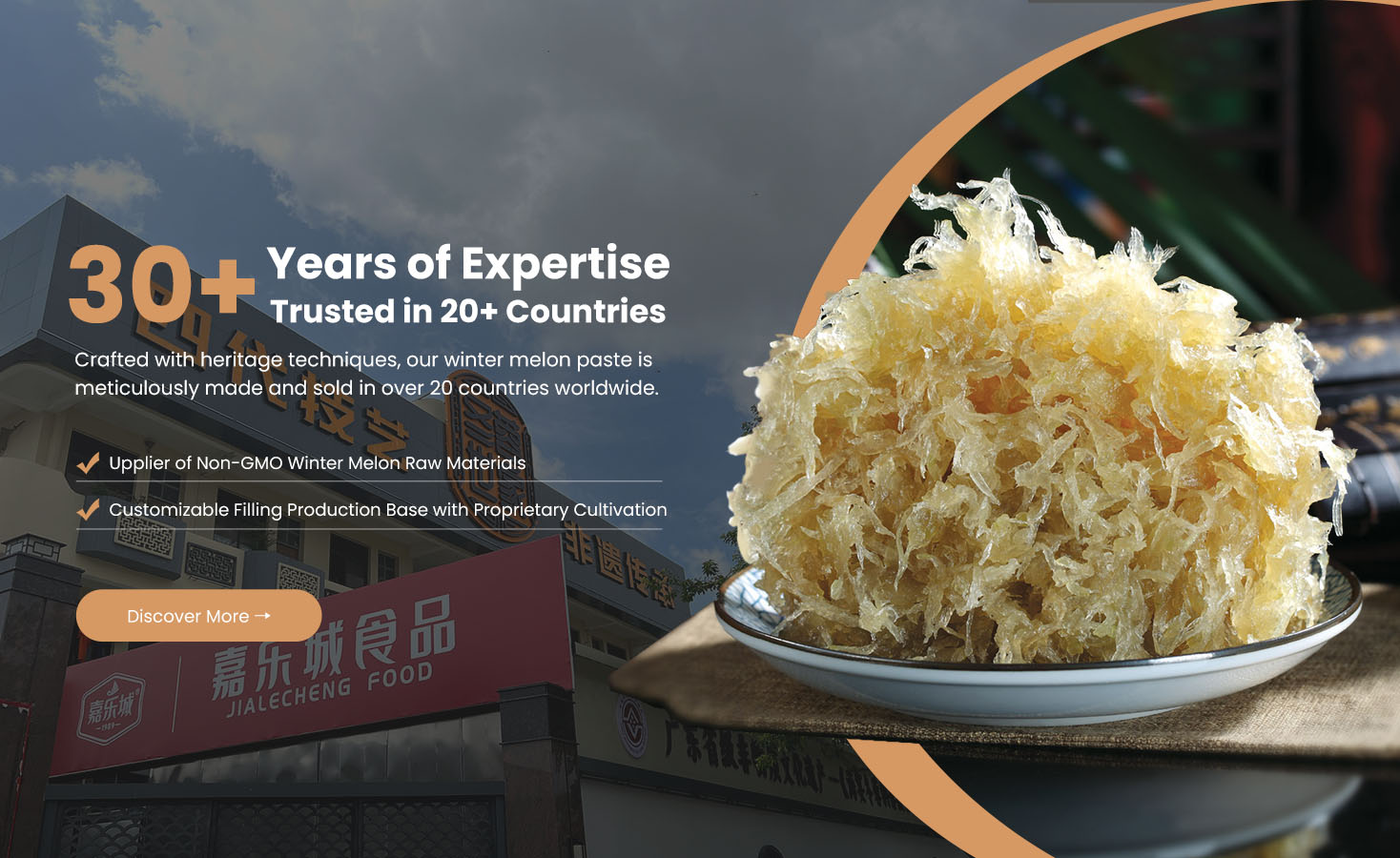
As a professional Winter Melon Paste Filling manufacturer, JIALECHENG Foods focuses on balancing traditional flavor development with precise production control. Since 1989, we have specialized in winter melon paste filling research, development, and manufacturing, combining traditional techniques with modern food processing systems to create stable filling solutions. (JIALECHENG)
Table of Contents
- Why Does Caramelization Happen In Fillings?
- Control Cooking Temperature During Filling Production
- Maintain Proper Moisture Balance
- Select Suitable Raw Materials
- Optimize Formula Through OEM And ODM Development
- Manufacturing Process Overview For Caramelization Control
- Quality Control Checkpoints For Filling Stability
- Material Standards Used For Stable Filling Production
- Bulk Supply Considerations For Caramelization-Controlled Fillings
- Export Market Compliance And Production Management
- Creating Stable Fillings Through Manufacturing Expertise
Why Does Caramelization Happen In Fillings?
Caramelization occurs when sugars undergo thermal decomposition under heat. This reaction creates new flavor compounds and color changes, which can be desirable in some foods but undesirable when excessive.
For bakery fillings, uncontrolled caramelization may lead to:
| Issue | Impact On Product |
|---|---|
| Excessive browning | Changes product appearance |
| Burnt flavor | Reduces original ingredient characteristics |
| Texture changes | Affects filling consistency |
| Uneven color | Creates batch differences |
The goal of professional filling production is not to eliminate all heat reactions, but to control them so the final product maintains the intended flavor, color, and texture.
Control Cooking Temperature During Filling Production
Temperature management is one of the most important methods to prevent excessive caramelization.
When sugar-containing fillings are heated too aggressively, the outer layer may experience faster color changes than the internal structure. A controlled heating process allows moisture evaporation and flavor development to happen gradually.
Important temperature control factors include:
Heating intensity
Cooking time
Product thickness
Mixing frequency
Cooling speed
JIALECHENG’s winter melon paste production process includes controlled boiling and stir-frying stages. According to the company’s published manufacturing process, the prepared filling is heated at controlled temperatures during production to achieve stable texture and flavor while maintaining food safety requirements. (JIALECHENG)
Maintain Proper Moisture Balance
Moisture plays an important role in controlling caramelization. Water absorbs heat during processing and influences how quickly sugars react.
| Moisture Condition | Possible Result |
|---|---|
| Too little moisture | Faster sugar concentration and darker color |
| Balanced moisture | Stable heating performance |
| Excess moisture | Longer processing time and texture changes |
For winter melon paste fillings, moisture control is especially important because the product needs to maintain a smooth texture while avoiding excessive darkening during production and baking.
JIALECHENG manages moisture through processes including dehydration, cooking, and stir-frying. These steps help create fillings with consistent structure and application performance. (JIALECHENG)
Select Suitable Raw Materials
Raw material quality directly influences caramelization behavior. Different ingredients contain different levels of natural sugars, moisture, and fiber structures.
A professional filling manufacturer evaluates:
| Raw Material Factor | Influence On Caramelization |
|---|---|
| Sugar content | Affects reaction speed |
| Moisture level | Influences heating behavior |
| Fiber structure | Changes heat distribution |
| Ingredient consistency | Affects batch stability |
JIALECHENG focuses on winter melon raw material control through integrated sourcing and cultivation management. The company has established winter melon cultivation bases and selects suitable raw materials to support stable filling production. (JIALECHENG)
Optimize Formula Through OEM And ODM Development
Different bakery products require different levels of color, sweetness, and heat stability. A filling designed for traditional mooncakes may require different characteristics from one used in other pastry applications.
Through OEM and ODM development, manufacturers can optimize:
Sweetness level
Moisture content
Texture structure
Heating performance
Color expectations
| Customization Direction | Development Goal |
|---|---|
| Sugar adjustment | Control sweetness and browning |
| Moisture adjustment | Improve heating stability |
| Texture optimization | Maintain filling structure |
| Application testing | Match production conditions |
Compared with a trader, a direct manufacturer has stronger control over formulation adjustments, production parameters, and quality consistency.
JIALECHENG provides customized filling solutions based on different product applications, supporting adjustments in sweetness, color depth, fiber thickness, and flavor combinations. (JIALECHENG)
Manufacturing Process Overview For Caramelization Control
Preventing excessive caramelization requires control throughout the entire manufacturing process.
| Production Stage | Control Purpose |
|---|---|
| Raw Material Inspection | Confirm ingredient consistency |
| Cleaning And Preparation | Ensure processing quality |
| Cooking | Develop flavor under controlled heat |
| Dehydration | Manage moisture content |
| Stir Frying | Create final texture |
| Cooling | Stabilize product characteristics |
| Packaging | Protect product quality |
JIALECHENG follows a complete winter melon paste manufacturing process including cleaning, peeling, pulp removal, cutting, cooking, dehydration, stir-frying, and finished product preparation. (JIALECHENG)
This structured process helps reduce production variation and maintain consistent filling performance.
Quality Control Checkpoints For Filling Stability
Quality control is essential for preventing unwanted caramelization differences between production batches.
Important inspection points include:
| Quality Checkpoint | Purpose |
|---|---|
| Raw Material Testing | Verify ingredient quality |
| Moisture Testing | Maintain proper balance |
| Color Evaluation | Monitor appearance consistency |
| Texture Testing | Confirm filling performance |
| Production Monitoring | Control process stability |
| Final Inspection | Ensure product standards |
For bulk supply projects, consistency is especially important. A small difference in processing conditions can affect the final appearance and taste of bakery products.
Material Standards Used For Stable Filling Production
Reliable filling performance depends on the relationship between ingredients and manufacturing technology.
Key considerations include:
Food-grade raw materials
Stable ingredient sources
Controlled sugar content
Suitable processing characteristics
Proper storage conditions
Manufacturers must understand how each ingredient reacts during heating rather than simply focusing on ingredient cost.
JIALECHENG develops different winter melon paste filling products for applications including mooncakes, pastries, baking products, and customized food solutions. (JIALECHENG)
Bulk Supply Considerations For Caramelization-Controlled Fillings
For large-scale bakery production, filling consistency is critical.
Before selecting a filling manufacturer, important factors include:
Production capacity
Process control capability
Quality management system
Batch consistency
Packaging options
Export experience
A reliable manufacturer helps ensure that each production batch maintains similar color, texture, and flavor performance.
Export Market Compliance And Production Management
International food markets have different expectations regarding food safety, labeling, packaging, and documentation.
A professional filling manufacturer should manage:
Food safety systems
Production records
Ingredient documentation
Packaging requirements
Export standards
JIALECHENG has obtained ISO 9001 certification, WIT certification, and export food qualifications. The company’s products are exported to more than 20 countries and regions, including the United States, Canada, the UK, and Belgium. (JIALECHENG)
Creating Stable Fillings Through Manufacturing Expertise
Preventing caramelization in fillings requires a combination of raw material control, moisture management, temperature control, and production experience.
A professional filling manufacturer does not simply produce ingredients. It develops solutions that maintain consistent color, flavor, and texture throughout production and application.
JIALECHENG Foods combines decades of winter melon paste manufacturing experience with modern quality management systems. Through OEM/ODM support, controlled manufacturing processes, and strict quality checkpoints, we provide filling solutions designed for stable performance in global bakery applications.