



What Is Ideal Viscosity For Automated Filling Machines?
The ideal viscosity of baking fillings is one of the key factors that determines whether a filling can run smoothly through automated production equipment. For modern bakery manufacturing, filling consistency directly affects machine performance, production efficiency, product appearance, and final quality.
A filling that is too thick may create resistance during pumping and depositing, while a filling that is too thin may cause inaccurate portioning, leakage, or poor product structure. According to food engineering research, viscosity is a critical rheological property that influences flow behavior, processing stability, and product consistency in food manufacturing.
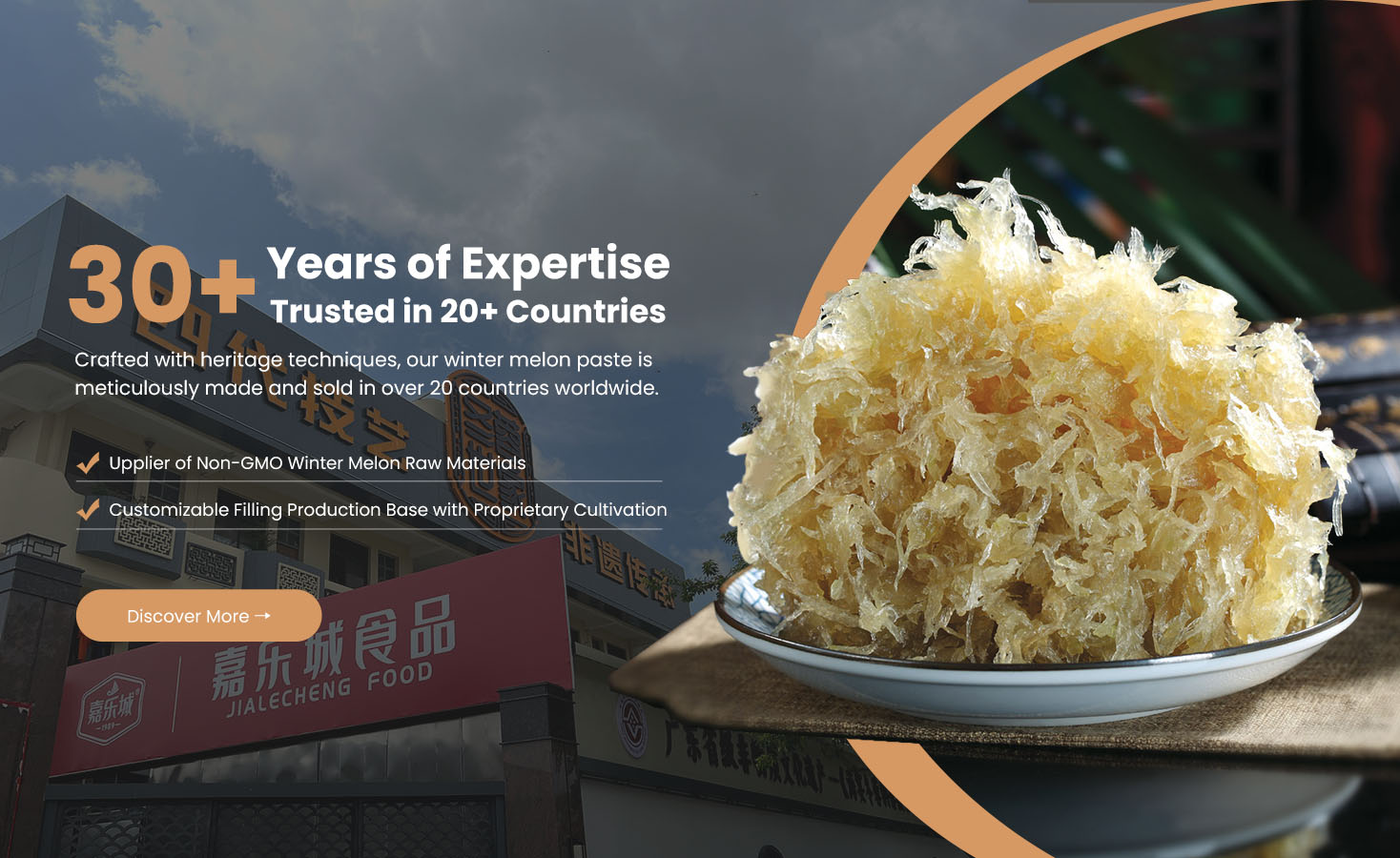
As a professional Winter Melon Paste Filling manufacturer, JIALECHENG Foods understands that viscosity control is not only a texture requirement but also a manufacturing performance requirement. Since 1989, we have focused on winter melon paste filling research, development, and production, combining traditional craftsmanship with modern food processing technology to create fillings suitable for different bakery applications. (JIALECHENG)
Table of Contents
- Why Does Viscosity Matter For Automated Filling Machines?
- How To Determine The Ideal Filling Viscosity?
- The Relationship Between Moisture And Viscosity
- How Manufacturers Adjust Viscosity Through Formulation
- Manufacturing Process Overview For Automated Filling Performance
- Quality Control Checkpoints For Viscosity Stability
- Material Standards Used For Stable Filling Performance
- Project Sourcing Checklist For Automated Filling Applications
- Export Market Compliance And Production Stability
- Creating Better Automated Filling Solutions Through Manufacturing Expertise
Why Does Viscosity Matter For Automated Filling Machines?
Automated filling machines rely on consistent material flow to achieve accurate portion control. The filling must move smoothly through pumps, pipes, and depositing systems without changing its structure.
The relationship between viscosity and machine performance can be summarized as:
| Filling Viscosity | Production Performance |
|---|---|
| Too Low | Leakage, inaccurate filling volume, poor shaping |
| Balanced | Smooth pumping, stable depositing, consistent products |
| Too High | Increased machine resistance, slow production speed |
For products such as mooncakes and pastries, the filling needs to maintain enough firmness to hold its shape while remaining flexible enough for automated processing.
JIALECHENG’s winter melon paste filling is developed with fine and dense texture characteristics, suitable for automated filling operations and molding processes. The product is designed to maintain moderate viscosity and structural stability during mass production. (JIALECHENG)
How To Determine The Ideal Filling Viscosity?
There is no single viscosity value that fits every filling application. The ideal viscosity depends on:
Filling type
Machine structure
Pumping system
Product shape
Processing temperature
Final application
For example, a filling used in mooncake production may require higher structural stability, while a filling used in bakery injection applications may require smoother flow performance.
| Application | Required Viscosity Characteristics |
|---|---|
| Mooncake Filling | Stable structure and molding ability |
| pastry filling | Smooth spreading performance |
| Automated Depositing | Consistent flow behavior |
| Injection Filling | Good pumpability |
Professional manufacturers evaluate viscosity together with texture, moisture content, and processing conditions rather than measuring viscosity alone.
The Relationship Between Moisture And Viscosity
Moisture content has a direct impact on filling viscosity. Water changes the interaction between ingredients and affects how easily the filling flows.
| Moisture Condition | Effect On Viscosity |
|---|---|
| Higher Moisture | Lower viscosity and softer structure |
| Balanced Moisture | Stable texture and processing performance |
| Lower Moisture | Higher viscosity and firmer structure |
During winter melon paste production, controlling moisture is an important step. JIALECHENG’s manufacturing process includes dehydration and controlled cooking stages to adjust product concentration and texture stability. (JIALECHENG)
For example, different winter melon paste products may require different moisture levels depending on their applications. Products designed for mooncakes and baking applications require specific texture control to maintain performance during production and baking. (JIALECHENG)
How Manufacturers Adjust Viscosity Through Formulation
Viscosity optimization is not achieved by one ingredient alone. It requires a balance between raw materials, processing conditions, and product requirements.
Manufacturers may adjust:
| Adjustment Method | Purpose |
|---|---|
| Moisture Control | Improve flow consistency |
| Cooking Time Adjustment | Develop suitable structure |
| Fiber Control | Modify texture characteristics |
| Formula Optimization | Match application requirements |
Through OEM and ODM development, manufacturers can customize filling characteristics based on different production systems.
Customization may include:
Softer filling texture
Higher molding stability
Improved machine compatibility
Different sweetness levels
Customized application performance
Compared with a trader, a direct manufacturer has stronger control over production parameters, formulation adjustments, and quality consistency.
Manufacturing Process Overview For Automated Filling Performance
The manufacturing process directly affects the viscosity stability of fillings.
A professional filling production process includes:
| Manufacturing Stage | Viscosity Control Function |
|---|---|
| Raw Material Selection | Ensure ingredient consistency |
| Cleaning And Preparation | Improve processing stability |
| Cooking | Develop filling structure |
| Dehydration | Control concentration |
| Stir Frying | Adjust final texture |
| Homogenization | Improve uniformity |
| Quality Inspection | Confirm batch consistency |
JIALECHENG follows a complete winter melon paste production process including cleaning, peeling, pulp removal, cutting, cooking, dehydration, stir-frying, and finished product processing. (JIALECHENG)
These controlled steps help maintain stable viscosity between different production batches.
Quality Control Checkpoints For Viscosity Stability
For automated production, viscosity consistency is more important than achieving a specific number.
A professional quality control system should include:
| Quality Checkpoint | Purpose |
|---|---|
| Raw Material Inspection | Confirm ingredient quality |
| Moisture Testing | Control filling structure |
| Texture Evaluation | Maintain mouthfeel |
| Flow Performance Testing | Ensure machine compatibility |
| Batch Comparison | Maintain consistency |
| Finished Product Inspection | Verify final standards |
For bulk supply projects, stable viscosity helps reduce production adjustments and improves efficiency during large-scale manufacturing.
Material Standards Used For Stable Filling Performance
The ingredients used in fillings influence viscosity, texture, and processing behavior.
Important material considerations include:
Raw material quality
Fiber structure
Natural ingredient characteristics
Sugar balance
Moisture retention ability
JIALECHENG focuses on winter melon raw material management and has established its own cultivation base to support stable ingredient quality. The company selects winter melons cultivated for approximately 120 to 150 days to achieve suitable processing characteristics. (JIALECHENG)
Project Sourcing Checklist For Automated Filling Applications
Before selecting a filling manufacturer for automated production, consider:
Filling machine type
Required filling speed
Product shape
Desired texture
Moisture requirements
Expected production volume
Packaging requirements
Export market standards
Providing detailed production information helps manufacturers develop more suitable filling solutions.
Export Market Compliance And Production Stability
For international food applications, filling manufacturers must consider food safety requirements, documentation, packaging standards, and transportation conditions.
JIALECHENG has obtained ISO 9001 certification, WIT certification, and other export food qualifications. The company’s products are exported to more than 20 countries and regions, including the United States, Canada, the UK, and Belgium. (JIALECHENG)
Creating Better Automated Filling Solutions Through Manufacturing Expertise
The ideal viscosity for automated filling machines is not simply about making a product thicker or thinner. It requires a balance between flow performance, texture stability, moisture control, and application requirements.
A professional filling manufacturer provides more than ingredients. Through OEM/ODM development, controlled manufacturing processes, and strict quality management, fillings can be optimized for different automated production systems.
JIALECHENG Foods combines decades of winter melon paste manufacturing experience with modern production capabilities to develop filling solutions that deliver stable viscosity, consistent texture, and reliable performance for global bakery applications.