


How To Optimize Filling For Injection Machines?
Optimizing filling performance for injection machines requires precise control of texture, viscosity, moisture, and processing characteristics. For automated bakery production, a filling is not only judged by flavor but also by how efficiently it moves through pumps, nozzles, and filling systems.
A filling with unsuitable properties may cause problems such as uneven injection volume, nozzle blockage, product deformation, or inconsistent final appearance. Industrial bakery filling systems depend heavily on rheological properties because the filling behavior changes during pumping, depositing, and temperature variation.
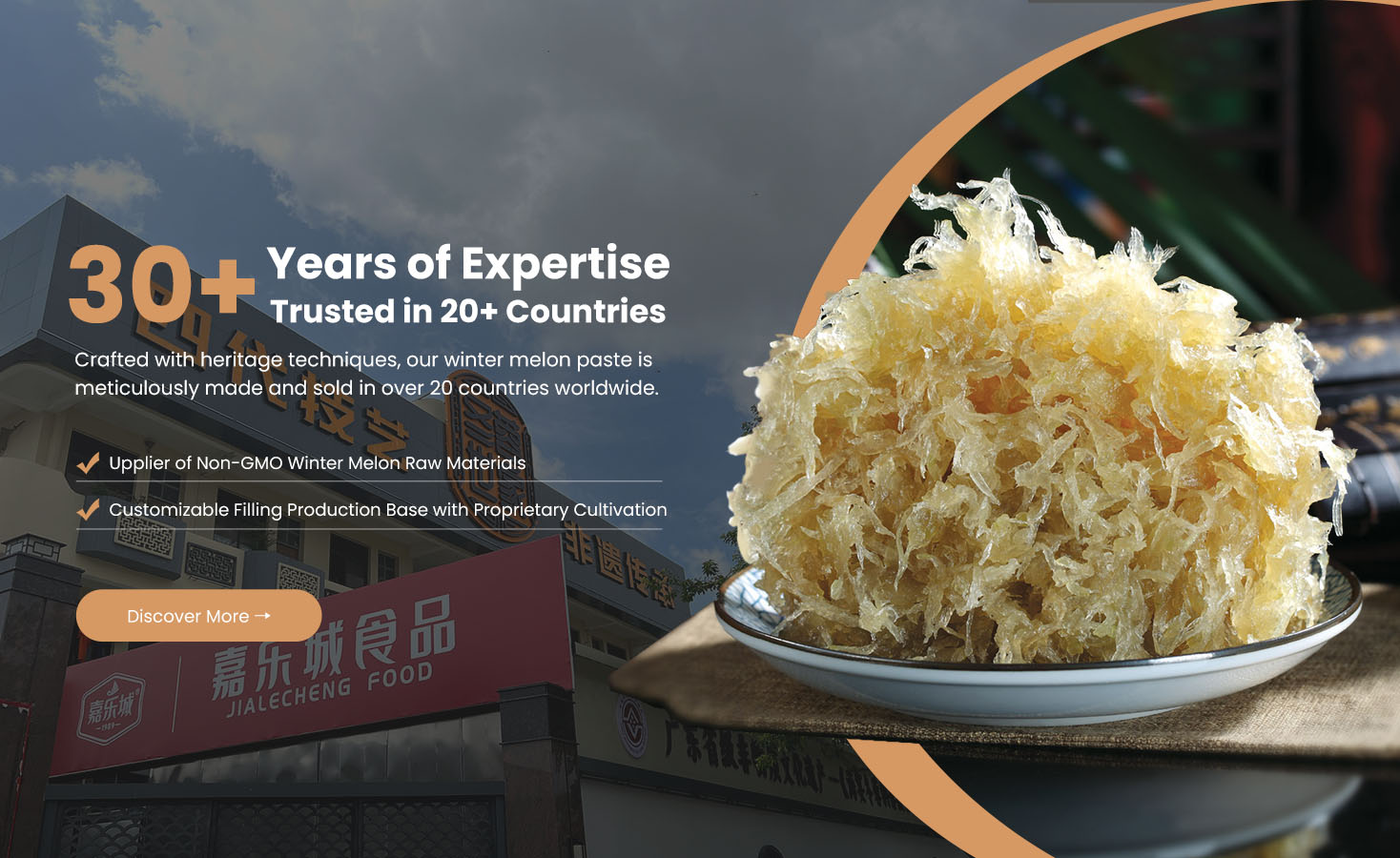
As a professional Winter Melon Paste Filling manufacturer, JIALECHENG Foods focuses on developing fillings with stable texture, controlled moisture, and consistent processing performance. Since 1989, we have specialized in winter melon paste filling production, combining traditional techniques with modern food manufacturing systems to provide reliable filling solutions for mooncakes, pastries, and bakery applications.
Table of Contents
- Why Filling Optimization Matters For Injection Machines
- 1. Control Filling Viscosity For Machine Compatibility
- 2. Optimize Moisture Content And Texture Structure
- 3. Adjust Filling Formulation Through OEM And ODM Development
- 4. Manufacturing Process Overview For Injection-Compatible Fillings
- 5. Evaluate Filling Performance Under Real Production Conditions
- 6. Quality Control Checkpoints For Automated Filling Applications
- 7. Material Standards Used For Stable Filling Performance
- 8. Project Sourcing Checklist For Injection Filling Solutions
- 9. Export Market Compliance And Manufacturing Stability
- Creating Better Filling Solutions For Automated Production
Why Filling Optimization Matters For Injection Machines
Injection machines require fillings to maintain stable flow characteristics during continuous production. The filling needs to move smoothly through the equipment while keeping the original texture and structure.
Key performance requirements include:
| Filling Performance | Production Impact |
|---|---|
| Stable viscosity | Smooth injection and accurate portioning |
| Suitable texture | Prevent nozzle blockage |
| Controlled moisture | Reduce leakage and separation |
| Good structure stability | Maintain product appearance |
When viscosity is too low, fillings may spread unevenly or migrate into unwanted areas. When viscosity is too high, the machine may require more pressure, increasing the risk of inconsistent filling or equipment adjustment problems.
1. Control Filling Viscosity For Machine Compatibility
Viscosity is one of the most important factors affecting injection performance. However, there is no universal viscosity value suitable for every machine because different products and equipment require different flow characteristics.
The ideal filling viscosity depends on:
Injection machine structure
Nozzle size
Filling speed
Product shape
Processing temperature
Filling composition
| Viscosity Condition | Possible Result |
|---|---|
| Too Low | Leakage and inaccurate filling |
| Balanced | Smooth injection and stable output |
| Too High | Slow flow and equipment resistance |
Professional manufacturers evaluate viscosity together with temperature and application conditions because filling behavior can change during processing.
For example, a winter melon paste filling used in mooncakes requires enough firmness to maintain shape while still allowing smooth processing during production.
2. Optimize Moisture Content And Texture Structure
Moisture directly influences filling viscosity and injection performance. Too much moisture can make fillings loose, while insufficient moisture can create excessive hardness.
A balanced moisture level helps improve:
Pumpability
Texture consistency
Storage stability
Injection accuracy
| Moisture Level | Filling Performance |
|---|---|
| High moisture | Softer texture but possible instability |
| Balanced moisture | Better machine compatibility |
| Low moisture | Firmer structure and reduced flow |
During filling production, moisture control requires precise management of cooking, dehydration, and mixing processes.
JIALECHENG follows a production process including cleaning, peeling, pulp removal, cutting, cooking, dehydration, and stir-frying to achieve stable filling structure and texture.
3. Adjust Filling Formulation Through OEM And ODM Development
Different injection machines and bakery products require different filling characteristics. A professional manufacturer should be able to adjust formulations according to application requirements.
Through OEM and ODM development, manufacturers can optimize:
| Customization Area | Development Purpose |
|---|---|
| Texture adjustment | Improve injection performance |
| Moisture adjustment | Control stability |
| Sweetness adjustment | Match product positioning |
| Structure optimization | Improve production efficiency |
Compared with a trader, a direct manufacturer can control formulation adjustments, production parameters, and testing procedures more effectively.
JIALECHENG supports customized filling solutions by adjusting product characteristics according to different applications, including texture, sweetness, and processing requirements.
4. Manufacturing Process Overview For Injection-Compatible Fillings
A stable filling performance depends on the complete manufacturing process rather than one individual ingredient.
A professional filling production process includes:
| Manufacturing Stage | Main Function |
|---|---|
| Raw Material Selection | Ensure ingredient consistency |
| Preparation | Improve processing stability |
| Cooking | Develop flavor and structure |
| Dehydration | Control moisture |
| Stir Frying | Create final texture |
| Homogenization | Improve consistency |
| Quality Inspection | Confirm performance |
Each production stage affects the final rheological properties of the filling.
For automated production, consistency between different batches is especially important because injection machines require predictable material behavior.
5. Evaluate Filling Performance Under Real Production Conditions
Testing filling properties under laboratory conditions alone may not fully represent actual machine performance.
Manufacturers should evaluate:
Filling temperature
Injection speed
Nozzle performance
Product structure after filling
Storage stability
A filling that performs well at room temperature may behave differently during high-speed production or temperature changes.
For this reason, professional filling development considers the entire production environment rather than only ingredient formulas.
6. Quality Control Checkpoints For Automated Filling Applications
Quality control is essential for maintaining stable injection performance.
Important checkpoints include:
| Quality Checkpoint | Purpose |
|---|---|
| Raw Material Testing | Confirm ingredient quality |
| Moisture Analysis | Maintain texture stability |
| Viscosity Testing | Evaluate flow behavior |
| Texture Testing | Ensure product consistency |
| Batch Comparison | Reduce variation |
| Finished Product Inspection | Confirm final standards |
For bulk supply projects, consistent filling performance helps reduce machine adjustment time and improves production efficiency.
7. Material Standards Used For Stable Filling Performance
The selection of raw materials affects viscosity, texture, and machine compatibility.
Important material considerations include:
Ingredient quality
Fiber structure
Natural flavor characteristics
Moisture retention ability
Processing suitability
JIALECHENG focuses on winter melon raw material management and maintains control from raw material selection to finished product production. The company has its own winter melon cultivation base to support stable ingredient quality.
8. Project Sourcing Checklist For Injection Filling Solutions
Before selecting a filling manufacturer, consider:
Injection machine type
Product application
Required filling speed
Texture requirements
Moisture requirements
Expected production volume
Packaging requirements
Export standards
Providing detailed production information helps manufacturers develop filling solutions that match actual processing conditions.
9. Export Market Compliance And Manufacturing Stability
International food markets require manufacturers to consider food safety, documentation, packaging, and regulatory requirements.
A professional filling manufacturer should manage:
Ingredient documentation
Production records
Food safety systems
Packaging standards
Export requirements
JIALECHENG Foods has obtained ISO 9001 certification, WIT certification, and export food qualifications. Its products are exported to more than 20 countries and regions, including the United States, Canada, the UK, and Belgium.
Creating Better Filling Solutions For Automated Production
Optimizing filling for injection machines requires a complete manufacturing approach that combines formulation control, moisture management, viscosity adjustment, and quality inspection.
A professional filling manufacturer provides more than ingredients. Through OEM/ODM development, controlled production processes, and application-focused testing, fillings can be optimized for different automated production systems.
JIALECHENG Foods combines decades of winter melon paste manufacturing experience with modern production capabilities to create filling solutions with stable texture, reliable performance, and consistent quality for global bakery applications.