


How To Reduce Oil Leakage In Fillings?
Oil leakage is one of the most common quality challenges in bakery fillings, especially for products that require baking, long-term storage, and transportation. Excess oil migration can affect product appearance, texture, shelf stability, and consumer experience.
For fillings used in mooncakes, pastries, and other bakery products, controlling oil release requires careful management of raw materials, moisture balance, processing conditions, and texture structure. Food science studies show that oil migration is closely related to fat composition, emulsion stability, moisture movement, and the internal structure of food systems.
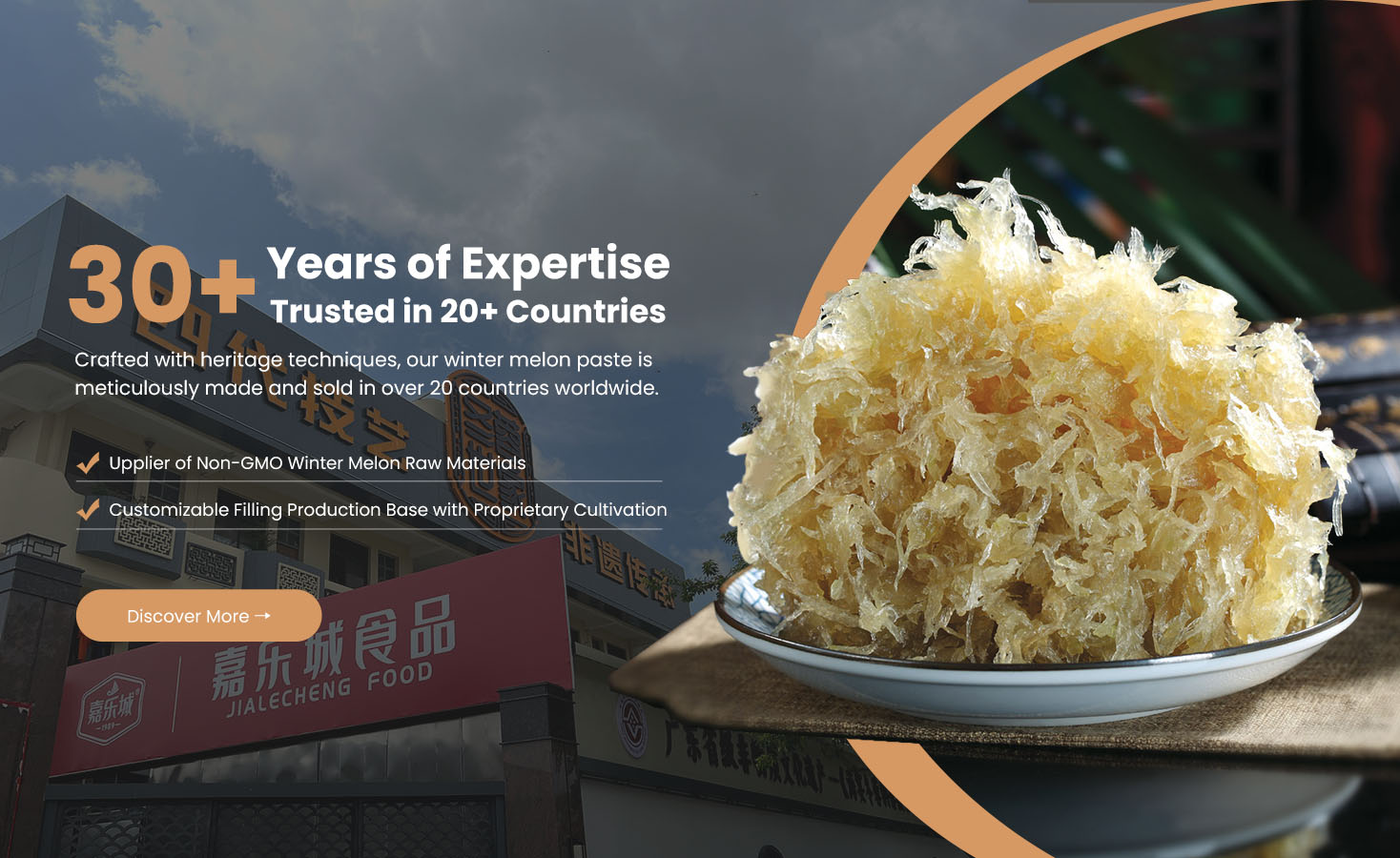
As a professional Winter Melon Paste Filling manufacturer, JIALECHENG Foods focuses on developing fillings with stable texture and controlled oil release through optimized manufacturing processes. Since 1989, we have specialized in winter melon paste filling production, combining traditional processing methods with modern quality management systems to provide stable filling solutions for bakery applications.
Table of Contents
- Why Does Oil Leakage Happen In Fillings?
- 1. Control Moisture Balance During Production
- 2. Optimize Ingredient Structure
- 3. Improve Processing Control Through Manufacturing Technology
- 4. Optimize Formula Through OEM And ODM Development
- 5. Control Temperature During Baking And Storage
- 6. Quality Control Checkpoints For Oil Stability
- 7. Material Standards Used For Stable Fillings
- 8. Manufacturing Capability For Bulk Supply Requirements
- 9. Project Sourcing Checklist For Filling Development
- Export Market Compliance And Quality Management
- Creating More Stable Fillings Through Manufacturing Expertise
Why Does Oil Leakage Happen In Fillings?
Oil leakage occurs when fats or oils separate from the filling structure and move toward the surface. During production, baking, or storage, changes in temperature and internal structure can accelerate this process.
Common causes include:
| Cause | Impact On Filling |
|---|---|
| Weak internal structure | Oil separates more easily |
| Excess fat content | Increases migration risk |
| Poor moisture balance | Reduces stability |
| Improper processing | Creates uneven texture |
| Temperature changes | Accelerates oil movement |
For bakery fillings, oil is not always a problem. Properly controlled fats can improve smoothness, flavor release, and mouthfeel. The key is keeping oil evenly distributed within the filling structure.
1. Control Moisture Balance During Production
Moisture plays an important role in oil retention. Too much or too little moisture can affect how ingredients interact.
A balanced moisture structure helps fillings maintain:
Smooth texture
Stable consistency
Better oil retention
Improved baking performance
| Moisture Condition | Possible Result |
|---|---|
| Excess moisture | Weak structure and separation risk |
| Balanced moisture | Stable texture and better oil control |
| Low moisture | Hard texture and reduced flexibility |
During winter melon paste production, moisture management is especially important because the filling needs to maintain a soft texture while preventing excessive oil migration.
JIALECHENG controls moisture through production steps including cooking, dehydration, and stir-frying to create a stable filling structure.
2. Optimize Ingredient Structure
Oil leakage is closely related to how fats are held inside the filling matrix. Ingredients need to work together to create a stable structure that can retain oil during processing and storage.
Important factors include:
| Ingredient Factor | Function |
|---|---|
| Fiber structure | Helps hold moisture and oil |
| Sugar balance | Influences texture formation |
| Natural ingredients | Affect stability |
| Processing conditions | Determine final structure |
A professional filling manufacturer does not simply adjust oil levels. Instead, the entire ingredient system needs to be balanced.
JIALECHENG focuses on winter melon raw material quality and production control to maintain consistent filling performance.
3. Improve Processing Control Through Manufacturing Technology
The manufacturing process directly influences oil stability. Excessive heating, uneven mixing, or insufficient processing control can damage the internal structure of fillings.
A controlled production process includes:
| Production Stage | Oil Leakage Control Purpose |
|---|---|
| Raw Material Inspection | Ensure ingredient consistency |
| Preparation | Improve uniformity |
| Cooking | Develop stable structure |
| Dehydration | Control moisture content |
| Stir Frying | Balance texture |
| Cooling | Stabilize filling properties |
| Inspection | Confirm quality |
JIALECHENG follows a traditional winter melon paste production process including cleaning, peeling, pulp removal, cutting, cooking, dehydration, and stir-frying. These steps help create fillings with consistent texture and stability.
4. Optimize Formula Through OEM And ODM Development
Different bakery products have different requirements for oil control. A mooncake filling may require stronger baking stability, while another pastry filling may focus more on softness and flavor release.
Through OEM and ODM development, manufacturers can optimize:
| Customization Direction | Purpose |
|---|---|
| Texture adjustment | Improve oil retention |
| Moisture adjustment | Increase stability |
| Formula optimization | Balance ingredients |
| Application testing | Match production conditions |
Compared with a trader, a direct manufacturer has stronger control over formulation development, production parameters, and quality testing.
JIALECHENG provides customized filling solutions based on different applications, including adjustments in texture, sweetness, and product characteristics.
5. Control Temperature During Baking And Storage
Temperature changes can accelerate oil movement inside fillings. During baking, fats may become more fluid, making structural stability especially important.
Oil leakage risks increase when:
Filling structure is too loose
Heating is too intense
Cooling is uncontrolled
Storage temperatures fluctuate
| Temperature Control | Benefit |
|---|---|
| Stable baking conditions | Reduce oil separation |
| Controlled cooling | Maintain structure |
| Suitable storage | Improve shelf stability |
For large-scale bakery production, temperature testing should be included during product development.
6. Quality Control Checkpoints For Oil Stability
A professional filling manufacturer needs multiple quality checkpoints to monitor oil leakage risks.
| Quality Checkpoint | Purpose |
|---|---|
| Raw Material Testing | Confirm ingredient quality |
| Moisture Analysis | Maintain balance |
| Texture Evaluation | Ensure consistency |
| Oil Separation Testing | Monitor stability |
| Baking Simulation | Evaluate performance |
| Finished Product Inspection | Confirm standards |
For bulk supply projects, consistent oil control is essential because every production batch needs to perform similarly during manufacturing.
7. Material Standards Used For Stable Fillings
Material selection directly affects oil retention and product performance.
Important considerations include:
Raw material quality
Natural ingredient characteristics
Fat compatibility
Moisture control
Storage stability
JIALECHENG manages raw material selection and production processes to maintain consistent quality. The company has its own winter melon cultivation base to support stable ingredient supply and product consistency.
8. Manufacturing Capability For Bulk Supply Requirements
For large-volume filling supply, manufacturers need more than production capacity. They need reliable process control.
Important sourcing considerations include:
Production capability
Quality management system
Batch consistency
Packaging options
Storage requirements
Export experience
A reliable manufacturer helps reduce quality variation and supports stable production schedules.
9. Project Sourcing Checklist For Filling Development
Before developing a filling project, manufacturers should understand:
Product application
Baking conditions
Required texture
Oil control requirements
Production volume
Packaging specifications
Target market regulations
Clear project information allows manufacturers to develop more suitable filling solutions.
Export Market Compliance And Quality Management
Global food markets require manufacturers to consider food safety, labeling, packaging, and documentation requirements.
A professional filling manufacturer should manage:
Ingredient records
Food safety systems
Production documentation
Packaging standards
Export requirements
JIALECHENG Foods has obtained ISO 9001 certification, WIT certification, and export food qualifications. Its products are exported to more than 20 countries and regions, including the United States, Canada, the UK, and Belgium.
Creating More Stable Fillings Through Manufacturing Expertise
Reducing oil leakage in fillings requires a complete manufacturing approach. Raw material selection, moisture management, production technology, and quality control all influence final performance.
A professional filling manufacturer provides more than ingredients. Through OEM/ODM development, controlled manufacturing processes, and strict quality checkpoints, fillings can achieve better oil stability, texture consistency, and application performance.
JIALECHENG Foods combines decades of winter melon paste manufacturing experience with modern production systems to create reliable filling solutions for global bakery applications.