



How To Improve Shelf Stability Of Fillings?
Shelf stability is one of the most important performance indicators for bakery fillings. A filling with good shelf stability can maintain its flavor, texture, appearance, and safety throughout storage and transportation, helping finished bakery products achieve consistent quality in different markets.
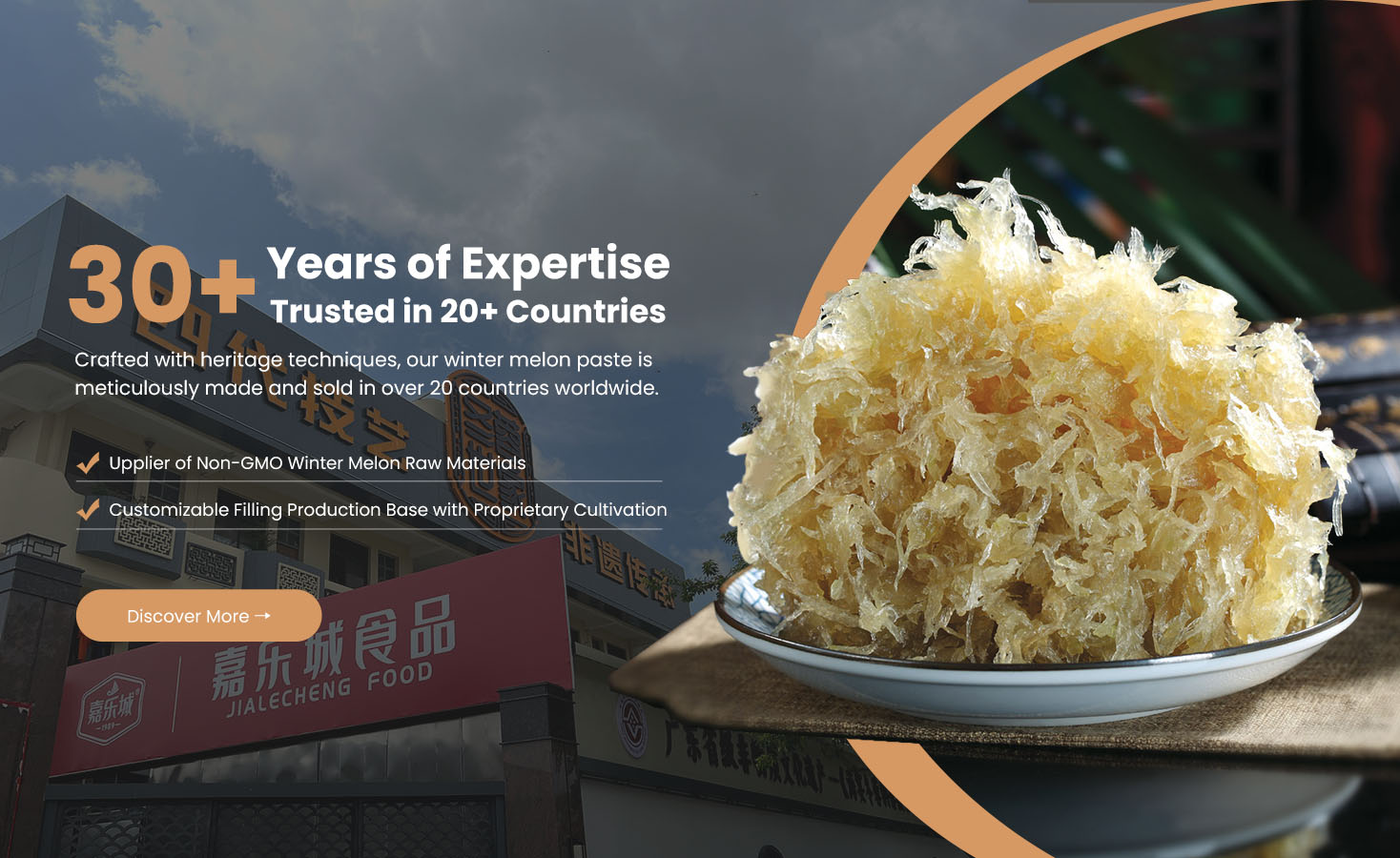
For products such as mooncakes, pastries, and fruit-based fillings, shelf stability depends on multiple factors, including moisture control, water activity, raw material quality, processing technology, packaging, and storage conditions. Food science research shows that water activity is a key factor affecting microbial growth, texture changes, and chemical reactions during food storage. As a professional Winter Melon Paste Filling manufacturer, JIALECHENG Foods focuses on developing stable filling solutions through controlled production processes, strict quality management, and optimized ingredient systems. Since 1989, we have specialized in winter melon paste filling manufacturing, combining traditional techniques with modern food production technology.
Table of Contents
- Why Is Shelf Stability Important For Fillings?
- 1. Control Moisture And Water Activity
- 2. Select Stable Raw Materials
- 3. Optimize Manufacturing Process
- 4. Improve Stability Through OEM And ODM Development
- 5. Maintain Stable Texture During Storage
- 6. Quality Control Checkpoints For Shelf Stability
- 7. Material Standards Used For Stable Fillings
- 8. Packaging And Storage Considerations
- 9. Project Sourcing Checklist For Stable Fillings
- Export Market Compliance And Quality Management
- Building Long-Lasting Filling Solutions Through Manufacturing Expertise
Why Is Shelf Stability Important For Fillings?
Bakery fillings must maintain consistent performance from production to final consumption. During storage, changes in moisture, temperature, and packaging conditions may influence product quality.
Common shelf stability challenges include:
| Stability Issue | Possible Impact |
|---|---|
| Moisture migration | Changes filling texture |
| High water activity | Increases spoilage risk |
| Oil separation | Reduces appearance quality |
| Texture change | Affects eating experience |
| Flavor degradation | Reduces product value |
Water activity is different from moisture content. Moisture content measures the total amount of water, while water activity measures how available that water is for microbial growth and chemical reactions. Controlling water activity helps manufacturers better manage shelf life and product stability.
1. Control Moisture And Water Activity
Moisture management is the foundation of improving filling shelf stability. Excess moisture can create an environment where microorganisms grow more easily, while unstable moisture distribution may cause texture changes.
A suitable moisture balance helps fillings maintain:
Stable texture
Better storage performance
Reduced separation
Consistent application properties
| Moisture Condition | Effect On Shelf Stability |
|---|---|
| Too much moisture | Higher spoilage and separation risk |
| Balanced moisture | Better texture and stability |
| Too little moisture | Hard texture and reduced quality |
Food manufacturers often monitor water activity because it directly affects microbial growth, texture stability, and chemical reactions. The FDA identifies water activity control as an important factor in food safety and stability management.
JIALECHENG controls moisture through production processes such as cooking, dehydration, and stir-frying to create winter melon paste fillings with stable structure and storage performance.
2. Select Stable Raw Materials
The quality of raw materials directly affects filling shelf stability. Different raw materials contain different levels of natural moisture, fiber, and sugar, which influence final product performance.
Important raw material factors include:
| Material Factor | Influence On Stability |
|---|---|
| Freshness | Affects flavor retention |
| Fiber structure | Supports texture stability |
| Moisture content | Influences shelf life |
| Processing suitability | Determines consistency |
For winter melon paste fillings, selecting suitable winter melon raw materials helps maintain natural flavor and stable texture.
JIALECHENG manages raw material selection through controlled sourcing and cultivation systems. The company has its own winter melon cultivation base and focuses on selecting raw materials with suitable characteristics for filling production.
3. Optimize Manufacturing Process
Shelf stability is created through the entire manufacturing process. Each production stage influences moisture distribution, texture structure, and final quality.
A professional filling manufacturing process includes:
| Production Stage | Stability Function |
|---|---|
| Raw Material Inspection | Confirm ingredient quality |
| Cleaning | Remove impurities |
| Preparation | Improve consistency |
| Cooking | Develop flavor structure |
| Dehydration | Control moisture |
| Stir Frying | Create stable texture |
| Cooling | Maintain product characteristics |
| Packaging | Protect quality |
JIALECHENG follows a traditional winter melon paste manufacturing process including cleaning, peeling, pulp removal, cutting, cooking, dehydration, and stir-frying. These controlled steps help maintain consistent filling performance.
4. Improve Stability Through OEM And ODM Development
Different bakery applications require different shelf stability characteristics. A filling used for mooncakes may need stronger storage stability, while another pastry application may focus more on softness and flavor release.
Through OEM and ODM development, manufacturers can optimize:
| Customization Direction | Development Purpose |
|---|---|
| Moisture adjustment | Improve storage stability |
| Texture adjustment | Match application requirements |
| Sweetness optimization | Balance flavor and preservation |
| Formula improvement | Enhance performance |
Compared with a trader, a direct manufacturer has stronger control over product development, production parameters, and quality consistency.
JIALECHENG provides customized filling solutions according to different product applications, helping optimize texture, sweetness, and processing characteristics.
5. Maintain Stable Texture During Storage
Texture changes are one of the most common signs of reduced shelf stability. Moisture migration, temperature changes, and packaging performance can all affect filling texture.
Common storage-related texture problems include:
Hardening
Softening
Stickiness
Loss of smoothness
| Storage Factor | Stability Impact |
|---|---|
| Temperature fluctuation | Accelerates quality changes |
| Humidity exposure | Changes moisture balance |
| Packaging performance | Affects moisture protection |
| Storage time | Influences texture retention |
Research on food shelf life shows that water activity is closely related to texture changes, microbial stability, and chemical reactions during storage.
6. Quality Control Checkpoints For Shelf Stability
A reliable filling manufacturer requires strict quality control throughout production.
Important checkpoints include:
| Quality Checkpoint | Purpose |
|---|---|
| Raw Material Testing | Ensure ingredient quality |
| Moisture Analysis | Maintain balance |
| Texture Evaluation | Confirm consistency |
| Microbial Testing | Support food safety |
| Storage Testing | Evaluate stability |
| Packaging Inspection | Protect product quality |
For bulk supply projects, quality consistency is especially important because large-scale bakery production requires predictable filling performance.
7. Material Standards Used For Stable Fillings
Stable filling performance depends on the relationship between ingredients and processing technology.
Key considerations include:
Natural ingredient quality
Sugar balance
Moisture retention
Fiber structure
Storage compatibility
JIALECHENG focuses on winter melon-based filling solutions and develops products suitable for mooncakes, pastries, and other bakery applications.
8. Packaging And Storage Considerations
Packaging plays an important role in maintaining shelf stability. Even a well-developed filling can experience quality changes if packaging cannot protect against moisture and environmental conditions.
Important packaging considerations include:
Moisture barrier performance
Sealing quality
Storage temperature
Transportation conditions
A complete shelf stability strategy combines product formulation, manufacturing control, and packaging protection.
9. Project Sourcing Checklist For Stable Fillings
Before developing a filling project, manufacturers should understand:
Product application
Expected shelf life
Storage environment
Transportation conditions
Required texture
Production volume
Packaging requirements
Export market standards
Clear project requirements help manufacturers develop more suitable filling solutions.
Export Market Compliance And Quality Management
Different countries have different requirements for food safety, labeling, packaging, and documentation.
Professional manufacturers need to manage:
Food safety systems
Ingredient records
Production documentation
Packaging standards
Export requirements
JIALECHENG Foods has obtained ISO 9001 certification, WIT certification, and export food qualifications. Its products are exported to more than 20 countries and regions, including the United States, Canada, the UK, and Belgium.
Building Long-Lasting Filling Solutions Through Manufacturing Expertise
Improving shelf stability of fillings requires a complete manufacturing approach. Moisture control, raw material selection, production technology, quality inspection, and packaging protection all influence final performance.
A professional filling manufacturer provides more than ingredients. Through OEM/ODM development, controlled manufacturing processes, and strict quality checkpoints, fillings can achieve better storage stability, consistent texture, and reliable performance.
JIALECHENG Foods combines decades of winter melon paste manufacturing experience with modern production systems to create filling solutions designed for global bakery applications.