


What Food Regulations Apply To Fruit Paste Export?
Exporting fruit paste to international markets requires more than stable flavor and texture. Manufacturers need to understand food safety regulations, ingredient requirements, labeling standards, traceability systems, and documentation requirements before entering different countries.
Fruit paste products, including fruit fillings and Winter Melon Paste Fillings, are considered processed food ingredients. Their export success depends on whether the manufacturing process meets the regulations of the destination market. According to the European Commission, food safety regulations cover the entire food chain, including production, processing, import control, and traceability management.
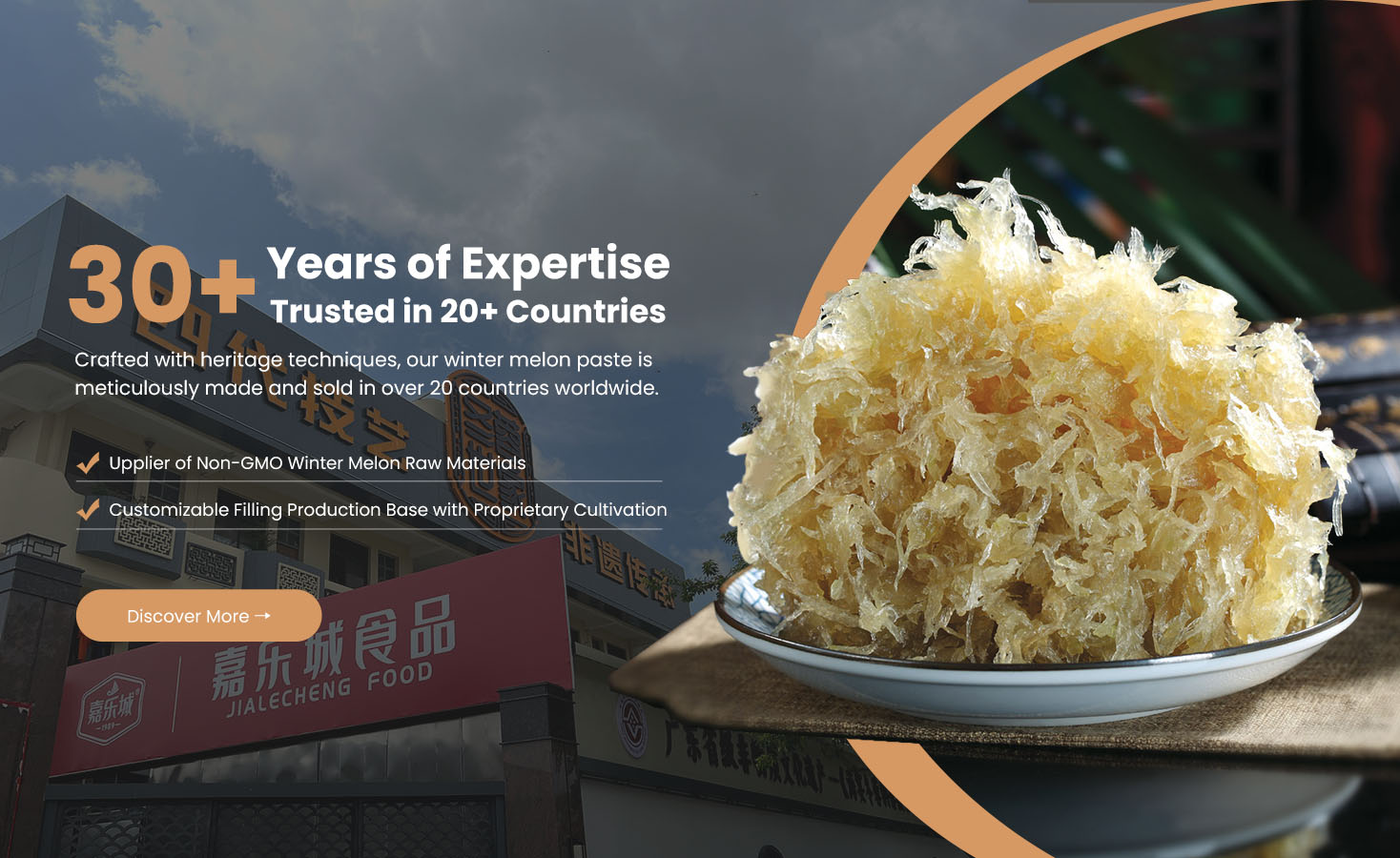
As a professional winter melon paste filling manufacturer, JIALECHENG Foods has focused on filling production since 1989. We combine traditional processing methods with modern food safety management systems to provide stable filling solutions for global bakery applications.
Table of Contents
- Why Food Compliance Matters For Fruit Paste Export
- 1. Understand Destination Market Food Regulations
- 2. Control Raw Materials And Ingredient Standards
- 3. Follow A Controlled Manufacturing Process
- 4. Food Safety Management And Quality Control
- 5. Labeling Requirements For Export Fruit Paste
- 6. OEM And ODM Process For Export Products
- 7. Packaging And Transportation Compliance
- 8. Bulk Supply Considerations For Export Projects
- 9. Export Market Compliance And Long-Term Development
- Building Reliable Export Fruit Paste Solutions
Why Food Compliance Matters For Fruit Paste Export
International food markets have strict requirements because fruit paste products are directly consumed ingredients. Manufacturers need to ensure that every production stage meets food safety expectations.
Key compliance areas include:
| Compliance Area | Manufacturing Requirement |
|---|---|
| Food safety | Control microorganisms and contamination risks |
| Ingredient management | Verify raw material quality |
| Traceability | Record production and supply information |
| Labeling | Meet destination market requirements |
| Packaging | Ensure food-contact safety |
Food traceability has become increasingly important worldwide. Regulations such as the European Union food safety framework emphasize traceability throughout the food chain, while the U.S. food system also continues to strengthen tracking requirements for food products.
For fruit paste exporters, compliance is not only about passing inspections. It also helps build long-term supply reliability.
1. Understand Destination Market Food Regulations
Different countries apply different food regulations. A fruit paste manufacturer must understand the requirements of each target market before export.
Major export markets usually focus on:
| Market | Important Requirements |
|---|---|
| United States | FDA food regulations, ingredient compliance, labeling requirements |
| European Union | Food safety framework, traceability, hygiene requirements |
| Canada | Food safety and labeling standards |
| Other regions | Local import regulations and certification requirements |
The FDA provides export-related food information and regulatory guidance for companies involved in international food trade.
A professional manufacturer should evaluate regulations before product development rather than adjusting compliance after production.
2. Control Raw Materials And Ingredient Standards
Fruit paste quality starts with raw materials. Export markets require manufacturers to control ingredient sources, processing suitability, and safety documentation.
Important material control factors include:
| Material Standard | Purpose |
|---|---|
| Raw material origin | Ensure stable supply |
| Ingredient quality | Maintain product safety |
| Agricultural practices | Reduce contamination risks |
| Storage conditions | Protect raw material performance |
For winter melon paste fillings, raw material selection directly affects flavor, texture, moisture control, and final product stability.
JIALECHENG manages raw material selection through controlled sourcing and cultivation systems. The company has its own winter melon cultivation base to support stable ingredient quality.
3. Follow A Controlled Manufacturing Process
Export compliance depends heavily on the manufacturing process. A qualified factory needs to control every production stage.
A typical fruit paste manufacturing process includes:
| Production Stage | Compliance Focus |
|---|---|
| Raw Material Inspection | Verify ingredient safety |
| Cleaning | Remove impurities |
| Preparation | Maintain production hygiene |
| Cooking | Control processing conditions |
| Dehydration | Manage moisture content |
| Stir Frying | Develop stable texture |
| Packaging | Protect product quality |
| Final Inspection | Confirm finished standards |
JIALECHENG follows a complete winter melon paste production process including cleaning, peeling, pulp removal, cutting, cooking, dehydration, and stir-frying.
This structured process helps maintain consistent product performance for different applications.
4. Food Safety Management And Quality Control
Food safety systems are essential for export-oriented manufacturers. A complete quality management system helps identify risks and maintain consistent production.
Important quality checkpoints include:
| Quality Control Stage | Purpose |
|---|---|
| Raw Material Testing | Confirm ingredient quality |
| Production Monitoring | Control processing stability |
| Moisture Testing | Maintain texture consistency |
| Microbial Testing | Support food safety |
| Finished Product Inspection | Verify final quality |
| Packaging Inspection | Protect during transportation |
Certifications such as ISO-based quality systems are commonly used by food manufacturers to strengthen safety management and production control. ISO 22000 is also widely recognized as a food safety management framework used across international food supply chains.
JIALECHENG has obtained ISO 9001 certification, WIT certification, and export food qualifications to support international market requirements.
5. Labeling Requirements For Export Fruit Paste
Labeling is one of the most important export compliance areas. Different countries have different requirements for ingredient declarations, nutrition information, allergens, and product descriptions.
Common labeling requirements include:
Product name
Ingredient list
Net weight
Production date
Shelf life information
Storage instructions
Manufacturer information
For example, the United States and European Union have different approaches to food labeling and allergen declaration requirements. Export manufacturers need to prepare labels according to the regulations of each market.
6. OEM And ODM Process For Export Products
Many food companies require customized fruit paste solutions for different markets. OEM and ODM services allow manufacturers to adjust products according to specific requirements.
Customization may include:
| Customization Area | Development Direction |
|---|---|
| Formula adjustment | Match local taste preferences |
| Sweetness control | Adapt to market demand |
| Texture modification | Fit different applications |
| Packaging options | Meet import requirements |
Compared with a trader, a direct manufacturer has stronger control over production processes, documentation, quality management, and customization.
JIALECHENG supports customized filling development based on application needs, including different texture, sweetness, and packaging requirements.
7. Packaging And Transportation Compliance
Fruit paste products need suitable packaging to maintain quality during international transportation.
Important considerations include:
Food-grade packaging materials
Moisture protection
Sealing performance
Storage conditions
Transportation environment
Food contact materials must meet safety requirements because packaging directly interacts with food products. The European Union, for example, regulates food contact materials to ensure they do not create unacceptable changes to food composition or safety.
8. Bulk Supply Considerations For Export Projects
For large-volume fruit paste supply, compliance consistency is as important as production capacity.
A complete project checklist includes:
| Evaluation Item | Importance |
|---|---|
| Production capacity | Support continuous supply |
| Quality system | Maintain batch consistency |
| Export experience | Reduce compliance risks |
| Documentation ability | Support customs clearance |
| Packaging capability | Protect products during shipping |
A reliable manufacturer should provide stable products, complete documentation, and consistent quality across multiple shipments.
9. Export Market Compliance And Long-Term Development
Global food markets continue to increase requirements for safety, transparency, and traceability. Manufacturers need to combine product development with regulatory understanding.
A professional fruit paste manufacturer should manage:
Food safety systems
Production records
Ingredient documentation
Export certificates
Market-specific requirements
JIALECHENG Foods has developed long-term export capabilities, with products supplied to more than 20 countries and regions, including the United States, Canada, the UK, and Belgium.
Building Reliable Export Fruit Paste Solutions
Fruit paste export requires a complete manufacturing system that connects raw materials, production technology, quality control, packaging, and regulatory compliance.
A professional manufacturer provides more than filling products. Through OEM/ODM development, strict manufacturing processes, and export compliance management, fruit paste solutions can achieve stable quality and meet international market requirements.
JIALECHENG Foods combines decades of winter melon paste manufacturing experience with modern production systems to create reliable filling solutions for global bakery and food applications.