


How To Meet FDA Requirements For Fillings?
Exporting bakery fillings to the United States requires manufacturers to meet strict food safety, labeling, traceability, and production control requirements. For filling products such as winter melon paste, fruit fillings, and bakery ingredients, compliance is not only related to the final product but also covers raw material management, manufacturing processes, packaging, and documentation.
The U.S. Food and Drug Administration regulates food safety through requirements covering manufacturing practices, preventive controls, and food labeling. Under the Food Safety Modernization Act, food facilities are required to focus on preventing food safety risks through hazard analysis and risk-based preventive controls.
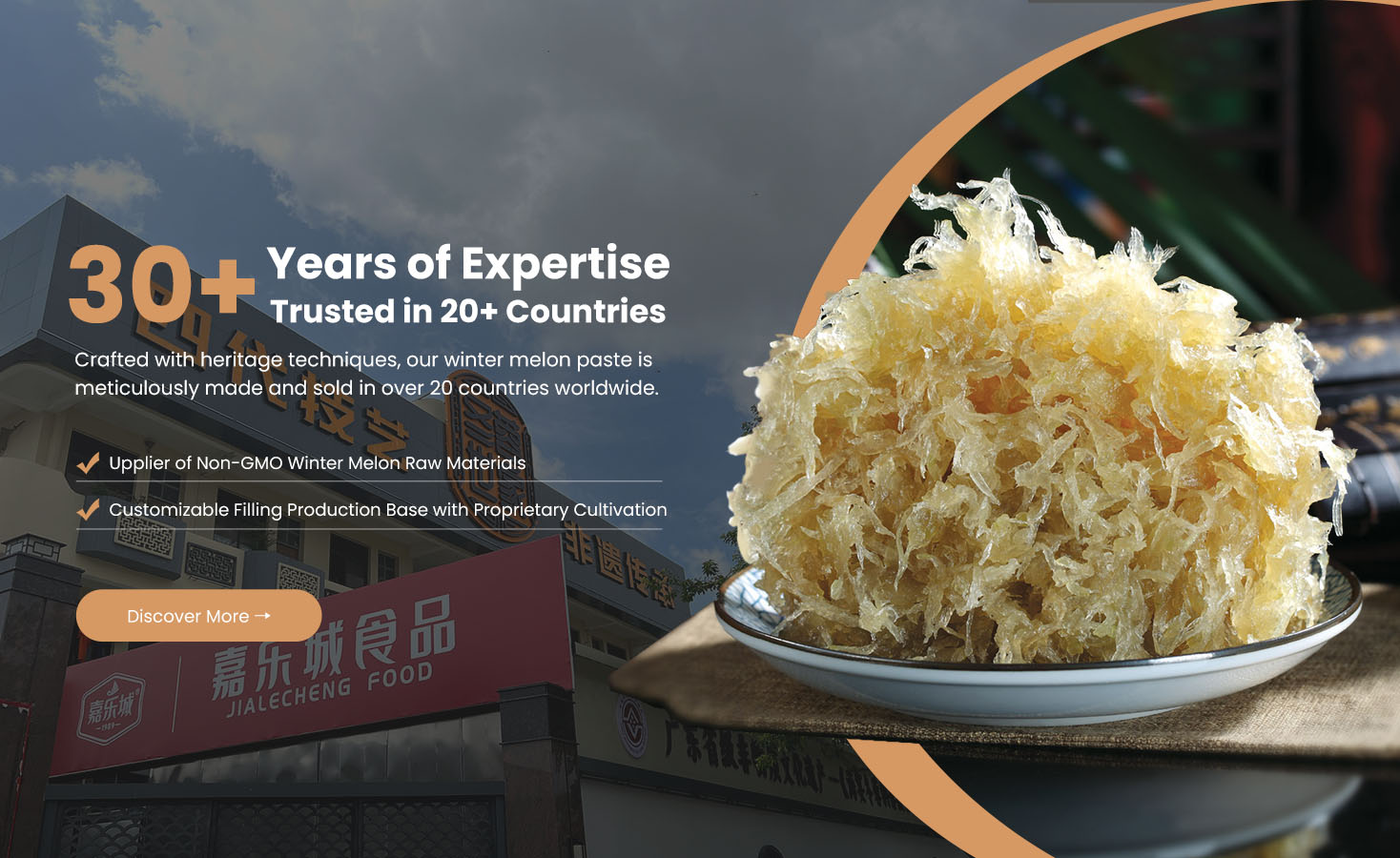
As a professional Winter Melon Paste Filling manufacturer, JIALECHENG Foods has focused on filling production since 1989. We combine traditional processing techniques with modern food safety management systems to develop stable filling solutions for global bakery applications.
Table of Contents
- Understanding FDA Requirements For Filling Products
- 1. Establish A Food Safety Management System
- 2. Control Raw Materials According To FDA Expectations
- 3. Follow A Controlled Manufacturing Process
- 4. Meet FDA Labeling Requirements
- 5. Implement Quality Control Checkpoints
- 6. OEM And ODM Process For FDA-Compliant Fillings
- 7. Material Standards Used For Export Fillings
- 8. Packaging And Transportation Requirements
- 9. Export Project Checklist For FDA Requirements
- Building Reliable FDA-Compliant Filling Solutions
Understanding FDA Requirements For Filling Products
For manufacturers exporting fillings to the U.S. market, FDA compliance involves multiple areas rather than one single certification.
Key compliance areas include:
| FDA Compliance Area | Manufacturing Focus |
|---|---|
| Food facility requirements | Maintain compliant production conditions |
| Food safety plan | Identify and control potential hazards |
| Ingredient control | Ensure approved raw materials |
| Labeling requirements | Provide accurate product information |
| Traceability | Maintain production records |
FDA requires food manufacturers to ensure labels are truthful and not misleading. Most prepared foods also require proper nutrition labeling and allergen information where applicable.
For filling manufacturers, compliance starts from the factory rather than the export stage.
1. Establish A Food Safety Management System
A strong food safety system is the foundation of FDA compliance. Manufacturers need to identify possible risks and establish preventive controls before products enter the market.
Important elements include:
Hazard analysis
Preventive control procedures
Sanitation management
Supplier verification
Recall procedures
Production documentation
| Food Safety Control | Purpose |
|---|---|
| Hazard analysis | Identify possible risks |
| Preventive controls | Reduce contamination possibility |
| Monitoring records | Verify process stability |
| Corrective actions | Respond to production issues |
The FDA Food Safety Modernization Act emphasizes prevention rather than only responding to food safety problems after they occur.
JIALECHENG applies systematic quality management throughout production to improve product safety and consistency.
2. Control Raw Materials According To FDA Expectations
Raw material management is an important part of filling production compliance. The quality of ingredients directly affects food safety, flavor, texture, and product stability.
For winter melon paste fillings, manufacturers need to evaluate:
| Raw Material Factor | Importance |
|---|---|
| Ingredient origin | Ensure traceability |
| Agricultural quality | Reduce contamination risks |
| Freshness | Maintain flavor quality |
| Processing suitability | Support stable production |
JIALECHENG controls raw material selection through stable sourcing systems and cultivation management. The company has its own winter melon cultivation base to support consistent ingredient quality.
A direct manufacturer has stronger control compared with a trader because production records, raw material inspection, and processing parameters can be managed internally.
3. Follow A Controlled Manufacturing Process
FDA compliance requires manufacturers to maintain hygienic and controlled production environments.
A professional filling manufacturing process includes:
| Production Stage | Compliance Purpose |
|---|---|
| Raw Material Inspection | Confirm ingredient safety |
| Cleaning | Remove impurities |
| Preparation | Maintain production hygiene |
| Cooking | Control processing conditions |
| Dehydration | Manage moisture level |
| Stir Frying | Create stable texture |
| Packaging | Protect product safety |
| Final Inspection | Confirm quality standards |
JIALECHENG follows a complete winter melon paste production process including cleaning, peeling, pulp removal, cutting, cooking, dehydration, and stir-frying.
This structured manufacturing approach helps maintain stable quality across different production batches.
4. Meet FDA Labeling Requirements
Correct labeling is one of the most important requirements for exporting food products to the United States.
Common labeling requirements include:
| Label Information | Purpose |
|---|---|
| Product name | Identify food category |
| Ingredient list | Show formulation details |
| Nutrition information | Provide nutritional data |
| Allergen declaration | Protect consumers |
| Net weight | Meet packaging requirements |
| Manufacturer information | Support traceability |
FDA guidance states that food manufacturers are responsible for developing labels that comply with legal requirements, including nutrition labeling and major allergen declarations.
For OEM and ODM filling projects, manufacturers should evaluate labeling requirements during product development rather than after production.
5. Implement Quality Control Checkpoints
Quality control is essential for maintaining FDA-compliant filling production.
Important checkpoints include:
| Quality Checkpoint | Purpose |
|---|---|
| Raw material testing | Confirm ingredient quality |
| Moisture analysis | Maintain product stability |
| Microbial testing | Support food safety |
| Texture evaluation | Ensure consistency |
| Packaging inspection | Protect during transportation |
| Finished product testing | Verify standards |
For bulk supply projects, quality consistency is especially important because repeated shipments require the same performance and safety level.
6. OEM And ODM Process For FDA-Compliant Fillings
Different markets and applications may require different filling characteristics. OEM and ODM services allow manufacturers to adjust products while maintaining compliance requirements.
Customization may include:
Formula adjustment
Sweetness control
Texture optimization
Packaging design
Label preparation
| Customization Area | Development Focus |
|---|---|
| Formula | Match product requirements |
| Texture | Adapt to bakery applications |
| Packaging | Meet market standards |
| Documentation | Support export compliance |
A manufacturer with complete production capability can manage both customization and compliance control.
JIALECHENG supports customized filling solutions based on different product applications, including texture, sweetness, and packaging requirements.
7. Material Standards Used For Export Fillings
FDA compliance begins with ingredient selection. Manufacturers need to ensure that all materials meet food safety expectations.
Important considerations include:
Food-grade raw materials
Ingredient traceability
Stable supply sources
Storage conditions
Processing compatibility
JIALECHENG focuses on winter melon-based fillings and manages raw materials from selection to finished production to maintain stable quality.
8. Packaging And Transportation Requirements
Packaging plays an important role in maintaining food safety during international transportation.
Manufacturers should consider:
Food contact packaging standards
Moisture protection
Sealing performance
Storage environment
Transportation conditions
A compliant packaging system helps protect product quality from factory shipment to final use.
9. Export Project Checklist For FDA Requirements
Before exporting fillings to the U.S. market, manufacturers should prepare:
| Checklist Item | Purpose |
|---|---|
| Facility compliance | Ensure production requirements |
| Food safety plan | Control possible hazards |
| Ingredient documentation | Support traceability |
| Label review | Avoid compliance issues |
| Packaging confirmation | Protect product quality |
| Shipping documents | Support customs clearance |
A complete preparation process reduces risks during international supply.
Building Reliable FDA-Compliant Filling Solutions
Meeting FDA requirements for fillings requires more than adjusting a product formula. It requires a complete manufacturing system covering raw materials, production processes, quality control, documentation, and export management.
A professional filling manufacturer provides more than ingredients. Through OEM/ODM capabilities, controlled manufacturing processes, and strict quality management, fillings can achieve stable quality while meeting international food safety expectations.
JIALECHENG Foods combines decades of winter melon paste manufacturing experience with modern production systems to create reliable filling solutions for global bakery and food applications.