


What Is Winter Melon Filling in Food Manufacturing
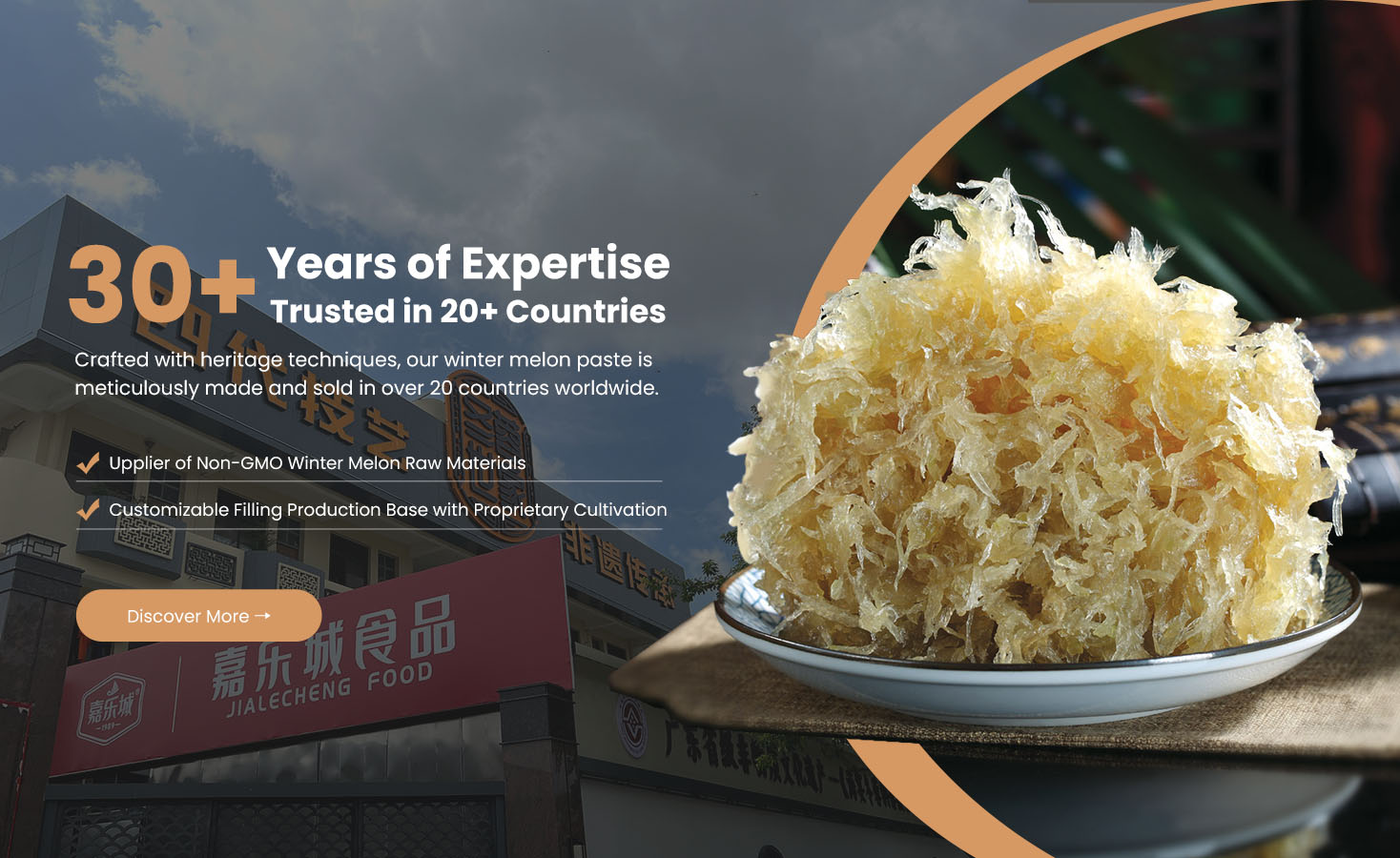
Winter Melon Filling is a processed fruit-based paste used as a functional filling ingredient in pastry, bakery, and dessert manufacturing. It is usually made by preparing winter melon raw material through cleaning, cutting, cooking, concentration, and blending until the product reaches a stable texture, balanced sweetness, and suitable moisture level for industrial use. In food manufacturing, it is valued not only for flavor but also for structure, because it can help fillings keep body, spread evenly, and remain stable during forming and baking. JIALECHENG’s published process for winter melon paste includes raw material inspection, moisture and Brix sampling, controlled concentration, and automated vacuum packaging, showing a manufacturing-oriented approach rather than simple trading supply.
Table of Contents
Manufacturer Vs Trader
For Winter Melon Filling, the difference between a manufacturer and a trader affects consistency, customization, and delivery control. A trader may arrange supply, but a direct manufacturer can adjust sweetness, fiber feel, moisture range, and package size inside the production system. JIALECHENG positions itself as a producer with OEM and ODM capability, which is important when a filling needs to match a specific pastry texture, shelf-life target, or export packaging format. That kind of direct control is especially valuable in bulk supply, where small variations can affect entire production runs.
Manufacturing Process Overview
In food manufacturing, winter melon filling is designed to work as a repeatable semi-finished ingredient. The process usually begins with raw material grading, followed by cooking and concentration to remove excess water and build solids. After that, the product is adjusted for texture, cooled, packed, and coded for traceability. JIALECHENG states that its finished paste is packed with fully automated vacuum sealing systems and offered in 1 kg, 5 kg, 10 kg, and 20 to 25 kg formats, which supports both bakery factories and OEM or ODM projects.
Quality Control Checkpoints
| Checkpoint | Why it matters |
|---|---|
| Raw material inspection | Reduces unstable batches |
| Moisture and Brix checks | Keeps texture and sweetness consistent |
| Metal detection | Supports food safety |
| Weight verification | Improves batch accuracy |
| Batch coding | Strengthens traceability |
These checkpoints are part of a stronger project sourcing checklist. In practice, buyers should also review formula tolerance, packaging specification, retained sample rules, and shipping documentation before confirming a supplier. Codex General Principles of Food Hygiene places good hygiene practices and HACCP at the center of safe food production, which makes process control a core part of food ingredient evaluation.
Material Standards Used And Export Market Compliance
Winter melon filling used in food manufacturing must also meet labeling and compliance expectations in target markets. Under U.S. food labeling rules, ingredients are generally declared by common or usual name, and FDA guidance notes that food ingredients must meet the same safety standard whether they are naturally or artificially derived. For export supply, this means the manufacturer should not only provide stable filling performance, but also support clear ingredient declaration, traceability records, and packaging consistency.
Conclusion
Winter melon filling in food manufacturing is more than a sweet paste. It is a structured ingredient designed for consistency, processing efficiency, and product performance in bakery and pastry production. A supplier with real manufacturing control, OEM and ODM flexibility, bulk supply capability, and export-ready quality systems will usually offer more dependable long-term value. JIALECHENG’s integrated process, packaging options, and traceability-oriented production model make that advantage clear.