



What Does Winter Melon Paste Taste Like?
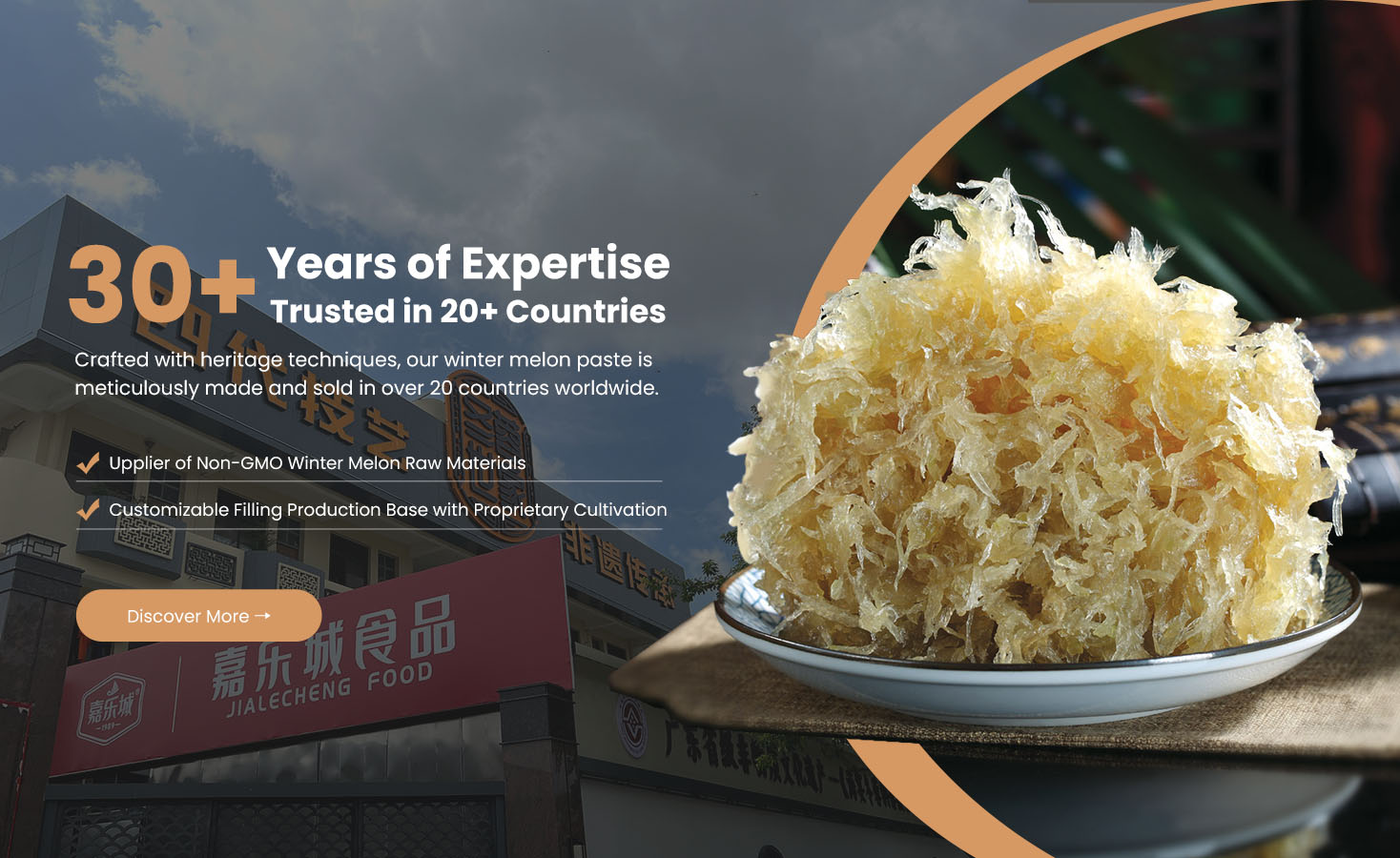
winter melon paste has a mild, clean, gently sweet taste with a soft cooked-fruit note rather than a sharp fruit profile. In commercial baking, it is valued because the flavor feels light and smooth on the palate, which makes it easier to pair with pastry dough, egg yolk, nuts, coconut, and other fillings without becoming overpowering. JIALECHENG’s product pages describe its Sweet Winter Melon Paste as light golden to light amber with a delicate and soft texture, while its standard Winter Melon Filling is presented as smooth and slightly fibery, showing that the sensory profile is built around softness, balance, and natural melon character.
Table of Contents
Why The Flavor Is Different From Other Fillings
Compared with stronger fillings such as bean paste or fruit jam, winter melon paste tastes lighter and more neutral. JIALECHENG notes that mooncake-specific melon filling follows a refreshing, natural, and not overly sweet flavor system, which is one reason it works well as both a main filling and a supporting filling in layered pastry products. Its Candied Winter Melon Paste is also described as sweet but not greasy, with natural fruity aroma and a stewed caramel note, showing that the flavor can move from fresh and clean to richer and deeper depending on process design.
Manufacturer Vs Trader In Flavor Consistency
For large-scale supply, taste consistency depends on factory control rather than simple trading. A direct manufacturer can adjust sweetness, moisture, fiber feel, and flavor intensity inside the production process. JIALECHENG positions itself as a specialized winter melon paste producer with product lines for baking, mooncakes, pastries, and blended fillings, which gives it more room to keep flavor stable across repeat orders and customized OEM or ODM projects.
Manufacturing Process Overview
The taste of winter melon paste is shaped by controlled dehydration, sugaring, grinding, homogenization, and slow cooking. JIALECHENG states that its mooncake-grade paste is made from fresh winter melon through these steps, which helps explain why the final flavor is smooth and mellow instead of raw or watery. Low-temperature slow cooking also helps preserve a cleaner aroma while building body and sweetness.
Texture And Taste Relationship
| Sensory point | What it means in use |
|---|---|
| Mild sweetness | Easier flavor pairing |
| Soft texture | Better mouthfeel in pastries |
| Slight natural fiber | More authentic filling character |
| Light aroma | Does not overpower dough or secondary fillings |
| Balanced richness | Suitable for repeated commercial use |
Quality Control, Sourcing, And Compliance
A practical sourcing checklist should include sweetness target, fiber level, moisture range, retained sample review, and ingredient declaration. In export markets, ingredient names generally need to be declared by common or usual name, and FDA also requires packaged foods to list ingredients for allergy protection. That makes flavor consistency part of a larger quality control system rather than a standalone sensory issue.
Conclusion
Winter melon paste tastes mild, smooth, lightly sweet, and naturally mellow, with enough body to feel rich without becoming heavy. That balance is why it remains useful in mooncakes, pastries, and blended fillings. JIALECHENG’s manufacturing process, flavor adjustment capability, and product specialization make it easier to deliver that taste profile consistently in commercial supply.