



What Are Haccp Requirements for Paste Manufacturers?
For paste manufacturers, food safety cannot rely only on final product inspection. A complete safety system must identify potential risks before they occur and control every stage from raw material selection to finished product delivery.
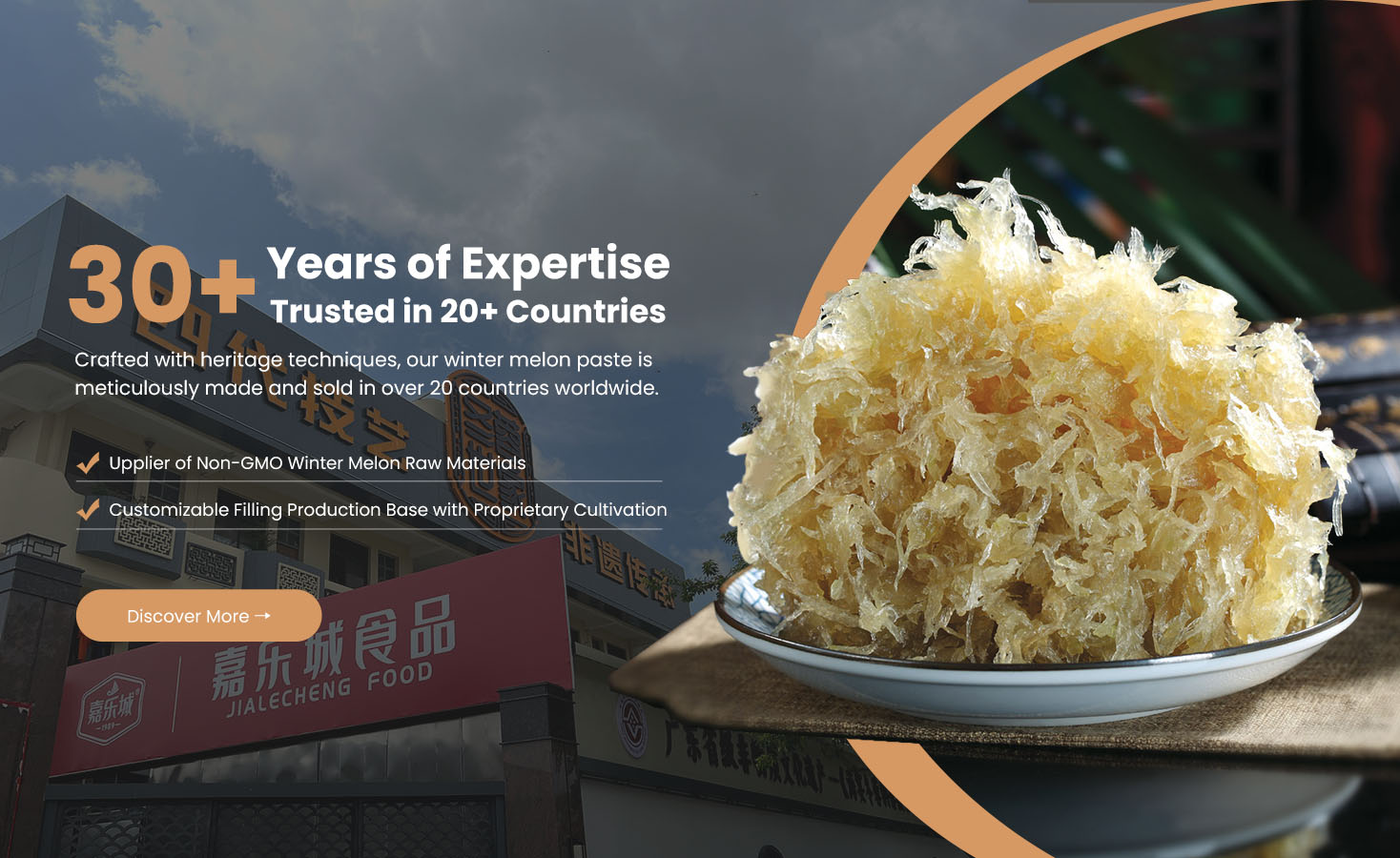
HACCP, which stands for Hazard Analysis and Critical Control Points, is a preventive food safety management system designed to identify, evaluate, and control biological, chemical, and physical hazards throughout food production. The FDA describes HACCP as a systematic approach that manages food safety risks from raw material handling through manufacturing, distribution, and consumption.As a professional Winter Melon Paste Filling manufacturer, JIALECHENG Foods applies strict production control from ingredient sourcing to finished product inspection. Since 1989, we have focused on developing stable filling solutions for mooncakes, pastries, and bakery applications by combining traditional processing techniques with modern food safety management.
Table of Contents
- Why Is HACCP Important For Paste Manufacturing?
- 1. Conduct Hazard Analysis For Paste Production
- 2. Identify Critical Control Points
- 3. Establish Critical Limits During Production
- 4. Monitor Manufacturing Processes Continuously
- 5. Control Raw Material Standards
- 6. Manufacturing Process Overview Under HACCP Control
- 7. Quality Control Checkpoints For Paste Manufacturers
- 8. OEM And ODM Process With HACCP Management
- 9. Documentation And Traceability Requirements
- 10. Export Market Compliance For Paste Products
- Project Sourcing Checklist For HACCP-Compliant Paste Manufacturers
- Building Safer Paste Products Through Manufacturing Expertise
Why Is HACCP Important For Paste Manufacturing?
Paste products usually contain natural ingredients, moisture, and nutrients that require careful management during processing and storage. A reliable HACCP system helps manufacturers reduce risks related to contamination, quality variation, and food safety issues.
The main objectives of HACCP include:
| HACCP Goal | Manufacturing Benefit |
|---|---|
| Identify hazards | Prevent food safety problems |
| Control critical points | Maintain stable production |
| Record production data | Improve traceability |
| Verify processes | Ensure consistent quality |
The HACCP system is built around seven principles, including hazard analysis, identifying critical control points, establishing critical limits, monitoring procedures, corrective actions, verification procedures, and record keeping.
For paste manufacturers, HACCP is not only a certification requirement but also a practical production management system.
1. Conduct Hazard Analysis For Paste Production
The first HACCP requirement is identifying possible hazards before production begins.
For fruit paste and winter melon paste fillings, manufacturers should evaluate:
| Hazard Type | Possible Risk |
|---|---|
| Biological hazards | Microbial contamination |
| Chemical hazards | Residue or unsuitable materials |
| Physical hazards | Foreign materials entering products |
A professional manufacturer needs to analyze risks related to:
Raw materials
Production environment
Equipment hygiene
Processing conditions
Packaging procedures
JIALECHENG controls raw material selection and production conditions to reduce potential risks from the beginning of the manufacturing process.
2. Identify Critical Control Points
Critical Control Points are production stages where controls can prevent, eliminate, or reduce food safety hazards to acceptable levels.
Typical CCP areas in paste manufacturing may include:
| Production Stage | HACCP Control Focus |
|---|---|
| Raw material inspection | Verify ingredient safety |
| Cooking process | Control temperature conditions |
| Dehydration | Manage moisture stability |
| Packaging | Prevent contamination |
| Final inspection | Confirm product safety |
For paste manufacturers, cooking and moisture control are often important because they directly influence product stability, texture, and shelf life.
3. Establish Critical Limits During Production
Each critical control point needs measurable limits to confirm whether the process remains under control.
Examples include:
| Control Item | Purpose |
|---|---|
| Temperature | Ensure processing safety |
| Time | Maintain process consistency |
| Moisture level | Improve product stability |
| Hygiene conditions | Reduce contamination risks |
A professional food factory should not rely only on operator experience. Data-based monitoring helps maintain consistent quality between production batches.
4. Monitor Manufacturing Processes Continuously
HACCP requires continuous monitoring because food safety depends on consistent execution.
A complete monitoring system includes:
| Monitoring Area | Function |
|---|---|
| Raw material records | Track ingredient sources |
| Production records | Confirm processing conditions |
| Cleaning records | Verify hygiene management |
| Inspection reports | Confirm quality standards |
JIALECHENG follows controlled production procedures including raw material inspection, cleaning, preparation, cooking, dehydration, stir-frying, packaging, and final inspection.
This structured manufacturing process supports product consistency and traceability.
5. Control Raw Material Standards
HACCP begins before raw materials enter the factory. Ingredient quality directly affects the safety and stability of finished paste products.
Important material standards include:
| Material Control | Purpose |
|---|---|
| Supplier evaluation | Ensure reliable sourcing |
| Ingredient inspection | Verify quality |
| Storage management | Maintain freshness |
| Batch tracking | Support traceability |
For winter melon paste production, suitable raw materials influence natural flavor, fiber structure, moisture control, and final texture.
JIALECHENG manages raw material selection through controlled sourcing and cultivation systems, including its own winter melon cultivation base to support stable ingredient quality.
6. Manufacturing Process Overview Under HACCP Control
A HACCP-based manufacturing process requires every production stage to be managed.
| Production Stage | Safety Management Focus |
|---|---|
| Raw material receiving | Ingredient verification |
| Cleaning | Hygiene control |
| Cutting and preparation | Process management |
| Cooking | Temperature control |
| Dehydration | Moisture management |
| Stir frying | Texture development |
| Packaging | Product protection |
| Final testing | Quality confirmation |
Compared with a trader, a direct manufacturer has stronger control over production because raw materials, processing conditions, and quality records are managed within the factory system.
7. Quality Control Checkpoints For Paste Manufacturers
HACCP works together with quality control systems. Manufacturers need multiple checkpoints to maintain stable products.
Key quality checks include:
| Quality Checkpoint | Purpose |
|---|---|
| Raw material testing | Confirm ingredient safety |
| Moisture testing | Maintain texture balance |
| Microbial testing | Support food safety |
| Texture evaluation | Ensure consistency |
| Packaging inspection | Protect product quality |
| Finished product testing | Verify standards |
For bulk supply projects, consistent HACCP management helps ensure every shipment maintains the same quality performance.
8. OEM And ODM Process With HACCP Management
Customized paste development requires HACCP principles to be integrated into the OEM and ODM process.
Customization may include:
| Development Area | HACCP Consideration |
|---|---|
| Formula adjustment | Review ingredient risks |
| Texture optimization | Maintain process control |
| Packaging design | Ensure food safety |
| Production scale-up | Verify process stability |
A manufacturer with complete HACCP management can better support customized product development while maintaining safety standards.
JIALECHENG provides customized filling solutions based on different applications, including texture, sweetness, packaging, and production requirements.
9. Documentation And Traceability Requirements
Documentation is a key HACCP requirement because records prove that food safety controls are working.
Important documents include:
Raw material records
Production logs
Temperature records
Inspection reports
Cleaning records
Packaging information
The FDA also emphasizes preventive controls and record keeping as important parts of modern food safety management.
10. Export Market Compliance For Paste Products
Different export markets may require manufacturers to meet additional food safety requirements.
Important considerations include:
| Compliance Area | Purpose |
|---|---|
| HACCP system | Control food safety risks |
| Quality certification | Demonstrate management ability |
| Traceability system | Track product history |
| Export documentation | Support customs procedures |
JIALECHENG has obtained ISO 9001 certification, WIT certification, and export food qualifications to support international market requirements.
Project Sourcing Checklist For HACCP-Compliant Paste Manufacturers
Before selecting a paste manufacturer, consider:
HACCP implementation
Raw material management
Production capability
Quality inspection system
Traceability records
Export experience
Customization ability
A reliable manufacturer should provide not only products but also a complete food safety management system.
Building Safer Paste Products Through Manufacturing Expertise
HACCP requirements for paste manufacturers involve much more than obtaining a certificate. They require continuous control of raw materials, production processes, quality checkpoints, documentation, and traceability.
A professional paste manufacturer combines food safety systems with manufacturing expertise to create stable and reliable products.
JIALECHENG Foods integrates decades of winter melon paste manufacturing experience with modern quality management systems to provide safe, consistent, and export-ready filling solutions for global bakery applications.